


A wooden dish brush isn’t automatically the more considered choice. When you search “natural dish brushes wood,” it’s easy to focus on the handle and miss the details that shape how the brush performs: its bristles, finish, and care needs.
It makes sense to wonder whether wood can handle daily washing without holding moisture or developing an odor, and whether a natural-material label reflects a thoughtful choice. The answer depends on more than appearance. A brush earns its place by matching your dishes and habits, clearly identifying its materials, and drying properly between uses.
This guide explains how to compare wooden and plastic brushes, assess handle and bristle materials, and look beyond vague environmental claims. You’ll also find practical care steps, from rinsing away residue to drying the handle, plus criteria for choosing a brush that suits the dishes you wash most often.
Key Takeaways
- A wooden handle doesn’t tell the whole story; check what the bristles and any finish are made from.
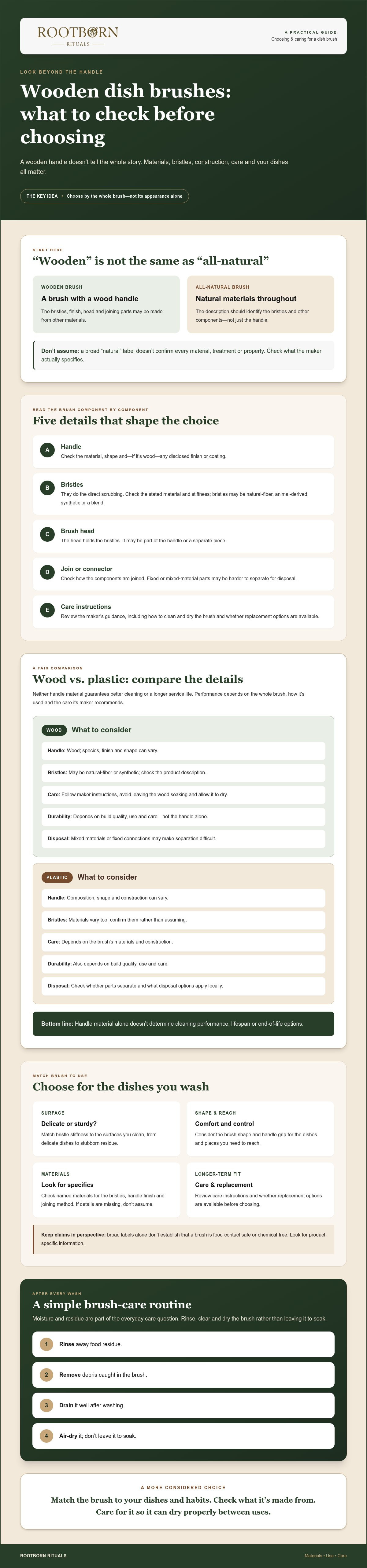
- Compare wood and plastic by care needs, durability, and disposal considerations rather than assuming one performs better.
- Choose natural dish brushes wood by matching bristle stiffness and brush shape to your dishes, from delicate surfaces to stubborn residue.
- Before choosing, review care instructions and whether replacement options are available.
- After washing, rinse the brush, remove debris, drain it well, and let it air-dry instead of leaving it to soak.
Natural Dish Brushes with Wood: What Are You Actually Choosing?
Small cleaning tools are part of the material choices we make every day. A dish brush may look simple, but its handle, bristles, and connections can use different materials, each with its own care and disposal considerations.
A wooden dish brush has a wood handle; an all-natural brush uses natural materials throughout, including its bristles and other components. That distinction matters. “Natural” on a label may describe only one part of the brush, so it doesn’t tell you the full material story. When comparing natural dish brushes wood, check what the maker specifies about bristle composition, handle finishes, and how the parts are joined.
Dishwashing is the process of removing food residue from dishes, as outlined in this overview of the process of cleaning food-soiled items. The tool you choose is one part of that routine. Its construction can affect how you use and care for it.
What does “natural dish brush” mean?
Assess the brush component by component instead of treating it as a single material. The handle may be wood, while the bristles could be plant-based, animal-derived, synthetic, or a blend. “Wooden” may refer only to the handle. A “natural” claim needs more detail before you can tell which parts it covers.
Read the product description for named materials and any disclosed treatments, such as a coating or finish on the handle. If the bristles or joining method aren’t identified, don’t assume. Clear details help you judge whether the brush fits your preferences and care habits.
Which parts of a wooden dish brush touch your dishes?
The bristles do the direct scrubbing, while the brush head holds them in place and the handle guides pressure and reach. Depending on its construction, the head may be part of the handle or a separate piece. A binding or connector may join the components. Check the description rather than assuming every part is wood or another natural material.
These details matter in everyday use. Bristle type and stiffness affect how a brush feels on different surfaces, while the join between head and handle may affect how it should be cleaned or dried. Mixed materials can also make disposal more complicated if the parts don’t separate easily. None of these details alone establishes that a brush is food-contact safe or chemical-free. Look for product-specific information, and treat broad labels as a starting point rather than proof of every component’s origin or properties.
Wooden Dish Brushes vs. Plastic: Compare Materials, Use, and Trade-Offs
Wood and plastic handles offer different everyday experiences, but neither guarantees better cleaning or a longer service life. Performance depends on the whole brush, how it’s used, and whether it receives the care its maker recommends. Searching for “natural dish brushes wood” is a useful starting point, but the material details make the comparison meaningful.
| Consideration | Wooden brush | Plastic brush |
|---|---|---|
| Handle | Wood; species, finish, and shape can vary. | Plastic; composition, shape, and construction can vary. |
| Bristles | May be natural-fiber or synthetic; check the product description. | May also vary; confirm the material rather than assuming. |
| Care | Follow maker instructions; avoid leaving wood soaking and allow it to dry. | Care depends on the brush’s materials and construction. |
| Durability | Depends on build quality, use, and care, not the handle alone. | Also depends on build quality, use, and care. |
| Disposal | Mixed materials or fixed connections may make separation difficult. | Check whether components can be separated and what disposal options apply locally. |
In brief: wood can offer a different feel and material profile than plastic, but handle material alone doesn’t determine cleaning performance, lifespan, or end-of-life options. A wooden handle may feel warm and substantial in the hand, and its response to moisture makes drying habits relevant. Plastic handles may be easier to wipe, but their shapes and construction vary, too. Neither handle tells you what the bristles are made from.
How do wooden and plastic handles differ in everyday use?
Think about grip, reach, and where the brush will rest between washes. Handle shape affects comfort and control. Moisture exposure also matters for a wooden handle that shouldn’t be left soaking. Plastic isn’t one uniform material, and a wood handle doesn’t mean the entire brush is natural. Check the full component list and care instructions.
Do bristles matter as much as the handle?
Yes. Bristles make direct contact with dishes, and their material and stiffness help determine the brush’s intended use. Compare the maker’s specifications for routine plate washing, stubborn residue, or delicate surfaces rather than guessing from appearance. Check whether the head is replaceable and how it attaches, too. A fixed assembly of mixed materials may affect care and disposal. The USDA’s guidance to keep all cutting boards clean concerns cutting boards specifically, not dish brushes, but reinforces the value of following suitable cleaning guidance for kitchen tools.
For a more considered home-care routine, explore RootBorn Rituals’ kitchen and home-care offerings. Review the materials and care details of any item before choosing.
Are Wooden Dish Brushes Durable and Hygienic? Understand the Real Trade-Offs
A wooden dish brush can suit everyday washing, but wood needs attention after use. Rinse away food residue, don’t leave the brush soaking, and let it dry fully between washes. These habits support upkeep, but they don’t guarantee a fixed lifespan or make a brush inherently more hygienic than a plastic one.
Prolonged dampness and trapped residue can affect many cleaning tools. If a brush develops a persistent odor, shows damage, or has loose or heavily worn bristles, inspect it and follow the maker’s replacement guidance. Odor alone doesn’t establish the cause, but it’s a sensible prompt to clean the brush and check its condition.
Can a wooden dish brush develop odors or wear?
It can, particularly if moisture and food debris linger. Wear depends on construction, frequency of use, and care, so there’s no reliable lifespan that applies to every brush. Periodically check the head, handle, and bristles. If parts loosen, the brush is damaged, or an odor remains after cleaning and drying, consult the maker’s instructions about whether to replace it.
How should you dry and store a wood-handled brush?
After washing, rinse away residue and remove food caught between the bristles. Shake or drain off excess water, then place the brush where air can circulate and water won’t collect around the handle or head. Avoid prolonged soaking and closed, wet storage. Follow product-specific instructions, and don’t apply oils, heat, or other treatments unless the maker recommends them.
Guidance for other wooden kitchen items can offer useful context, but it isn’t a substitute for brush-specific directions. Michigan State University Extension discusses safe cleaning and sanitizing of wooden kitchen tools; for a dish brush, use the care instructions provided for that product rather than assuming a cutting-board method applies.
Weigh these trade-offs against your own washing routine:
- Potential advantages: A wooden handle may suit those seeking to reduce plastic in their kitchen routine, and some brushes have replaceable heads. Check the actual construction and whether replacement parts are offered.
- Considerations: Wood needs to dry between uses, and mixed materials can make repair or disposal less straightforward. Confirm care directions and component details before choosing.
A brush’s practical value isn’t a claim that it prevents germs or lasts indefinitely. It’s whether its construction suits your dishes and whether you can keep it clean, dry, and in good condition through ordinary use. That’s the meaningful test when comparing natural dish brushes wood for a working kitchen.
How to Choose Natural Dish Brushes with Wood for Your Kitchen
Choose by function first, then by material. A brush that suits daily plates and cups may not reach into a narrow glass or lift stubborn residue from cookware. Narrow down your options by identifying the tasks, inspecting each component, comparing care requirements, and checking whether the head or other parts can be replaced.
Which brush shape and stiffness suit your dishes?
Start with the dishes you wash most often. A compact or angled head may be easier to guide into a narrow glass, while a broader head may cover more surface on cookware. Treat these as starting points, not guarantees, and review the brush’s dimensions and intended use. For delicate finishes, check the maker’s guidance on bristle stiffness and suitable surfaces before scrubbing.
Grip and reach matter, too. Consider whether the handle lets you apply comfortable pressure and reach the base of deeper dishes. A brush can have appealing materials yet feel awkward in your hand or be poorly suited to your usual tasks.
What should a product description disclose?
Look for specific details instead of relying on “natural” as a complete description. A useful listing identifies the handle, bristles, brush head, and binding or connector separately. It also states whether any components are replaceable and explains how to clean and dry the brush. If the description mentions sourcing or certification, check what the claim covers.
Consider end-of-life details as well. A replaceable head may let you keep using the handle, but check whether replacement parts are actually offered and how the components connect. If important details are missing, contact the seller or choose an option with clearer information.
Use this checklist before choosing natural dish brushes wood for your kitchen:
- Tasks: Will it handle everyday dishes, narrow vessels, cookware residue, or more than one of these?
- Fit: Does the brush shape offer the reach and control you need, and are its bristles appropriate for your surfaces according to the maker?
- Materials: Are the handle, bristles, head, and joining parts identified individually?
- Care: Are cleaning and drying instructions clear and practical for your routine?
- Replacement and disposal: Can any part be replaced, and does the seller explain how to separate or dispose of components?
A considered choice rests on the details, not the label alone. RootBorn Rituals’ Eco Cleanse & Care home-care offerings can be part of a more intentional kitchen routine. Review current product details to see which items are available and what materials they use.
Make Wooden Dishwashing a More Intentional Kitchen Ritual
A considered kitchen routine grows from small, repeatable choices. The brush is one of them: how it’s made matters, and so does how you care for it after the dishes are done. Natural dish brushes wood may align with your preferences, but a wooden handle alone doesn’t establish how responsibly materials were sourced, how long the brush will serve, or what happens to it at the end of its use.
Keep the after-washing routine simple:
- Rinse the brush to wash away soap and food residue.
- Remove debris caught between the bristles.
- Drain excess water rather than leaving the brush in a pool of it.
- Air-dry it where air can circulate, following the maker’s care instructions.
How can a brush fit into a lower-waste kitchen routine?
Use a brush for as long as it remains in good condition and performs its intended task, rather than replacing it simply because it looks worn from ordinary use. At the same time, don’t keep using a damaged tool against the maker’s replacement guidance. The useful balance is thoughtful care without assuming that every brush will last for a particular length of time.
Environmental considerations extend beyond the handle. They include material sourcing, the brush’s useful life, whether parts can be replaced, and realistic disposal options. A wooden brush isn’t automatically compostable or entirely plastic-free; its bristles, bindings, coatings, and other components may use different materials. Check local disposal guidance, especially if the parts are difficult to separate.
Where can you explore considered kitchen-care essentials?
RootBorn Rituals’ Eco Cleanse & Care collection offers a place to explore home-care essentials. The collection name doesn’t confirm that a particular wooden dish brush is available, so review the current product page for availability and specific material, care, and disposal details before choosing.
A mindful routine doesn’t ask you to find a perfect tool. It invites you to understand what you’re choosing, care for it well, and replace it with intention when it’s no longer suitable for use. For a next step, explore mindful kitchen-care essentials and review the details of any item that interests you.
Choose with Care, Then Let the Routine Endure
A wooden dish brush isn’t automatically the better choice simply because its handle is made from wood. Look at the whole brush: identify the handle, bristles, and joining materials, then weigh how its shape suits your dishes and how its care instructions fit your routine. The right choice is one you can use thoughtfully and maintain well.
For natural dish brushes wood, everyday care matters as much as material choice. Rinse away residue, clear the bristles, let water drain, and air-dry the brush between uses. Consider its sourcing, construction, useful life, and realistic disposal options instead of relying on a broad “natural” label or assumptions about how long it will last.
RootBorn Rituals curates kitchen and home goods around mindful living and considered material choices, including the Eco Cleanse & Care collection. Explore its current offerings and review product details to confirm materials and availability. Explore mindful kitchen-care essentials and bring more intention to the daily work of caring for your home.
Frequently Asked Questions
Are wooden dish brushes better than plastic brushes?
Neither is automatically better; each involves different material and care considerations. A wooden handle may appeal if you want less plastic in your routine, while a plastic handle may suit a different feel or construction preference. Cleaning performance and sustainability depend on the whole brush, how you use and care for it, and what happens when it wears out. Compare specific materials and instructions, not just broad labels.
Are natural dish brushes with wood completely plastic-free?
No. A wooden handle doesn’t establish that every component is plastic-free. Bristles, bindings, coatings, connectors, and replacement parts may use different materials. If you’re researching natural dish brushes wood, read the full product description and check each component individually. If the listing identifies only the handle, ask the seller about the remaining parts rather than assuming they’re natural or plastic-free.
Can a wooden dish brush get moldy or develop an odor?
A brush that stays damp or holds food residue may develop an odor, but odor or discoloration alone doesn’t confirm mold. Rinse the brush after use, clear trapped debris, and let it dry where air can circulate. Avoid leaving it soaking or storing it wet in a closed space. If you notice a persistent odor or visible changes, clean and inspect the brush, then follow the maker’s care and replacement instructions.
How do you clean and dry a wooden dish brush?
Rinse the bristles thoroughly after washing and remove any food caught between them. Shake or drain off excess water, then place the brush where air can circulate and moisture won’t pool around the handle. Let it air-dry between uses. Don’t leave it soaking or store it in a closed, wet space. Follow the product’s instructions, especially before applying any treatment or using a particular cleaning method.
How long does a wooden dish brush last?
There’s no single lifespan that applies to every wooden dish brush. Materials, construction, frequency of use, and how consistently you let it dry all affect wear. Inspect the handle, head, and bristles for damage, looseness, or reduced cleaning performance. Persistent odor or visible deterioration is also a reason to check the maker’s guidance. Replace the brush or parts as directed rather than relying on a fixed timeline.
Are wooden dish brushes compostable?
Not necessarily. Disposal depends on the materials in the whole brush, including bristles, finishes, bindings, and connectors, as well as the facilities available where you live. A wooden handle alone doesn’t mean the complete brush belongs in a compost bin. Check product-specific disposal guidance and local instructions. If the brush has mixed materials, see whether components can be separated and handled through different disposal routes.
What bristles should I look for in a wooden dish brush?
Choose bristles based on the dishes you wash and the maker’s stated guidance. First, confirm the bristle material; product descriptions may identify natural fibers or synthetic materials. Then check the stated stiffness and intended surfaces. A brush suitable for everyday plates may not be appropriate for delicate finishes or stubborn residue. Clear specifications help you make that distinction. Follow the care instructions to maintain the bristles and brush head.


