


What makes the best zero waste dish brush? It’s not just a natural-looking handle. The brush should suit your dishes, dry well between uses, and have materials and disposal guidance you can understand. Because it meets water and food residue every day, how you care for it matters as much as how it’s made.
You may be wondering whether plant-based bristles can handle daily washing, whether a wooden handle will last, or what “compostable” really means. Start by matching the brush to your dishes and checking how each part is constructed. There’s no need to find a perfect product or overhaul your whole routine.
This guide covers how to compare brush materials and designs, care for a brush so it stays useful, and assess packaging and end-of-life claims. You’ll find practical checks for choosing, drying, cleaning, and disposing of a brush’s components. The goal is a lower-waste dishwashing routine built on choices that work for your kitchen.
Key Takeaways
- Think of a zero waste dish brush as one part of a waste-reduction practice, not a promise of zero impact.
- Match the brush’s shape and bristle firmness to the dishes and cookware you wash most often.
- Check materials, packaging, and care instructions instead of relying on broad “green” or “natural” labels.
- Rinse away residue and let the brush dry with good airflow between uses.
- Choose a brush that suits your routine, inspect it as it wears, and check disposal guidance before replacing it.
Why Choose a Zero-Waste Dish Brush for Everyday Washing?
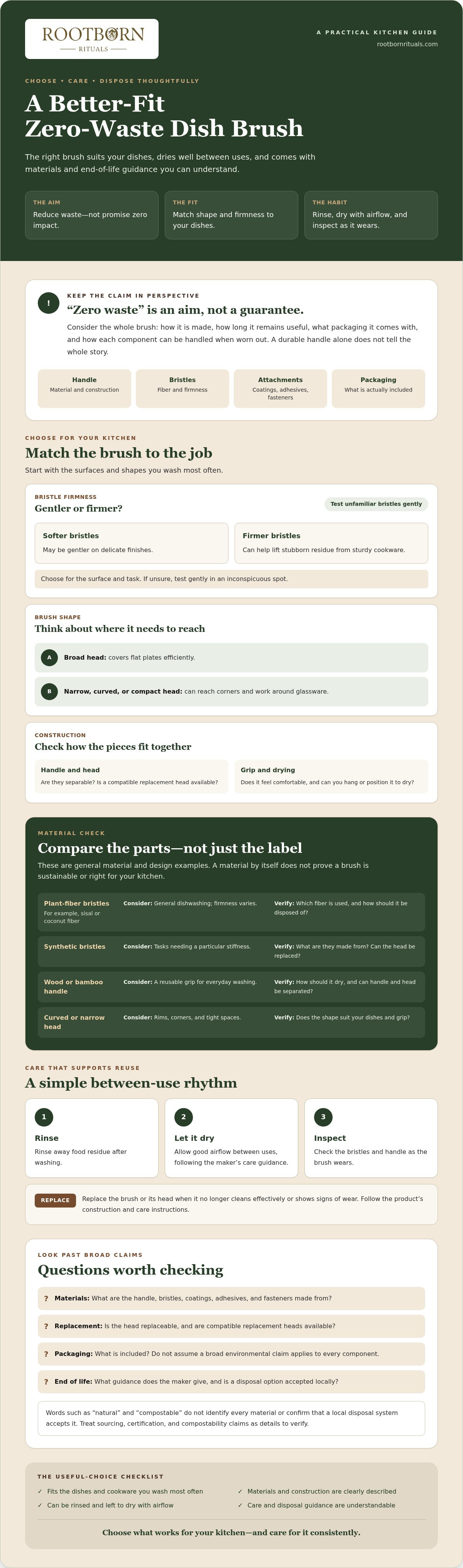
A dish brush is a small tool, but daily use makes it a practical place to consider waste. A zero waste dish brush is best understood as a waste-reduction choice, not a guarantee that every part has no environmental impact. Consider the brush’s full life: how it’s made, how long it remains useful, what packaging it comes with, and how each component can be handled when worn out.
A reduced-waste brush is one designed for repeated use and packaged with less unnecessary material. “Zero waste” describes an aim, not a promise of a completely waste-free product or household. A reusable design may help you avoid replacing a disposable scrubber as often, but a durable handle alone doesn’t tell the whole story. Bristles, fasteners, coatings, packaging, and replacement parts matter too.
What Does Zero-Waste Mean for a Dish Brush?
Look beyond the label and assess the whole brush. Check what the handle, bristles, and attachments are made from, whether the head can be replaced, and whether the maker provides care and end-of-life instructions. Terms such as “natural” and “compostable” don’t, by themselves, identify every material or show that it’s accepted by your local disposal system.
Brushes use a range of bristle materials, including natural vegetable fiber. Check the specific material and construction of the product you’re considering. Packaging is another useful comparison point: look at what’s included rather than assuming a broad environmental claim applies to every component.
When Can a Reusable Brush Replace a Disposable Scrubber?
A brush may work well for everyday jobs such as washing plates, cups, and cookware. A disposable scrubber may be convenient for a quick clean or a task that needs a different texture. Neither tool suits every surface. Match bristle stiffness and brush shape to the dish, and test gently in an inconspicuous spot before scrubbing delicate finishes.
Performance depends on more than the brush. Food residue, washing technique, frequency of use, and cleaning and drying habits all affect how long it stays useful. Inspect the bristles and handle as you go. Replace the brush or its head when it no longer cleans effectively or shows signs of wear. A reusable option is most helpful when it works for your routine and you can care for it consistently.
Which Dish Brush Materials and Designs Suit Your Kitchen?
The right brush handles your everyday tasks without being too rough on dishes or difficult to care for. A zero waste dish brush may pair a wooden or bamboo handle with plant-fiber or synthetic bristles, and some designs have replaceable heads. These are general examples, not guarantees about a product’s sourcing, durability, or disposal options. Check the full list of materials, including bristles, coatings, adhesives, and fasteners.
Bristle stiffness affects how a brush cleans. Firmer bristles can help lift stubborn residue from sturdy cookware, while softer bristles may be gentler on delicate finishes. A broad head covers flat plates efficiently; a narrow, curved, or compact head can reach corners and work around glassware. Choose a shape that fits your dishes, and test unfamiliar bristles gently on a discreet area.
How Do Bristle Materials Affect Cleaning?
Plant fibers, such as sisal or coconut fiber, and synthetic fibers are common bristle categories. Neither material alone proves a brush is sustainable or right for your kitchen. Consider the task, the surface, and the maker’s care instructions. If bristles bend, shed, or stop lifting residue effectively, replace the head or brush according to its construction.
| Material or design | May suit | Care needs | Questions to verify |
|---|---|---|---|
| Plant-fiber bristles | General dishwashing; firmness varies | Follow maker’s drying guidance | What fiber is used, and how should it be disposed of? |
| Synthetic bristles | Tasks needing a particular stiffness | Check cleaning and heat guidance | What are the bristles made from, and can the head be replaced? |
| Wood or bamboo handle | Reusable grip for everyday washing | Allow it to dry as directed | Are handle and head separable? |
| Curved or narrow head | Rims, corners, and tight spaces | Rinse residue from hard-to-reach areas | Does its shape suit your dishes and grip? |
What Should You Check in a Brush Handle and Head?
Check how the handle, head, bristles, and attachments fit together. A removable head may let you keep using the handle, but find out whether compatible replacement heads are available and how each part should be handled at end of life. Look for a comfortable grip and a way to hang or position the brush to dry. Treat claims about sourcing, certification, and compostability as details to verify.
Care instructions matter for every material. For kitchen tools, cleaning and sanitizing are distinct steps, so follow guidance for the specific brush instead of applying heat or soaking it without checking. For more ideas on considered kitchen care, explore mindful kitchen essentials.
How to Choose a Zero-Waste Dish Brush Without Greenwashing
Start with the jobs the brush needs to do, not the promise on its label. Broad terms such as “natural,” “green,” and “eco-friendly” don’t explain what every component is made from, how long the brush may last, or how to dispose of it. Review the construction and care details to decide whether a zero waste dish brush suits your kitchen.
Use this five-step check before buying:
- List your tasks. Note whether you mainly wash plates and glasses, scrub cookware, or reach into narrow vessels.
- Choose a shape. Match the head and handle to your dishes, grip, and access needs.
- Inspect materials. Identify what the handle, bristles, head, and fittings are made from.
- Check packaging. Find out what packaging is included and how it can be discarded.
- Review care. Look for clear cleaning, drying, replacement, and end-of-life guidance.
A replaceable head may extend the useful life of a handle, but only if compatible replacements are available and suit the design. Don’t assume heads are interchangeable. For a broader look at practical qualities such as durability and ergonomics, consult this in-depth review of dish brushes. Performance comparisons aren’t, on their own, proof of environmental benefit.
Which Questions Should You Ask Before Buying?
Ask the maker or retailer what each part is made from, including fittings and coatings. Is packaging included, and can it be recycled or otherwise responsibly discarded where you live? Are the care instructions specific to the materials? If a listing makes environmental claims, does it explain what they cover? Clear answers make it easier to compare products than a reassuring label alone.
Before purchasing, verify the brush’s materials, construction, packaging, care instructions, replacement compatibility, and the details behind its environmental claims.
How Can You Shop Package-Free More Thoughtfully?
Package-free options vary by retailer, so check before making a special visit. Ask whether the brush is available without packaging or with reduced packaging, and clarify what that means for the brush itself. When shopping online, review the product details or contact the seller rather than assuming “plastic-free” means there’s no packaging.
Small, considered changes can make a kitchen routine more intentional over time. For ideas beyond this purchase, explore how to remove plastic from your kitchen at a gradual, practical pace.
How to Clean, Dry, and Extend the Life of Your Dish Brush
Help a brush stay useful by removing residue and letting it dry between uses. After washing, rinse the bristles thoroughly. If food is trapped, work it out with your fingers, then shake off excess water. Set or hang the brush where air can circulate around the head and handle. A dish caddy that holds water can keep a brush damp, so choose a spot that drains well.
Follow the maker’s care instructions for the specific materials. Heat, prolonged soaking, and some cleaning agents may damage handles, bristles, adhesives, or fittings. Don’t assume a method that suits one brush is suitable for another. If deeper cleaning or disinfection is needed, use only methods the manufacturer confirms are appropriate.
What Is a Simple After-Use Brush-Care Routine?
Keep the routine simple: rinse away residue, shake off water, and leave the brush where air can circulate. Check that food isn’t lodged between the bristles or around the head, then store the brush so its working end isn’t pressed against a wet surface. This quick check helps you notice buildup and gives the brush a chance to dry between uses.
A zero waste dish brush isn’t maintained by its materials alone. Regular rinsing, suitable storage, and care that respects its construction all help it continue to clean effectively.
When Should You Replace or Dispose of a Dish Brush?
There’s no universal replacement timetable. Check the brush’s condition and performance. Persistent residue, loose or misshapen bristles, cracks, or a head that no longer removes food effectively are reasons to inspect it and consider replacement. If the design has a replaceable head, use a compatible part and keep the handle only if it remains sound and clean.
Before disposal, identify the material of each component. Separate parts only if the brush is designed to come apart safely; don’t force fittings or detach bonded materials. A plant-based handle doesn’t mean the whole brush belongs in compost. Bristles, metal fittings, coatings, and adhesives may need different handling, and household compost systems may not accept every material. Check local composting or recycling guidance for each component, and follow the maker’s end-of-life instructions where available.
Thoughtful maintenance is part of a considered kitchen routine. Explore RootBorn Rituals’ mindful kitchen and home goods for products that support intentional everyday care.
How to Build a Calm, Package-Free Dishwashing Routine
A lower-waste routine comes from small actions repeated with care, not perfect choices. Choose a brush that suits your dishes, use it for tasks it handles well, rinse it after washing, and let it dry with airflow. Inspect it as it wears, then replace a worn head or brush thoughtfully. This helps a zero waste dish brush become part of daily kitchen care rather than a purchase expected to solve every waste concern.
Package-free options aren’t available everywhere, and some products need protective packaging. Choose reduced packaging when you can confirm what’s included, and focus on using tools you already own for as long as they remain effective. Progress can be practical and imperfect.
How Can You Reduce Dishwashing Waste Beyond the Brush?
Use dish soap according to the product label instead of adding more by habit. Group dishes that can be washed together, and turn off running water when you’re not actively rinsing. These simple choices can make dishwashing more deliberate without requiring a complete change to your kitchen routine.
Refill or package-free soap options may be useful, but availability and product details vary. Check what a retailer offers and how its packaging should be handled before making a special trip or purchase. Choose changes that fit your household and are easy to sustain.
Where Can You Explore More Mindful Kitchen-Care Choices?
Thoughtful kitchen tools are one part of a mindful-home approach: choose with care, use what you have well, and don’t expect a single product to eliminate waste. RootBorn Rituals’ Eco Cleanse & Care collection is one place to explore kitchen and home-care essentials. Review current product details to see what suits your needs.
For a wider, step-by-step approach to kitchen changes, read the non-toxic kitchen makeover. Keep this short checklist close for your next brush purchase:
- Does its shape suit the dishes I wash?
- Are the handle, bristles, and fittings clearly identified?
- Is its packaging explained, and can it be reduced?
- Are care, replacement, and disposal instructions clear?
Choose what works, care for it consistently, and make the next decision when it’s needed. A calmer, lower-waste routine grows through steady practice, not perfection.
Make Your Next Dishwashing Choice More Intentional
A thoughtfully chosen zero waste dish brush is more than a material choice. Match its shape and bristles to your dishes, check what every part is made from, and look for clear packaging and care details rather than relying on broad environmental labels. After each use, rinse away residue and let the brush dry with airflow. Replace it when wear affects its cleaning performance.
Package-free living doesn’t need to be perfect to be purposeful. Choosing less packaging where possible and using household tools well are practical steps toward a calmer kitchen routine.
RootBorn Rituals offers a curated range of eco-friendly, plastic-free, and sustainable kitchen and home goods. Explore RootBorn Rituals’ mindful kitchen and home collections to find essentials that fit your everyday routine, and check current product details before choosing.
Frequently Asked Questions
What is a zero-waste dish brush?
A zero-waste dish brush is best understood as part of an effort to reduce waste, not as a product with no environmental impact. Consider its materials, packaging, durability, and end-of-life options together. The label alone doesn’t prove that every component is plastic-free, compostable, or responsibly sourced. Before buying, review details for the handle, bristles, fittings, packaging, care instructions, and disposal guidance.
Are wooden dish brushes more sustainable than plastic brushes?
A wooden handle may be a lower-plastic choice, but the material alone can’t establish a brush’s overall environmental impact. Consider the bristles, fittings, packaging, useful life, and disposal options as well. Compare specific product details rather than assuming a natural-looking brush is automatically sustainable. Choose a design that suits your dishes and that you can care for properly.
Can I compost a natural dish brush?
It depends on the brush’s exact materials, how its components are joined, and what your local composting service accepts. A brush may combine a natural handle with bristles or fittings that need different disposal routes. Check the maker’s material and disposal guidance, and separate parts only if the design allows it safely. Before placing any component in a compost stream, confirm acceptance with the relevant composting provider.
How do I clean and dry a wooden dish brush?
After washing, rinse away food residue and shake off excess water. Store the brush where air can circulate instead of leaving it in standing water or a damp, enclosed space. Follow the manufacturer’s instructions before using cleaning products, heat, or soaking, since these methods may not suit every brush. Inspect the handle and bristles periodically, and replace the brush if damage or poor cleaning performance makes it less useful.
How often should I replace a dish brush?
There’s no single replacement interval that suits every brush or household. Frequency of use, the dishes you clean, your care routine, and the brush’s construction all affect its useful life. Replace it when bristles are damaged or ineffective, parts loosen, or it no longer cleans well. If it has replaceable parts, follow the maker’s guidance and check that replacements are compatible.
Where can I buy a package-free dish brush?
Package-free availability varies by retailer and may not be offered consistently. Before purchasing, ask whether the brush can be supplied without packaging or with reduced packaging, and verify what the packaging contains. Review the brush’s materials and care guidance too. Check current product listings rather than assuming a brand or collection carries a particular dish brush.
Are all natural dish brushes plastic-free?
No. A brush may have a natural handle but still use synthetic bristles, plastic fittings, or other mixed-material components. Broad descriptions don’t always identify every part. Review the complete materials list and ask the seller about anything unclear. If replacement or disposal matters to you, check whether the components can be separated and what guidance the maker provides for each material.


