


What if the most sophisticated tool for your physical vitality is not a laboratory innovation, but a vessel formed from the very soil that sustains us? You likely feel a quiet, persistent anxiety when you consider the synthetic coatings and heavy metals that leach from contemporary pans into your daily nourishment. It is a valid concern. With 2026 safety standards under constant revision and recent recalls highlighting the risks of lead contamination, the search for a truly non-toxic kitchen has never been more vital. Embracing organic clay cookware is more than a culinary preference; it is a reverent return to purity and a rejection of the chemical shortcuts that define the modern age.
We recognize that moving away from conventional materials can feel overwhelming, especially when you are navigating the confusion between glazed and unglazed safety or the fear of breaking a natural material. This guide serves as your intentional path to reclaiming the sanctity of your home through our Pure Ancestral Cooking Collection. You will learn how to identify authentic, earth-born vessels, understand the science of alkaline nutrient retention, and master the gentle rituals of care required to preserve these heirloom pieces. We invite you to slow down and discover how these ancient tools can transform your kitchen into a sanctuary of holistic health.
Our pick
Ceramic Clay Cooking Pot – Traditional Rice & Broth Pot
From $42.95 · Free worldwide shipping
Buy Now →Key Takeaways
- Distinguish between pure, earth-harvested materials and industrial alternatives to ensure your kitchen remains a sanctuary free from heavy metal leaching.
- Discover how the unique far-infrared heat and porous nature of organic clay cookware preserve delicate food enzymes and maintain natural alkalinity.
- Learn to identify critical red flags in commercial ceramics, such as synthetic glazes and chemical sealants, by understanding the sourcing of primary clay.
- Master the intentional ritual of seasoning to "awaken" your vessel, creating a durable and naturally non-stick surface without the use of toxic coatings.
- Explore how the Pure Ancestral Cooking Collection bridges the gap between ancient wisdom and modern design, serving as both a high-performance tool and sculptural art.
The Sacred Vessel: Why Organic Clay Cookware is the Foundation of a Mindful Kitchen
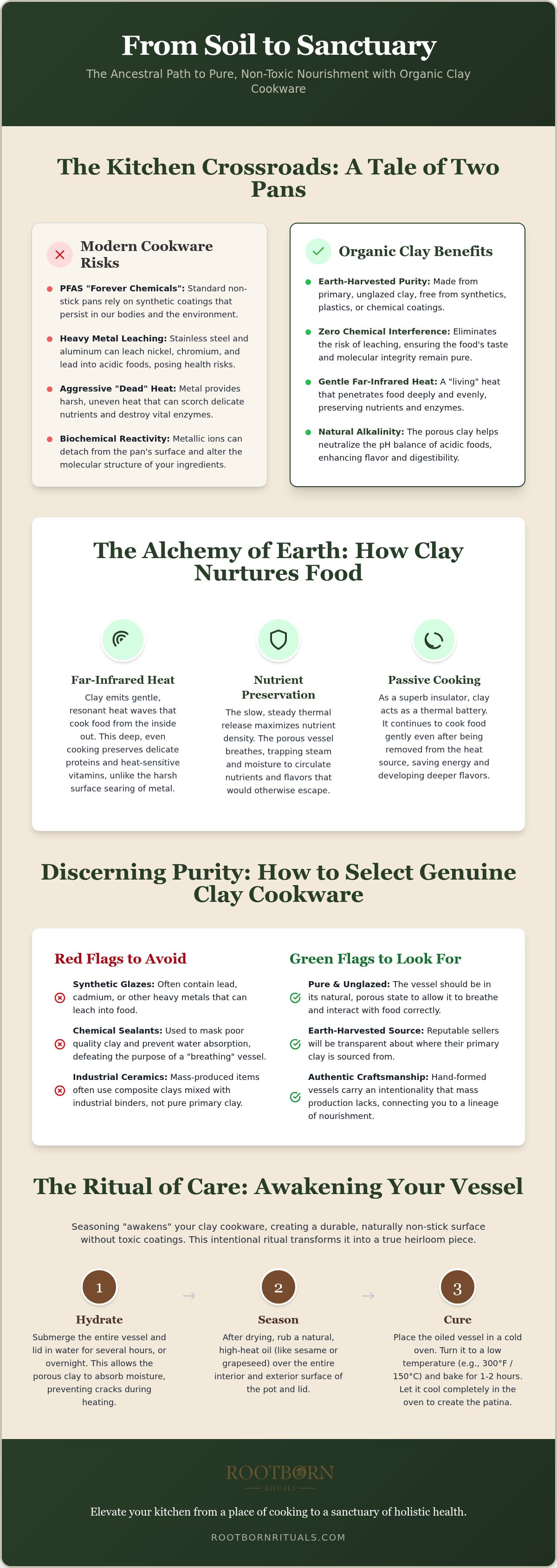
The kitchen is the heart of a home’s ecosystem, a space where the elements of nature are transformed into cellular energy. Choosing organic clay cookware is a foundational step in establishing this sanctuary. Unlike industrial materials, this primary, unglazed medium is harvested directly from the earth, carrying with it a purity that modern manufacturing can't replicate. We're witnessing a collective shift away from the hollow promises of industrial convenience and a return to ancestral purity. This transition isn't merely about nostalgia; it's about the quality of the heat itself. While metal provides a "dead," aggressive heat that can scorch delicate nutrients, clay offers a "living" far-infrared resonance. This gentle energy penetrates food deeply and evenly, preserving the vital enzymes that sustain us.
The Problem with Modern Surface Technology
Modern kitchens are often filled with surfaces designed for speed rather than safety. Standard non-stick pans rely on PFAS, often called "forever chemicals," which persist in our bodies and the environment long after a meal is finished. Stainless steel and aluminum aren't exempt from scrutiny either, as they can leach heavy metals like nickel and chromium into acidic ingredients. The environmental impact of these synthetic coatings extends to our water and soil, creating a cycle of toxicity that contradicts a mindful lifestyle. Biochemical reactivity is the silent exchange where metallic ions detach from the pan’s surface and bond with the molecular structure of your ingredients. By choosing earth-born materials, you eliminate this chemical interference entirely.
Reclaiming the Ancestral Cooking Ritual
When you hold a clay vessel, you connect with a lineage of nourishment that predates the industrial age. The history of clay pot cooking reveals that for millennia, civilizations relied on this "mother vessel" to sustain their people. Incorporating organic clay cookware into your daily life is a ritual that intentionally slows the frantic pace of modern living. It demands a different rhythm, one that values the steady transformation of ingredients over the rush of high-heat searing. The sensory experience is profound. You'll notice the subtle aroma of minerals, the grounding weight of the earth in your hands, and the unique texture of a vessel that breathes as it cooks. It's a return to a more intentional way of being, where every meal is treated with the gravity and respect it deserves.
The Alchemy of Earth: The Health Science Behind Unglazed Clay
The transition from metal to organic clay cookware represents a shift from mere heat application to a sophisticated biological exchange. While modern metal pans rely on aggressive conduction that can shock and degrade the molecular structure of your food, unglazed clay operates through a far-infrared resonance. This isn't just a traditional preference; it's a matter of cellular vitality. The earth-born material acts as a thermal battery, releasing energy that penetrates deep into the heart of your ingredients. By understanding the science of how clay interacts with heat and moisture, we can better appreciate why these vessels have remained the gold standard for health-conscious civilizations for millennia.
Far-Infrared Heat and Nutrient Density
Clay heat is fundamentally different from the "dead" heat of stainless steel or cast iron. It emits far-infrared waves that cook food from the inside out, a process that's far gentler on delicate proteins and heat-sensitive vitamins. This penetrating heat ensures that the internal temperature of a vegetable or grain rises evenly, preventing the surface charring that often destroys vital enzymes. Because clay is an exceptional insulator, it also facilitates "passive cooking." You can remove the vessel from the heat source and allow the stored energy to complete the process, which maximizes flavor extraction while minimizing energy use. This slow, steady thermal release ensures that every meal retains its maximum nutrient density.
The porous nature of the material adds another layer of health protection. As the vessel "breathes" during the cooking process, it creates a natural steam cycle. Moisture is pulled into the clay and then released as a fine vapor, which condenses and drips back into the food. This self-basting mechanism preserves water-soluble nutrients that would otherwise be lost to evaporation in a conventional pan. Adhering to rigorous food safety standards involves more than just avoiding toxins; it's about choosing tools that actively protect the integrity of our nourishment.
Natural Alkalinity and Digestive Wellness
One of the most profound benefits of organic clay cookware is its natural alkalinity. Modern diets are often high in acidic ingredients like tomatoes, citrus, and certain grains, which can contribute to systemic inflammation and digestive discomfort. Clay performs a subtle chemical balancing act. When acidic foods come into contact with the alkaline surface of the vessel, the pH level is naturally neutralized. This interaction creates a smoother, more balanced flavor profile without the need for added sugars or fats.
This pH balance isn't just a culinary trick; it supports long-term digestive harmony. By reducing the acid load on the body, clay-cooked meals are often easier to assimilate, leading to a sense of lightness and well-being after eating. For those looking to cultivate a more intentional kitchen environment, the Pure Ancestral Cooking Collection provides the perfect foundation for these health-giving rituals. Each piece is designed to facilitate this ancient alchemy, ensuring your home remains a sanctuary of vitality and peace.
Discerning Purity: Selecting Genuine Organic Clay Cookware
Selecting organic clay cookware requires a level of discernment that transcends simple aesthetics. It's a search for "primary clay," which is harvested from the exact location of its geological formation. Unlike secondary clays that have traveled through riverbeds and accumulated environmental pollutants, primary clay remains a pure, singular expression of the earth. Machine-made alternatives often rely on synthetic binders and plasticizers to survive high-speed manufacturing; however, authentic vessels are hand-crafted. This manual process ensures the material's structural integrity without chemical interference, making handmade status a health requirement rather than a luxury choice.
Unglazed vs. Glazed: The Purity Threshold
As we move through 2026, the scrutiny on ceramic safety has intensified, yet many commercial brands still offer "lead-free" glazes that can be misleading. Even without lead, glazes often contain cadmium, arsenic, or lithium to achieve specific colors and finishes. The FDA guidance on lead in pottery highlights the persistent risks of leaching in traditional ceramics, particularly when glazes are improperly fired. Beyond chemical safety, a glaze acts as a plastic-like seal that suffocates the clay. Only unglazed organic clay cookware maintains the porosity required for the "breathing" effect that preserves nutrient density. To verify this purity, you can perform a simple "water test" at home. Apply a few drops of water to the dry surface of the vessel. If the water beads and sits, it's likely sealed with a chemical agent. If it's absorbed into the clay, the vessel is truly unglazed and alive.
The Origin Matters: Sourcing Ancestral Clay
The sanctity of your kitchen depends on the history of the soil. Purity is found in clay harvested from deep, uncontaminated earth layers, far below the reach of modern agricultural runoff or industrial waste. Ethical artisanship respects this depth, utilizing traditional techniques passed down through generations to shape the vessel without the use of industrial lubricants or binders. When you choose a piece from our Pure Ancestral Cooking Collection, you're supporting a legacy of environmental stewardship and human health. This discerning approach ensures that no heavy metal pigments or synthetic sealants enter your home ecosystem. Consider this checklist to verify the integrity of your next vessel:
- Verify the clay source is protected from modern industrial runoff and meets 2026 safety standards.
- Ensure the vessel is entirely unglazed, including the lid and the base.
- Confirm the piece was hand-burnished with stone rather than chemically polished.
- Avoid any pottery that uses artificial pigments to mimic "earthy" tones.
The Ritual of Care: Seasoning and Preserving Your Vessel
Transitioning from the instant convenience of synthetic non-stick surfaces to organic clay cookware requires a shift in mindset. It's a move from disposable tools to living vessels. Seasoning is the foundational ritual that awakens the clay, transforming a raw earthen pot into a high-performance culinary tool. This process creates a natural, durable non-stick surface that evolves with every meal you prepare. Unlike modern pans that begin to degrade the moment they leave the factory, a well-cared-for clay vessel matures. It becomes more efficient, more seasoned, and more aesthetically rich over time.
Awakening the Clay: The Initial Seasoning
The initial awakening begins with a 24-hour water immersion ritual. This deep hydration is essential to saturate the clay fibers, ensuring they can expand and contract safely under heat. Once the vessel is fully air-dried, you'll apply a generous layer of a high-smoke point natural oil, such as avocado or coconut oil, to the entire surface. The final step is a slow, methodical tempering on the stovetop. By heating the oiled vessel gradually over low heat, you bond the lipids to the mineral structure of the earth. This creates a permanent, non-toxic barrier that protects both the food and the pot alike, a process that mirrors the ancient wisdom of our ancestors.
Mindful Maintenance and Daily Cleansing
Daily cleansing must be approached with the same level of intention as the cooking itself. Because unglazed clay is porous, it's vital that synthetic detergents never touch the surface. Soap will be absorbed into the pores and eventually leach into your food, compromising the purity of your kitchen sanctuary. Instead, use warm water and a natural abrasive like baking soda or a stiff brush to remove residue. This method respects the integrity of the organic clay cookware while ensuring a deep, chemical-free clean.
After washing, ensure the vessel is completely dry before storing it in a well-ventilated area. Breathability is the lifeblood of clay; trapping moisture in a closed cupboard can lead to mildew. Additionally, always respect the "patience of clay" by avoiding thermal shock. Never move a cold pot directly onto a high flame or plunge a hot pot into cold water. These gentle transitions preserve the structural harmony of the material for decades. To begin your journey with a vessel that is designed for a lifetime of health, explore the Pure Ancestral Cooking Collection and reclaim the sanctity of your daily kitchen practice.
Elevating the Modern Kitchen with the Pure Ancestral Cooking Collection
The Pure Ancestral Cooking Collection represents the zenith of mindful kitchen design. It isn't merely a set of pots; it's a curated selection of vessels that honor the sanctity of the home. These pieces function as high-performance tools for the modern chef while remaining sculptural art for the discerning curator. The transition from the stovetop to the oven and finally to the center of the table is seamless. This versatility allows the vessel to remain the focal point of the meal, bridging the gap between preparation and the communal act of dining. By choosing these tools, you're inviting a level of sophistication that respects both the ingredients and the environment.
Sophistication Meets Sustainability
Integrating organic clay cookware into a modern home creates a profound visual harmony. The raw, matte textures of the earth provide a grounding contrast to the sleek, polished surfaces of a contemporary kitchen. This aesthetic choice reflects a deeper commitment to a plastic-free, zero-waste lifestyle. By choosing materials that return to the soil without leaving a synthetic trace, you align your daily environment with the broader cycles of nature. To complete this holistic ecosystem, our Natural Preservation Essentials serve as the perfect companion, ensuring your organic ingredients remain as pure as the vessels they're cooked in.
Starting Your Ritual with RootBorn Rituals
Embarking on this journey begins with identifying your most cherished culinary ritual. If your home is defined by the slow, aromatic simmering of heirloom stews, a deep-bellied pot from our collection is the essential first step. For those who find peace in the precise preparation of ancient grains or the tactile nature of sourdough baking, a specialized vessel will serve as your primary tool. We invite you to explore the full Mindful Dining & Table Wellness range to create a cohesive environment that supports your physical and spiritual well-being. For a deeper look at creating a non-toxic home, read The Ultimate Guide to Plastic-Free Kitchen Essentials.
Investing in organic clay cookware is more than a simple purchase; it's a commitment to your family’s generational health. These vessels don't just hold food; they hold the promise of a life lived with intention and a kitchen free from the interference of modern chemicals. By choosing the Pure Ancestral Cooking Collection, you're securing a legacy of purity that will be felt at your table for years to come. It's a quiet, powerful investment in the vitality of those you love most, ensuring that the heart of your home remains a sanctuary of health.
Reclaiming the Sanctity of Your Daily Table
Embracing organic clay cookware is a profound act of stewardship for both your home and your cellular health. You've moved beyond the anxiety of heavy metal leaching and into a space where every meal is prepared with intentionality and biological respect. By understanding the alchemy of far-infrared heat and the necessity of unglazed purity, you've established a foundation for a kitchen that breathes. These vessels aren't just tools; they're heirloom-quality natural materials that mature alongside your family, offering a connection to ancestral wisdom that modern manufacturing simply can't replicate.
As you curate a home environment grounded in tranquility, every detail matters. Our offerings are meticulously curated for mindful, intentional living, ensuring that your path to wellness is supported by the highest standards of safety and beauty. Whether you're seeking plastic-free hydration and dining essentials or the transformative power of earth-born vessels, your journey toward a more purposeful lifestyle begins with a single, conscious choice. We invite you to explore the Pure Ancestral Cooking Collection and experience the serene grace of a kitchen returned to its natural state. Your table is ready for its awakening.
Frequently Asked Questions
Is organic clay cookware safe to use on a gas stove?
Yes, organic clay cookware is safe for gas stoves when used with a mindful approach to temperature. You should always start with a low flame for the first several minutes to allow the earth to expand with grace. Using a heat diffuser is a wise practice that ensures the flame is distributed evenly across the base. This protects the vessel from concentrated stress while maintaining the energetic integrity of your meal.
Can I use unglazed clay pots in the oven or microwave?
Unglazed clay pots flourish in the oven, where they create a self-basting environment that preserves the moisture of your ingredients. You should place the vessel in a cold oven and allow it to heat up along with the air to avoid thermal shock. While these pots are technically microwave safe, we suggest traditional heating methods. This honors the slow, intentional process that defines a truly ancestral kitchen and a sophisticated home.
Does clay cookware contain lead or other heavy metals?
Authentic organic clay cookware crafted from primary clay sources is naturally free from lead, cadmium, and other heavy metals. The primary risk of contamination occurs with commercial glazes or secondary clays harvested from polluted industrial areas. Our collection is vetted for purity to ensure that no synthetic binders or metallic pigments interfere with your food’s vitality. This meets the rigorous safety standards expected in a conscious, health-focused home.
How do I clean my clay pot if I can’t use dish soap?
Cleaning your vessel is a simple ritual that requires only warm water and a natural abrasive like baking soda or sea salt. Because unglazed clay is porous, it absorbs synthetic chemicals found in modern dish soaps, which can later leach into your food. You can use a stiff natural-bristle brush to remove stubborn residue. This method preserves the pot’s seasoning while ensuring your kitchen remains a sanctuary free from industrial detergents and fragrances.
What is the best way to prevent my clay cookware from cracking?
The most effective way to prevent cracking is to avoid sudden temperature fluctuations, known as thermal shock. Always allow your pot to reach room temperature before washing it, and never place a cold vessel onto a high-heat source. Proper seasoning creates a flexible internal structure that resists stress. By treating your cookware with patience and following these gentle transitions, you ensure your heirloom-quality vessel remains a functional piece of art for decades.
How long does it take for a clay pot to become naturally non-stick?
A clay pot begins its journey toward becoming naturally non-stick during the initial seasoning ritual, but it truly matures through consistent use. You'll notice a significant improvement in surface release after the first five to ten meals, especially when cooking with natural fats. This living patina deepens over time, creating a surface that rivals synthetic coatings without the need for toxic chemicals. It’s a rewarding process that honors the slow patience of natural materials.
Can I use clay cookware on an induction cooktop?
Clay is a non-metallic material and does not work directly on induction cooktops, which require magnetic conduction to generate heat. However, you can easily bridge this gap by using a stainless steel induction interface disk. This tool sits between the cooktop and your clay pot, allowing the magnetic energy to heat the disk, which then transfers a gentle, steady warmth to the vessel. This preserves the integrity of your ancestral cooking ritual.
What is the difference between terracotta and organic clay cookware?
While terracotta is a form of fired earth, it's often made from secondary clays that may contain impurities or are intended for decorative use rather than high-heat cooking. Organic clay cookware is specifically crafted from primary clay deposits, which are deeper and purer. These vessels are fired at specific temperatures to ensure they're durable enough for the stove while remaining porous enough to allow the food to breathe and retain its natural alkalinity.
Ready to buy?
Ceramic Clay Cooking Pot – Traditional Rice & Broth Pot
From $42.95 · Free worldwide shipping
Buy Now →


