


Your kitchen is the sacred hearth of your home; it's the place where life is sustained and health is forged. Yet, for many, this sanctuary has become cluttered with synthetic materials that whisper of modern convenience while quietly compromising our ancestral purity. If you've been wondering how to remove plastic from kitchen spaces to protect your family from endocrine disruptors, you're listening to a deep, intuitive truth about your well-being. The fear that even "safe" modern synthetics leach harmful chemicals into your nourishment isn't just a worry; it's a call to return to a more intentional, grounded way of living.
We understand the weight of this transition. It's not a chore of elimination, but a sacred ritual of returning to the elemental. This guide provides a clear, manageable roadmap to purge the synthetic and reclaim your home as a sanctuary of health. You'll discover a methodical approach to replacing mismatched containers with pure materials like unglazed clay, wood, and glass. By following this path, you'll gain the confidence that every meal is prepared in a vessel that honors your heritage and your physical vitality. It's time to transform your daily environment into a place of profound peace and holistic wellness.
Key Takeaways
- Understand the invisible impact of the leaching process and how heat or acidity draws synthetic toxins into your daily nourishment.
- Follow a graceful 7-day roadmap on how to remove plastic from kitchen environments by auditing your preparation, preservation, and presentation zones.
- Rediscover the ancestral wisdom of using unglazed clay and antimicrobial copper as the primary materials for a non-toxic culinary sanctuary.
- Shift from a mindset of modern convenience to one of mindful curation, ensuring every tool in your home supports both physical health and spiritual peace.
The Hidden Cost of Convenience: Why Your Kitchen Needs a Plastic-Free Awakening
The kitchen stands as the silent guardian of a family's vitality. It's the space where raw elements transform into the life force that sustains us. When we consider how to remove plastic from kitchen environments, we aren't simply cleaning a cupboard; we're performing a ritual of reclamation. For decades, synthetic materials have been marketed as the peak of convenience. However, this ease has come at a significant biological cost. By understanding plastic pollution on a global and cellular level, we can see that these materials don't just sit on our shelves. They interact with our food, our water, and ultimately, our blood. This shift in perspective is essential. We're not just throwing things away. We're clearing space for the sacred and the pure.
The Science of Leaching: Heat, Acid, and Time
Leaching is the quiet migration of chemicals from a container into its contents. This process isn't static. It's accelerated by the very rituals of cooking we perform daily. High heat is the most common catalyst. When plastic is subjected to high temperatures, such as during microwaving or dishwasher cycles, its molecular bonds loosen, allowing additives to seep into your nourishment. Acidity acts as a secondary solvent. Ingredients like heirloom tomatoes, vinaigrettes, or fresh citrus can physically degrade polymer structures over time, even if the damage isn't visible to the naked eye. While many modern products are labeled "BPA-free," the bisphenol alternatives used in their place are equally disruptive to the body's delicate hormone health. In 2026, California's ban on all bisphenols in children's feeding products took effect, highlighting a growing awareness of these risks. This chemical transfer is a constant, invisible exchange that occurs every time we choose synthetic convenience over elemental safety.
Reclaiming the Ancestral Kitchen Sanctuary
There is a profound, grounding difference between the cold, sterile touch of a plastic bowl and the weighted presence of a hand-carved wooden spoon or a clay pot. Returning to these materials isn't a step backward; it's a mindful progression toward a life of substance and health. Our ancestors understood that the vessels we use are as important as the ingredients they hold. They relied on stone, wood, and earth to cradle their food, ensuring that nothing foreign or harmful interfered with their vitality. This philosophy is the foundation of our Pure Ancestral Cooking Collection, which prioritizes unglazed, organic clay as the gold standard for purity. When you commit to learning how to remove plastic from kitchen life, you're choosing a path of ancestral wisdom. By choosing materials that come from the earth, you invite a sense of peace and permanence back into your culinary sanctuary. You transform your kitchen from a site of consumption into a temple of wellness.
The Sacred Replacement: Identifying Plastic in Your Daily Rituals
To begin the journey of how to remove plastic from kitchen spaces, you must first see what has become invisible through years of familiarity. This process is a mindful audit of your hearth. It requires you to look beyond the obvious single-use bags and gaze into the drawers and cupboards where "durable" synthetics reside. While a plastic container may look sturdy, its molecular structure is constantly shedding, especially when it meets the friction of a scrub brush or the weight of stacked goods. By categorizing your kitchen into three distinct zones—Preparation, Preservation, and Presentation—you can systematically identify where synthetic materials have intruded upon your daily rituals.
The most critical priority in this audit is identifying any item that comes into direct contact with heat. High-heat environments act as a catalyst for chemical migration, turning a convenient tool into a source of contamination. Whether it is a silicone-coated whisk or a plastic gasket hidden in a blender lid, these small details matter. We aren't just looking for large objects; we're looking for every point of contact where your food meets a polymer.
Zone 1: Preparation and High-Heat Hazards
The area surrounding your stove is the most urgent frontier for change. Plastic spatulas and slotted spoons are particularly concerning because they're often subjected to temperatures that exceed their structural stability. Even "high-heat resistant" plastics can begin to degrade at a microscopic level well before they show signs of melting. Similarly, plastic cutting boards pose a dual threat. Every knife stroke creates deep grooves that harbor bacteria and, more importantly, releases microplastics directly into your ingredients. Replacing these with end-grain wood boards and stainless steel or wooden tools is a foundational step in reclaiming your kitchen's purity. As states like Maine and Colorado enact bans on PFAS in cookware, the transition to natural materials becomes not just a preference, but a necessary alignment with emerging health standards.
Zone 2: Rethinking Food Preservation Rituals
Preservation should be an act of honoring the ingredient's life force, not stifling it in a synthetic shroud. Moving away from plastic wraps and zip-top bags allows your food to breathe and prevents the transfer of bisphenols during storage. Transitioning to glass vessels with wooden lids or exploring our Natural Preservation Essentials ensures that your leftovers remain as pure as the moment they were prepared. These materials offer airtight seals without the risk of chemical interference, maintaining the true flavor profile of your nourishment. When you choose glass and wood, you're choosing materials that have been trusted for generations. You can find beautiful, functional alternatives for your storage needs within our Natural Preservation Essentials collection, which bridges the gap between ancient wisdom and modern kitchen requirements.
Embracing Elemental Materials: The Wisdom of Clay, Wood, and Copper
Once you understand how to remove plastic from kitchen environments, the focus shifts from what to discard to what to invite in. This transition is an invitation to return to the earth. By choosing elemental materials, you replace the sterile, disposable nature of synthetics with tools that possess a soul and a history. Unlike plastic, which begins to degrade the moment it's manufactured, natural materials age with a quiet grace. They become heritage pieces, absorbing the stories of your family's meals and becoming more beautiful with every use. This is the essence of a mindful kitchen: choosing items that serve your health today and remain as a legacy for tomorrow.
The Purity of Unglazed Clay
Organic, unglazed clay stands as the gold standard for non-toxic cooking because it's a living material. Its porous nature allows heat and moisture to circulate through the pot, a process that preserves the nutritional profile of your ingredients. While many modern cooks reach for enameled cast iron, our Le Creuset vs Clay comparison reveals that unglazed earth offers unique alkaline benefits. Clay naturally neutralizes the acidity in foods, resulting in a flavor profile that's gentler on the digestive system. The ritual of seasoning your clay pot with natural oils creates a non-toxic, non-stick surface that improves over time. It's a functional art form that ensures no synthetic coatings ever touch your nourishment.
The Vitality of Copper and Wood
Hydration and preparation are equally vital rituals that benefit from an elemental touch. Pure copper has been revered for centuries in Ayurvedic tradition for its antimicrobial properties and its ability to vitalize water. Using copper vessels for mindful hydration isn't just an aesthetic choice; it's a commitment to table wellness. Similarly, ethically sourced hardwoods like maple or walnut provide a superior surface for food preparation. Studies have shown that wood possesses natural tannins that inhibit bacterial growth, making it far more sanitary than plastic boards where bacteria hide in deep knife scars. When you select utensils carved from solid wood, you're choosing tools that feel warm in the hand and respect the integrity of your ingredients. These materials transform a simple meal into a sensory, mindful dining experience that grounds you in the present moment. By mastering how to remove plastic from kitchen life and replacing it with these timeless elements, you create a culinary sanctuary that breathes with life.
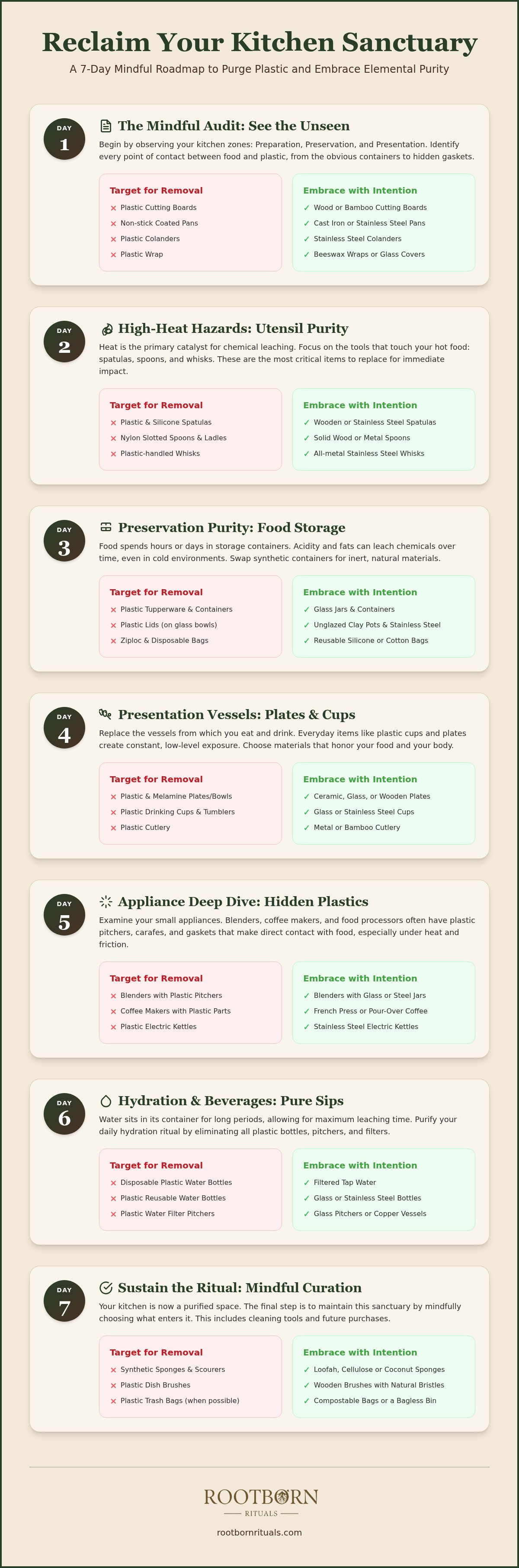
A 7-Day Mindful Roadmap to a Purified Culinary Sanctuary
Transformation requires a steady, rhythmic approach. To truly understand how to remove plastic from kitchen environments, we must view the process as a week-long ceremony of purification rather than a frantic chore. This phased roadmap allows you to honor the transition, ensuring each change is intentional and permanent. By breaking the process into daily focuses, you can manage the shift without the overwhelm of a total overhaul.
- Day 1-2: The High-Heat Purge. Begin where the risk is highest. Clear your stove area of non-stick pans and plastic utensils. These items are the most urgent to replace with unglazed clay or stainless steel, as they're the primary sources of chemical leaching during cooking.
- Day 3-4: The Preservation Shift. Audit your cold storage. Transition leftovers from plastic containers into glass vessels and wooden bowls. This ensures your food remains vital and free from synthetic interference.
- Day 5-6: The Hydration Ritual. Reclaim the purity of your water. Replace every plastic bottle with copper carafes or clay jugs. This shift supports your body's natural detoxification and honors the water that sustains you.
- Day 7: The Cleaning Cleanse. Address the tools used for care. Swap synthetic sponges and plastic brushes for natural fiber alternatives like coconut husk or sisal.
Managing the Transition Without Waste
Reclaiming your space doesn't mean contributing to environmental burden. We advocate for a "slow replacement" philosophy. If a plastic item isn't currently posing a high-heat risk, use it for non-food purposes until you find the perfect natural successor. Repurpose old containers for organizing garden seeds or garage hardware. This measured pace is the most effective way to learn how to remove plastic from kitchen spaces while maintaining a sense of peace. By waiting for the right tool, you avoid the trap of modern consumerism and ensure you only invite items of true meaning into your sanctuary. Focus on quality over quantity; it's better to have one exceptional clay pot than a dozen mismatched synthetic pans.
Establishing New Maintenance Rituals
Natural materials require a different kind of attention, one that rewards you with longevity and beauty. Hardwood utensils and boards benefit from a monthly application of organic oils to maintain their suppleness and antimicrobial properties. Unglazed clay thrives when allowed to breathe and occasionally dry in the sun, a practice that naturally purifies the material. Natural care rituals deepen your connection to your tools, transforming them from mere objects into cherished companions of your daily life. To begin your journey toward a more intentional home, explore our Hydration & Detox Rituals to find vessels that honor your well-being.
Sustaining the Ritual: Curating a Lifetime of Plastic-Free Living
The journey of how to remove plastic from kitchen spaces is not a finite project with a clear end date. It is a fundamental shift in how you relate to the objects that populate your home. To sustain this commitment, you must move away from a consumer mindset, which prioritizes impulsive acquisition, toward a curator mindset. A curator does not simply buy; they invite. Every vessel, spoon, and carafe is vetted for its material integrity and its ability to support your family's vitality. By choosing only items of profound meaning and elemental purity, you ensure that your kitchen remains a sanctuary rather than a repository for transient, synthetic clutter.
This intentionality naturally flows from the kitchen into every other area of holistic living. When you begin to value the tactile warmth of wood and the cooling breath of clay, your tolerance for the artificial fades. You may find yourself seeking the same purity in your linens, your cleansing rituals, and your daily rhythms. The kitchen serves as the foundation for this transformation. It's where you establish the standards for what is allowed to touch your body and nourish your soul. By integrating mindful dining essentials into your home, you create a physical environment that reinforces your spiritual and physical goals every single day.
Investing in Timelessness
Handcrafted, sustainable tableware is more than a functional necessity; it's an investment in your family's heritage. Unlike plastic, which is designed to be discarded, materials like unglazed clay and solid hardwood are built for lineage. They are meant to be passed down. To protect this investment, you must learn to identify the "greenwashing" trap. Many products marketed as eco-friendly are actually composite materials held together by synthetic resins or "bioplastics" that still pose leaching risks. True purity is found in the singular. Look for solid wood, unglazed earth, and pure metals. There is a deep, aesthetic peace that comes from a kitchen filled with earth-toned, organic textures. These materials don't just look better; they feel better, resonating with a frequency that modern synthetics can never replicate.
Your Invitation to Purity
We invite you to treat this transition as a gentle, evolving practice. It doesn't require perfection overnight, but it does require a consistent, reverent focus on the materials you interact with daily. RootBorn Rituals acts as a bridge between the ancient wisdom of our ancestors and the complexities of your modern kitchen. We've carefully vetted every material to ensure it aligns with the highest standards of health and environmental stewardship. As you continue to refine your culinary sanctuary, we invite you to explore our curated Plastic-Free Plates and Bowls to begin your table transformation. Every pure choice you make today is a gift to your future self and the generations that will follow in your footsteps.
Reclaiming the Heart of Your Home
Reclaiming your kitchen as a sanctuary of health is a profound act of self-care that resonates through every meal you prepare. By following a structured roadmap and embracing the wisdom of elemental materials, you've begun the vital work of returning your home to its natural state. Learning how to remove plastic from kitchen environments isn't just about clearing cupboards; it's about making a permanent commitment to your family's long-term vitality. You've discovered that the path to purity lies in the intentional replacement of synthetic hazards with tools that honor ancestral traditions.
This journey is supported by our Pure Ancestral Cooking Collection, which focuses on toxin-free, unglazed clay and handcrafted tools designed for lifelong wellness. We're dedicated to providing 100% plastic-free materials that bridge the gap between ancient heritage and modern safety. Every clay pot and wooden spoon you invite into your home becomes a heritage piece that serves your well-being today and for generations to come. It's a shift from transient convenience to lasting substance.
Reclaim your kitchen's purity with RootBorn Rituals and begin your transformation into a more grounded, intentional way of living. Your sanctuary is waiting.
Frequently Asked Questions
Is it safe to suddenly stop using all plastic in my kitchen?
It's entirely safe and highly beneficial to stop using plastic immediately; however, many find a gradual transition more sustainable. Focus first on tools that touch high heat, as these pose the greatest risk for chemical leaching. By following a methodical roadmap, you learn how to remove plastic from kitchen spaces without feeling overwhelmed by the change. This steady progression allows you to curate a collection of high-quality, elemental tools that serve your health for a lifetime.
How do I replace plastic wrap for food storage effectively?
Replacing plastic wrap is a simple yet profound shift toward table wellness. You can effectively preserve the life force of your ingredients by using glass vessels with wooden lids or organic cotton wraps infused with beeswax. These alternatives allow your food to breathe while maintaining an airtight seal. Exploring our Natural Preservation Essentials provides you with beautiful, functional tools that keep your nourishment pure without the need for synthetic, single-use shrouds.
What is the best material for non-toxic cooking if I'm a beginner?
Unglazed organic clay is the gold standard for those beginning a non-toxic cooking journey. It's a forgiving, living material that naturally balances the acidity in your food and enhances its nutritional profile. Unlike synthetic non-stick coatings, clay develops its own natural release surface through the ritual of seasoning with organic oils. It offers a sensory, grounded experience that transforms the act of meal preparation into a sacred practice of wellness.
Can I use wood and clay in the dishwasher?
You should never place unglazed clay or hardwood tools in a dishwasher. The combination of intense heat, high-pressure water, and abrasive detergents will strip the natural oils from wood and compromise the structural integrity of clay. Instead, treat these items with a gentle hand-washing ritual using mild, natural soaps. This mindful care ensures your heritage pieces remain beautiful and functional, deepening your connection to the tools that nourish your family.
How do I know if my 'eco-friendly' kitchen tools are actually plastic-free?
Identifying truly plastic-free tools requires a discerning eye for material composition. Many "eco-friendly" items are actually composites made of plant fibers held together by synthetic resins or melamine, which can still leach chemicals. Look for declarative statements of purity and prioritize solid, single-material items like hand-carved wood or pure clay. At RootBorn Rituals, we ensure every piece in our collections is vetted to meet the highest standards of ancestral purity and health.
What should I do with the old plastic containers I'm removing?
When you decide how to remove plastic from kitchen environments, the goal is to prevent these materials from entering your body, not just the landfill. Repurpose old containers for non-food storage, such as organizing heirloom seeds, craft supplies, or small hardware in the garage. If the items are beyond use, research specialized recycling programs in your area that handle specific polymer types. This mindful disposal honors the earth while purging synthetic influence from your culinary sanctuary.
Are microplastics really that harmful in the kitchen?
Microplastics are a significant concern because they act as persistent endocrine disruptors once they enter the body. Every scratch on a plastic cutting board or heat cycle in a synthetic container releases thousands of microscopic particles into your food. These particles don't simply pass through; they can accumulate in tissues and interfere with delicate hormonal balances. Choosing elemental materials like wood and stone eliminates this invisible threat, ensuring your nourishment remains untainted and pure.
How much does it cost to fully transition to a plastic-free kitchen?
The cost of transitioning depends entirely on your pace and the depth of your curation. While high-quality materials like copper and organic clay represent an upfront investment, they're designed to last a lifetime rather than being replaced every few years. By focusing on quality over quantity, you avoid the hidden costs of disposable culture. Investing in a few essential heritage pieces creates a foundation of wellness that pays dividends in health and peace of mind for generations.


