


The most profound healing often begins not with what we add to our plates, but with the vessel that holds the flame. While we carefully curate organic ingredients to protect our vitality, many of us remain unaware that conventional pots may leach lead or cadmium into the very nourishment we seek to provide. It's a quiet contradiction that challenges our pursuit of a truly non-toxic home. Choosing unglazed clay cookware is an intentional act of reclaiming ancestral wisdom for the modern table, ensuring your kitchen honors your health rather than compromising it through hidden chemicals or misleading marketing claims.
In this guide, you'll discover how these porous, earth-born tools restore nutritional integrity to your food and turn every meal into a mindful ceremony. We'll demystify the complexities of natural material care and explore how the Pure & Ancestral Cooking Collection bridges the gap between ancient purity and sophisticated wellness. By the end, you'll understand why clay remains the gold standard for those who view cooking as a sacred stewardship of life. Purity is the ultimate luxury.
Our pick
Ceramic Clay Cooking Pot – Traditional Rice & Broth Pot
From $42.95 · Free worldwide shipping
Buy Now →Key Takeaways
- Transition from industrial convenience to ancestral purity by understanding why earth-born materials remain the only choice for a truly non-toxic kitchen.
- Explore the science of porosity and how unglazed clay cookware regulates heat and moisture to preserve the vital, water-soluble nutrients in every meal.
- Discern the critical differences between inert clay and reactive metals, protecting your body from potential leaching and iron-overload concerns.
- Embrace the meditative ritual of seasoning and cleaning your vessels with gentle, chemical-free techniques that respect the life of the material.
- Elevate your daily environment by weaving the Pure & Ancestral Cooking Collection into a holistic wellness architecture that honors both health and heritage.
The Essence of Unglazed Clay Cookware: Returning to Ancestral Purity
The foundation of a mindful home rests upon the materials we choose to invite into our most sacred spaces. Unglazed clay cookware represents a return to a time when our tools were as living as the food they prepared. Unlike modern alternatives that rely on complex synthetic coatings, these vessels are born directly from the earth. They're crafted from organic soil and fired to a state of durable grace, maintaining a connection to the landscape that produced them. This is not just a tool; it's a piece of the planet's history sitting on your stovetop.
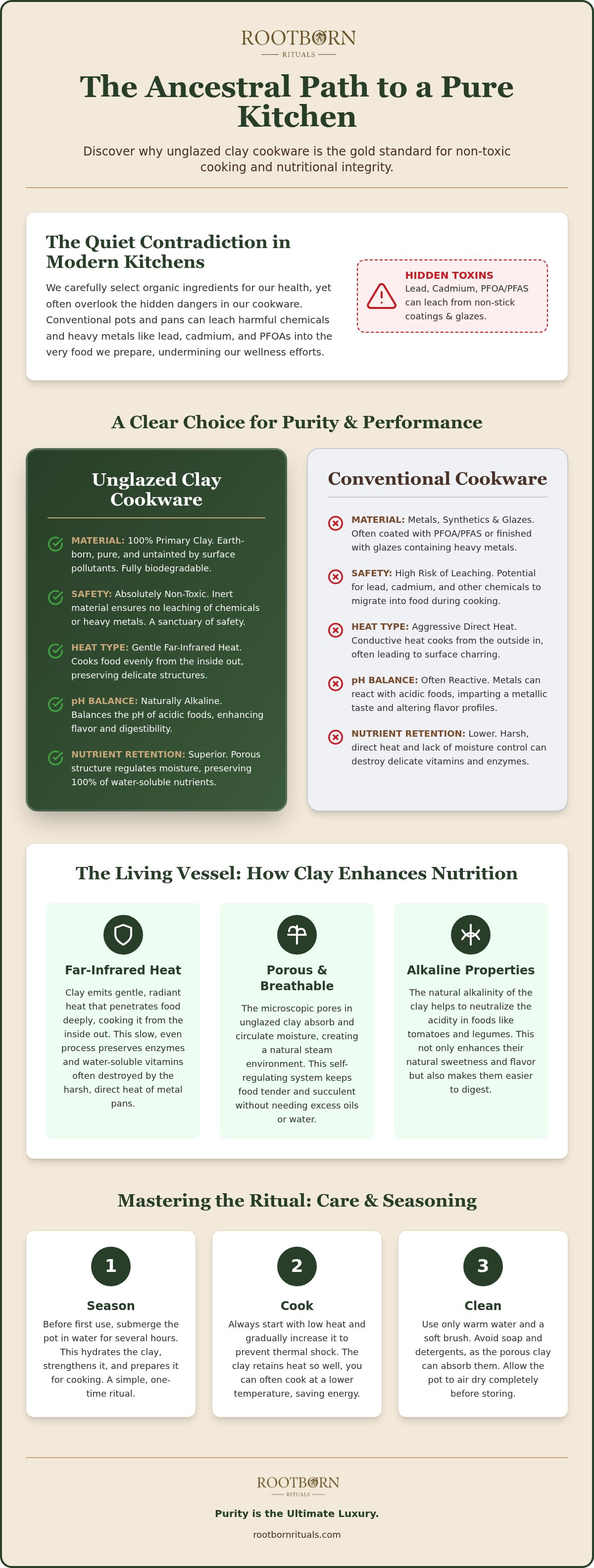
Choosing "unglazed" is a deliberate decision for absolute purity. Most commercial ceramics are finished with glass or chemical glazes that seal the natural pores of the material. While these finishes offer a glossy aesthetic, they often introduce heavy metals like lead or cadmium into the cooking process. This ancient cooking method relies on the clay's inherent breathability to circulate steam and heat with a gentleness that metal cannot replicate. When we cook in unglazed vessels, we participate in a cycle of environmental harmony. These tools are fully biodegradable, eventually returning to the earth as quietly as they arrived.
The Purity of Primary Clay
The distinction between primary clay and mass-produced earthenware is fundamental to your vitality. Primary clay is sourced from deep within the earth, remains untainted by surface pollutants, and possesses a unique molecular structure. When heat is applied, the unglazed surface interacts with food by neutralizing acidity and enhancing the natural sweetness of ingredients. Because the Pure & Ancestral Cooking Collection focuses on 100% organic materials, you don't have to worry about the PFOAs or PFAS found in traditional non-stick pans. It's a sanctuary of safety in a world of confusing "non-toxic" marketing claims.
A Ritualistic Approach to the Kitchen
Adopting these vessels requires a shift in consciousness. We move away from the frantic pace of modern life toward a state of intentional nourishment. There's a profound sensory delight in the process: the subtle aroma of earth meeting fire, the rhythmic sound of a slow simmer, and the weighted presence of the pot in your hands. This practice grounds the home environment in a sense of tranquility. It transforms a daily task into a quiet ceremony, reminding us that the way we prepare our food is just as vital as the food itself. Quality always takes precedence over convenience.
The Living Vessel: How Unglazed Clay Transforms Nutritional Integrity
The true brilliance of unglazed clay cookware lies in its ability to act as a living extension of the ingredients themselves. Unlike inert metals, clay is biologically active. It breathes. This breathability allows for a unique exchange where the vessel regulates moisture and temperature with a precision that modern machinery struggles to match. When you place a clay pot over a flame, you're not just heating food; you're initiating a sophisticated thermal process that honors the biological structure of your nourishment.
One of the most remarkable benefits is the material's natural alkalinity. Earth is inherently alkaline, and as it interacts with heat, it works to balance the pH levels of acidic foods. Ingredients like tomatoes, legumes, and certain grains become easier to digest and more flavorful as their acidity is softened by the vessel. While many brands use "non-toxic" as a vague marketing term, it is essential to ensure your pottery adheres to strict FDA safety standards. This verification ensures that the porous surface remains a gateway for health rather than a source of heavy metal leaching.
Far-Infrared Heat and Nutrient Density
Clay possesses a high thermal inertia, meaning it absorbs and retains heat with incredible efficiency. More importantly, it emits far-infrared heat. This is a gentle, deep-penetrating radiant energy that cooks food from the inside out. Unlike the aggressive, direct heat of stainless steel or cast iron, far-infrared energy prevents the surface charring that often destroys delicate water-soluble vitamins and enzymes. Proteins cooked in clay remain tender and structurally intact, retaining their moisture and vital essence through a slow, rhythmic simmer.
The Porous Nature of Health
The microscopic pores within the clay walls create a self-regulating moisture ecosystem. As the pot heats, water trapped within the pores is released as steam, creating a natural "steam-lock" under the lid. This environment allows you to reduce or even eliminate the need for excess fats and oils, as the food bastes in its own juices. It effectively creates a convection-like environment that circulates heat evenly without the need for fans or mechanical intervention. By choosing the Pure & Ancestral Cooking Collection, you're investing in a tool that prioritizes nutritional density over industrial speed, ensuring that every meal supports your personal vitality and long-term wellness.
Beyond Modern Convenience: Comparing Clay to Conventional Cookware
Modern kitchens often prioritize speed over sanctity. We've traded the slow, rhythmic pulse of heritage cooking for the aggressive efficiency of industrial metals and synthetic coatings. While stainless steel and cast iron are celebrated for their durability, they introduce a set of biological compromises that unglazed clay cookware gracefully avoids. Choosing unglazed clay cookware isn't just about changing a pot; it's about opting out of a culture of disposable convenience and embracing a more intentional, slow-living philosophy.
Stainless steel, though seemingly inert, is actually reactive under high heat and acidity. When you simmer a tomato-based sauce or a citrus reduction, the metal can leach nickel and chromium into your food. Cast iron, while natural, presents its own challenges. Its extreme weight makes it cumbersome for daily rituals, and for those sensitive to iron-overload, the constant leaching of metallic iron can be a legitimate health concern. Unlike these metals, clay provides a neutral environment where the flavor of the ingredient is the only thing that remains. It doesn't compete with your food; it cradles it.
The hidden dangers of non-stick coatings are perhaps the most concerning. These pans rely on PFAS, often called "forever chemicals," that can begin to degrade at high temperatures. As of August 2025, the FDA has increased its scrutiny of these materials, issuing warnings about the risks of chemical shed and heavy metal leaching in imported kitchenware. Clay offers a naturally non-stick experience through proper seasoning, without the need for toxic polymers or the risk of microplastic contamination in your meals.
The Reactivity Debate
Understanding the difference between inert and reactive materials is vital for a non-toxic home. Metals are inherently reactive, meaning they respond to the chemical composition of your food. In contrast, organic clay is a stable, earth-born material that remains neutral. This is especially important when considering the FDA guidance on lead in pottery, which highlights how traditional glazes can pose risks. By choosing unglazed vessels, you remove the glaze and the risk entirely, ensuring your kitchen remains a sanctuary of purity.
Durability and Longevity
There's a common misconception that clay is too delicate for the modern world. While it requires a more mindful touch than a steel pan, a well-cared-for clay vessel can last for generations. It matures with use, becoming more resilient and seasoned over time. Compare this to the lifecycle of a non-stick pan, which often ends up in a landfill after only a year or two as its coating begins to flake. Clay is an investment in both your health and the planet's future, representing a generational value that modern disposables can't match.
Mastering the Ritual: Seasoning and Caring for Your Primary Clay
Caring for unglazed clay cookware is an invitation to slow down and honor the materials that sustain us. It's a partnership that requires patience, moving away from the "scrub and store" mentality of modern stainless steel. By treating your vessel with reverence, you ensure its longevity and maintain the absolute purity of your kitchen environment. This process isn't a chore; it's a foundational ritual that grounds your daily life in the rhythms of nature.
The First Seasoning Ceremony
The first seasoning ceremony is the moment the clay transitions from a crafted object to a functional tool. Begin by immersing the vessel in clean, cool water for twenty-four hours. This allows the pores to saturate, preparing them for the expansion of heat. After drying the surface, gently massage the clay with a high-quality organic oil. Place the pot in a cold oven and gradually increase the temperature to a low heat, allowing the oil to bond deeply with the earth. Your first meal should be a gentle, liquid-based offering like a slow-simmered porridge or bone broth. Over time, the clay will develop a deep, rich patina. This darkening is a visual record of the nourishment you've provided for your home, marking the pot's evolution into a seasoned heirloom.
Natural Cleaning Practices
Because of the microscopic porosity inherent in natural earth, synthetic detergents have no place in a mindful kitchen. The clay will absorb chemical scents and artificial flavors, compromising the integrity of every subsequent meal. Instead, use hot water and a natural fiber brush to remove residue. For deeper cleansing rituals, a paste of baking soda or sea salt provides a gentle abrasive action without introducing toxins. Always ensure the vessel is completely dry before storage. If moisture remains trapped in the pores, it can lead to mildew, violating the sanctity of the vessel. Store your pots in a well-ventilated area where they can continue to breathe between uses. Never stack damp pots, as the lack of airflow disrupts the material's natural balance.
Troubleshooting your cookware is often a matter of returning to these simple, grounded principles. If the clay begins to feel dry, a light re-oiling can restore its suppleness. If an aroma lingers from a particularly fragrant spice, a brief soak with a lemon-water solution will refresh the pores. Mastering these simple rhythms ensures your tools remain as vital as the food they prepare. If you're ready to begin your own journey into intentional nourishment, explore the Pure & Ancestral Cooking Collection to find the vessel that speaks to your home's unique energy.
Cultivating a Mindful Kitchen with the Pure & Ancestral Cooking Collection
The home is a living ecosystem where every choice ripples through our physical and spiritual well-being. By integrating the Pure & Ancestral Cooking Collection into your daily wellness architecture, you do more than upgrade your tools. You establish a foundation for a kitchen that breathes. This collection bridges ancient wisdom with a modern aesthetic, ensuring that your pursuit of purity doesn't require a sacrifice of style. It's about creating a space where the act of preparing a meal is as restorative as the nutrients themselves. Inviting these earth-born vessels into your home is a quiet rebellion against the frantic pace of the outside world.
Choosing unglazed clay cookware is a central pillar of this transition toward a plastic-free life. It eliminates the risk of chemical off-gassing and microplastic shedding that often accompanies modern non-stick surfaces. This choice reflects a deep commitment to personal vitality and planetary health. It transforms the heart of the home into a sanctuary of safety and peace. Every time you lift the lid of a clay pot, you're participating in a ritual that honors the earth's natural rhythms. The cumulative health impact of removing synthetic materials from your cooking process is a profound gift to your future self.
Curating Your Collection
Building a mindful kitchen is a journey of curation rather than accumulation. For those beginning this path, a versatile primary pot and its natural lid are the essential starting points. These pieces adapt to a range of ancestral recipes, from slow-simmered grains to nutrient-dense stews. As you interact with these vessels, you'll find they naturally complement a holistic pantry filled with whole, organic ingredients. Your kitchen becomes a reflection of your values, where every object has a purpose and a story. The presence of unglazed clay cookware on your counter serves as a visual reminder to stay grounded in your wellness goals.
The RootBorn Promise
Our commitment extends beyond the physical object. It's a dedication to ethically sourced, organic materials that support a life of intentionality. We believe that slow living is the antidote to the frantic pace of modern existence. Every vessel in our collection is vetted to ensure it aligns with the highest standards of purity and sustainability. We invite you to slow down and consider the significance of the objects you touch every day. It's time to reclaim the sanctity of your table and the health of your lineage. Explore the Pure & Ancestral Cooking Collection and begin your transition to a more reverent way of living.
Reclaiming the Ancestral Hearth
The journey toward a truly non-toxic home is paved with intentional choices that honor both our heritage and our physical health. By embracing unglazed clay cookware, you've chosen to move beyond the compromises of modern industrial metals and reactive coatings. You've recognized that the vessel is just as vital as the ingredients it holds. This transition restores the biological integrity of your nourishment while grounding your kitchen in a sense of sanctuary and peace.
The Pure & Ancestral Cooking Collection represents our unwavering commitment to this path. Each piece is crafted from 100% organic primary clay, ensuring a plastic-free and eco-conscious environment for your family's vitality. These hand-curated tools are designed for the mindful curator who views daily living as a sacred ceremony. It's time to let the earth's natural wisdom guide your culinary rituals and transform your table into a place of holistic wellness.
Elevate your kitchen ritual with the Pure & Ancestral Cooking Collection
Your commitment to purity is a profound legacy for your home and the world around you.
Frequently Asked Questions
Is unglazed clay cookware safe for all stovetops, including induction?
Unglazed clay cookware is ideally suited for gas and electric stovetops but requires an induction interface disk for magnetic surfaces. Because clay is a non-metallic, organic material, it doesn't naturally trigger induction heating elements. We recommend starting on a low flame and gradually increasing the heat to allow the vessel to expand naturally. This patient approach respects the material's integrity and ensures a consistent, gentle cooking environment for your most delicate ingredients.
Does unglazed clay contain lead or other heavy metals?
Pure, unglazed clay is naturally free from the lead and cadmium often found in synthetic ceramic glazes. By choosing items from the Pure & Ancestral Cooking Collection, you're opting for 100% organic primary clay that hasn't been treated with industrial chemicals. We prioritize absolute purity, ensuring our vessels meet rigorous safety standards. This eliminates the fear of heavy metal leaching, providing a safe sanctuary for your family's daily nourishment and long-term wellness.
How do I prevent my unglazed clay pot from cracking or thermal shock?
Preventing thermal shock requires a mindful transition between temperature extremes. You should always place your clay pot on a cold stovetop or in a cold oven, allowing it to heat up slowly alongside the burner. Never place a hot vessel on a cold stone countertop or submerge it in cool water immediately after cooking. Using a wooden trivet or a folded cloth provides a gentle landing spot that preserves the structural harmony of the earth-born material.
Do I need to soak my clay pot in water every time I cook?
You don't need to soak your pot for twenty-four hours after the initial seasoning, though a brief five-minute immersion is beneficial. This quick ritual allows the pores to absorb a small amount of moisture, which then releases as steam during the cooking process. This natural moisture regulation is what creates the "steam-lock" effect, preserving water-soluble nutrients without the need for added fats. It's a simple step that enhances the nutritional integrity of every meal.
Can I use soap or detergents to clean my unglazed cookware?
You should never use synthetic soaps or detergents on your unglazed clay cookware. The microscopic pores that allow the clay to breathe will also absorb chemical fragrances and artificial surfactants, which can then leach into your food. Instead, use hot water and a brush made of natural fibers to cleanse the surface. For deeper cleaning, a simple paste of baking soda or sea salt provides an effective, non-toxic alternative that respects the vessel's purity.
What is the best way to season a new unglazed clay pot?
The best way to season a new vessel is a slow, multi-day ritual of hydration and tempering. Begin by soaking the pot in clean water for twenty-four hours, followed by a thorough drying and a gentle massage with organic oil. Heating the oiled pot slowly in a low oven bonds the fats to the clay, creating a naturally non-stick surface. This foundational ceremony prepares the 100% organic materials for a lifetime of service in your mindful kitchen.
Why does food taste different when cooked in unglazed clay?
Food tastes different because clay actively balances the pH levels of your ingredients while preserving their natural essences. The alkaline nature of the earth softens the harsh acidity of tomatoes and legumes, creating a more rounded, sophisticated flavor profile. Additionally, the far-infrared heat penetrates deeply without charring, allowing the innate sweetness of vegetables and proteins to emerge. It's a sensory experience that reflects the ancestral purity of the cooking process itself.
How long does unglazed clay cookware typically last with regular use?
With reverent care, unglazed clay cookware can serve your home for generations. While modern non-stick pans often fail within two years, a well-seasoned clay vessel actually improves and becomes more resilient with age. Its longevity depends on your commitment to gentle cleaning and gradual heating. By treating these tools as generational heirlooms rather than disposable commodities, you establish a permanent connection to the timeless traditions of ancestral nourishment and sustainable living.
Ready to buy?
Ceramic Clay Cooking Pot – Traditional Rice & Broth Pot
From $42.95 · Free worldwide shipping
Buy Now →


