


What if the very vessel you use to nourish your family is silently stripping the vitality from your ingredients? For those who walk a path of deep intentionality, the modern kitchen often presents a distressing paradox. You source the finest organic harvests and heritage meats, yet these life-giving foods are frequently subjected to the chemical realities of non-stick coatings and heavy-metal glazes. Transitioning to pure & ancestral cooking isn't just a return to tradition. It's a necessary reclamation of the sanctity of our domestic spaces and a commitment to the long-term vitality of those we love.
You likely feel the weight of this responsibility and the confusion that follows it. Choosing between various earthen materials can feel daunting, and the worry that traditional tools are too fragile for a modern life often keeps the most well-intentioned cooks at a distance. This guide serves as your mindful curator. You'll discover how to select unglazed clay that breathes with your food, protecting your home from microplastics and PFOAs while enhancing the nutrient density of your meals. We'll walk through the nuances of sourcing authentic vessels and the simple rituals of care that ensure these tools remain your companions for a lifetime.
Key Takeaways
- Understand why unglazed organic clay is the gold standard for purity, offering a biological harmony that modern coated cookware cannot replicate.
- Learn to align your kitchen with the principles of pure & ancestral cooking by selecting vessels that breathe and protect food from modern toxins.
- Discover how to match specific vessel forms and capacities to your unique culinary rituals, from slow-simmered stews to traditional ferments.
- Explore the essential tools within our curated 22-piece collection, focusing on how the Deep Earthen Stew Pot preserves the vitality of your ingredients.
- Master the sacred seasoning ritual and learn why simple, natural cleaning methods are the only way to honor your earthen cookware's longevity.
The Philosophy of Pure & Ancestral Cooking Tools
The kitchen serves as the heart of the home, a sanctuary where we transmute the gifts of the earth into the vitality of our families. We often dedicate ourselves to sourcing heritage grains and organic harvests, yet we rarely consider the energetic and physical impact of the vessels that hold them. In the practice of pure & ancestral cooking, the tool is never a mere utility. It is a sacred partner. A vessel should honor the integrity of the ingredients it carries, acting as a guardian of nutrient density rather than a source of contamination.
Modern "convenience" cookware, while marketed for efficiency, often contradicts the very principles of holistic health. These mass-produced items prioritize speed and disposable ease over the slow, rhythmic process of true nourishment. Choosing a vessel from the Pure & Ancestral Cooking Collection isn't just a purchase. It's a return to heritage. It's an intentional choice to treat the domestic environment with the gravity it deserves, ensuring that every meal is a ritual of restoration.
Beyond Non-Stick: The Hidden Cost of Modern Surfaces
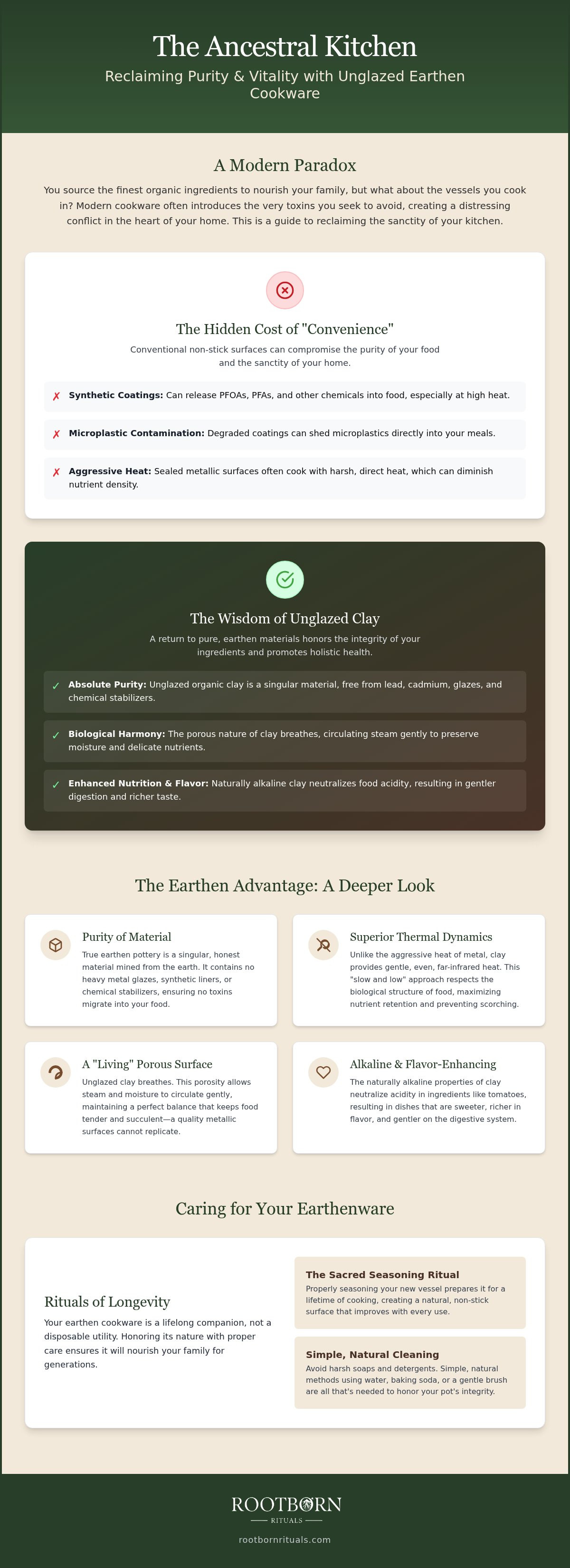
Synthetic coatings have become the standard in the contemporary kitchen, yet they carry a heavy biological price. When conventional pans are subjected to high heat, they can release PFOAs, PFAs, and microplastics directly into your food. These substances compromise the purity of your ingredients and disrupt the sanctity of your home. Transitioning away from these materials is a profound act of care for your family's long-term wellness. If you're ready to begin this reclamation, we invite you to explore our resource on switching from non-stick to clay.
The Biological Wisdom of Porous Materials
The history of cooking vessels reveals that unglazed organic clay has always been the preferred medium for those in harmony with nature. Unlike the sealed, aggressive heat of metal, unglazed clay is a living material. It breathes. This porosity allows steam to circulate gently, maintaining a moisture balance that metallic surfaces simply cannot replicate. Because clay is naturally alkaline, it works to neutralize the acidity in your ingredients, resulting in food that is gentler on the digestive system and richer in flavor. This material encourages a "slow and low" approach to heat, a method that respects the biological structure of your food and ensures maximum nutrient retention.
Materials of the Ancients: Why Unglazed Organic Clay Reigns Supreme
Unglazed organic clay is a primary, earth-mined material that remains in its most elemental state, entirely free from the heavy metal glazes and chemical stabilizers found in conventional kitchenware. Within the philosophy of pure & ancestral cooking, the material of the pot is as vital as the quality of the seed. While modern "ceramic-coated" cookware often relies on a metallic core sprayed with a thin, synthetic layer of silica, true earthen pottery is a singular, honest material. It doesn't rely on a temporary barrier to protect your food; the earth itself is the vessel. This purity ensures that no lead, cadmium, or hidden toxins ever migrate into your heirloom grains or pasture-raised meats. Instead, the porous nature of the clay preserves the natural oils and delicate moisture that define high-quality ingredients, allowing their true essence to remain uncompromised.
The Purity of Unglazed vs. Glazed Pottery
Many are drawn to the vibrant colors of glazed ceramics, yet these finishes often hide a troubling reality. Colorful glazes frequently require chemical stabilizers and heavy metals to achieve their luster and durability. Even when labeled as safe, the integrity of these coatings can degrade over time under the stress of high heat. The FDA guidance on pottery safety highlights the risks of lead leaching from improperly manufactured traditional vessels, a concern that disappears when you choose verified, raw materials. Beyond safety, there is a profound sensory experience in working with raw earth. The subtle aroma of rain on dry soil that arises when the pot first meets water connects you to the ritual of the meal in a way that sterile, glazed surfaces never can. You can explore more about why unglazed clay cookware remains the gold standard for those seeking absolute purity.
Thermal Dynamics of Ancestral Earthenware
Clay possesses unique thermal properties that modern metals cannot replicate. It emits far-infrared heat, which penetrates food deeply and evenly, cooking from the inside out. This gentle energy preserves the biological structure of your ingredients, preventing the nutrient loss associated with aggressive, conductive heat. Traditional clay lids are designed to create a "steam lock" effect, where moisture rises, condenses, and falls back onto the food, self-basting the meal in its own juices. This process is far more delicate than the heavy, pressurized environment of enameled cast iron. When comparing Le Creuset vs Clay Cookware, the choice becomes one of purity over mere performance. Choosing these ancestral tools is a quiet declaration that your family's health is worth the investment of time and intention.
Selecting Your Sacred Vessels: A Guide to Capacity and Form
In a world of excessive kitchen clutter, the path of pure & ancestral cooking invites us to return to a place of discernment. Modern retail often encourages the acquisition of expansive 12-piece sets, yet most of these items remain untouched, gathering dust in the shadows of our cabinets. True culinary wisdom lies in a curated collection of three or four versatile pieces that serve as the foundation for every nourishing ritual. Each vessel should be chosen with a specific intention, allowing you to build a deep, tactile relationship with the tool over years of daily use. When you hold a handcrafted earthen pot, its weight and presence speak to a heritage of quality that mass-produced metal simply cannot match. These ergonomics are a reflection of how the human body naturally interacts with the earth, turning the act of cooking into a grounded, physical meditation.
Understanding capacity is equally vital. For those practicing solo rituals or small family meals, a medium-sized pot allows for the efficient concentration of heat and flavor. Conversely, larger gatherings require vessels that can hold the energetic and physical volume of a shared feast. By choosing fewer, higher-quality tools that match your specific lifestyle, you create a kitchen space that feels intentional rather than overwhelmed.
The Ancestral Stew Pot: The Heart of the Kitchen
Deep, rounded geometry is the essential form for any kitchen dedicated to longevity. These curves aren't merely aesthetic; they facilitate a continuous, gentle convection of heat that is necessary for long-simmered bone broths and heritage grain porridges. As moisture rises, condenses on the lid, and falls back into the center, the vessel self-bastes the ingredients, ensuring every mineral and nutrient is preserved. This steady, protective thermal environment is also why these earthen pots are the premier choice for safe cookware for baby food. Protecting the next generation begins with the purity of the pot, ensuring that the first foods a child encounters are free from the metallic leaching and chemical interference of modern surfaces.
Fermentation Jars and Natural Preservation
Preserving the harvest requires a material that respects the life within it. Unglazed clay is naturally insulating, providing the stable, cool temperatures necessary for beneficial probiotics to thrive during the fermentation process. While plastic containers can leach chemicals and metal can react with the acids produced by healthy bacteria, earthen jars remain inert and protective. Selecting items from the Natural Preservation Essentials collection allows you to create a pantry that breathes, keeping your ferments and dry goods in a state of quiet, natural stasis. These vessels act as guardians of the microbiome, honoring the ancient partnership between soil, food, and human health.
Standout Essentials from the Pure & Ancestral Collection
Our curated selection of 22 essential ancestral tools isn't a mere inventory of kitchenware. It's a vetted gathering of functional ritual objects designed to support the practice of pure & ancestral cooking in the modern home. Each item has been selected for its ability to honor the integrity of your ingredients while protecting your family's vitality. The cornerstone of this assembly is the Deep Earthen Stew Pot, a vessel specifically engineered for the slow extraction of minerals in bone broths and the gentle hydration of heritage grains. Complementing this is the Ancestral Water Vessel, which utilizes the natural evaporative cooling of unglazed clay to provide hydration that is both purified and energetically alive. These pieces serve as a bridge between ancient wisdom and sophisticated living.
Artisanal Utensils and Natural Care
Metal utensils should never touch the surface of an unglazed clay pot. The aggressive nature of steel can scratch the raw earth, compromising the seasoned barrier you've worked to build. Instead, we favor hand-carved wooden utensils crafted from sustainable hardwoods. These tools offer a soft, resonant interaction with the clay, ensuring the vessel's longevity. Unlike plastic or silicone, wood is a living material that ages with grace. Over years of use, these spoons and spatulas develop a unique patina, absorbing the oils and stories of the meals they help create. Choosing wooden tools is a commitment to maintaining the sanctity of your earthen surfaces and the purity of your food.
Building Your Starter Ancestral Set
You don't need a cluttered kitchen to achieve culinary excellence. Investing in quality over quantity is a foundational principle of a mindful home. We suggest beginning with the "Essential Three": a versatile stew pot, a fermentation jar, and a well-balanced wooden spoon. This trio provides the necessary foundation for most traditional preparation methods, from long-simmered stews to probiotic-rich ferments. As you become more attuned to the rhythms of your kitchen, you can expand your collection to include more specialized tools. We invite you to explore the full Pure & Ancestral Cooking Collection to find the pieces that resonate with your unique path. These vessels are more than just tools; they are an investment in the long-term vitality of your household.
Discover the difference of earth-born tools by browsing the Pure & Ancestral Cooking Collection today.
Caring for Your Ancestral Cookware: Rituals of Longevity
The relationship you build with your earthen vessels doesn't end when the meal is served. In the practice of pure & ancestral cooking, the care of your tools is an extension of the nourishment they provide. Unlike modern metal pans that are treated with aggressive chemicals and abrasive pads, unglazed clay requires a rhythmic, gentle touch. This maintenance isn't a domestic chore; it's a meditative ritual that honors the material and ensures the vessel remains a sacred part of your home for generations. By treating these objects with the gravity they deserve, you preserve their biological integrity and the vitality of every ingredient they hold.
The Seasoning Ceremony
Before an earthen pot first meets the flame, it must undergo a foundational seasoning. This process bonds the cook to the vessel, preparing the porous walls for the heat of the kitchen. You begin by submerging the clay in water, allowing it to drink deeply before applying a thin coat of high-quality natural oil. When introduced to low, steady heat, the oil penetrates the pores to create a resilient, non-stick barrier. Once the first seasoning is complete, the raw, pale earth transforms into a deep, lustrous amber that signals its readiness to hold life-giving meals. It's vital to respect the thermal nature of the earth by introducing temperature changes gradually. Never move a cold pot onto a high flame, as earthen materials require a slow expansion to maintain their structural harmony.
Natural Cleaning and Maintenance
Conventional dish soaps are the enemy of unglazed clay. Because the earth remains porous throughout its life, it will absorb synthetic fragrances and chemical surfactants, which then leach into your next preparation. Instead, embrace the purity of hot water combined with salt or baking soda. These natural abrasives lift food particles without compromising the seasoned surface you've worked to cultivate. Hand-washing becomes a moment of quiet reflection, a physical closing of the culinary ritual. After rinsing, air-drying is essential to prevent moisture from becoming trapped within the walls of the vessel. Whenever possible, place your cookware in the direct path of the sun. Solar rays act as a natural sanitizer, purifying the clay and refreshing its energetic state. Between uses, store your vessels in a well-ventilated space without the lids tightly sealed, allowing the material to breathe as nature intended. We invite you to curate your own sanctuary of health by exploring the RootBorn Rituals Cookware collection, where every piece is a commitment to a lifetime of mindful nourishment.
Reclaiming the Sanctity of Your Kitchen
The journey toward a more intentional home begins with the objects we touch every day. By choosing unglazed, earth-mined clay, you're rejecting the chemical compromise of modern convenience in favor of a 100% plastic-free and non-toxic environment. These vessels don't just hold your food; they honor the biological integrity of every ingredient and protect your family's long-term vitality. Embracing the rituals of seasoning and natural care transforms the domestic space into a sanctuary of health.
As you step into the practice of pure & ancestral cooking, remember that each handcrafted tool is an investment in a slower, more purposeful way of being. You're not just buying cookware; you're curating a collection of functional ritual objects designed for mindful living. We invite you to Shop the Pure & Ancestral Cooking Collection and discover the profound impact of tools born from the earth itself. Your kitchen is a sacred space, and it's time your vessels reflected that truth.
Frequently Asked Questions
Is unglazed clay cookware safe for use on modern gas and electric stoves?
Yes, unglazed clay is compatible with gas and electric stoves when handled with care. You should always use a heat diffuser on electric glass or coil tops to ensure even heat distribution. Start with a low flame and increase it slowly over several minutes. This gradual approach respects the material's thermal properties. Avoid sudden temperature spikes to maintain the integrity of your vessels during your pure & ancestral cooking rituals.
Do I need to season my clay pot every time I use it?
You only need to perform the full seasoning ceremony once before the first use. After that, your pot develops a natural, non-stick patina through regular contact with oils and heat. If the surface begins to look parched after many uses, you can rub a small amount of oil into the clay. This ongoing relationship ensures your cookware ages with grace and continues to protect the vitality of your ingredients.
Can unglazed clay cookware be used in the oven?
Unglazed clay cookware is perfectly suited for oven use and excels at slow roasting or baking heritage grains. To prevent thermal shock, place your vessel into a cold oven and allow it to preheat along with the appliance. This method ensures the clay expands evenly. The porous walls create a unique steam-lock effect that keeps your food moist and flavorful without the need for synthetic additives or plastic wraps.
How do I prevent my clay pot from cracking or breaking?
Preventing cracks requires a mindful approach to temperature transitions. Never place a cold vessel onto a preheated burner or move a hot pot directly onto a cold stone countertop. Always use a wooden trivet or a folded cloth to cushion the pot when it leaves the heat. These simple habits protect the molecular structure of the organic clay, ensuring your sacred vessels remain functional ritual objects for a lifetime.
Is clay cookware really better for nutrient retention than stainless steel?
Clay offers superior nutrient retention compared to stainless steel because it utilizes gentle, far-infrared heat. While metal conducts heat aggressively and can destroy delicate enzymes, clay penetrates food deeply and evenly. Its natural alkalinity also helps neutralize acidity in ingredients. This makes unglazed vessels the gold standard for pure & ancestral cooking, as they preserve the biological essence of your food rather than merely heating it.
How do I clean food that has burnt onto the bottom of a clay pot?
If food adheres to the surface, fill the pot with hot water and add a generous amount of baking soda or coarse salt. Let it soak for several hours to loosen the debris. Use a soft brush or a natural sponge to gently lift the residue. Avoid all synthetic detergents and metallic scrubbers. This chemical-free cleaning method honors the porous nature of the clay and maintains the purity of your kitchen environment.
Are these products lead-free and cadmium-free?
Every piece in our collection is strictly lead-free and cadmium-free. We use only organic, earth-mined clay that remains unglazed to ensure no heavy metals or chemical stabilizers ever touch your food. Many colorful ceramic glazes rely on toxins for their finish, but our commitment to purity means we rely solely on the raw beauty of the earth. You can trust these tools to protect your family's long-term vitality.
What is the best way to store clay cookware in a small kitchen?
Proper storage ensures your vessels remain breathable and free from moisture buildup. In a small kitchen, you can stack pots if you place a clean linen cloth between them to prevent scratching. Always store the lids separately or inverted on top of the pot to allow air to circulate within the vessel. Avoid damp cabinets. Keeping your tools in a dry, ventilated space preserves their sanctity between your daily culinary rituals.
Ready to buy?
Shop Best Sellers
Non-toxic, plastic-free kitchenware · Free worldwide shipping
Buy Now →


