


Could a bottle labeled BPA-free still leave you unsure what’s touching your water? The label addresses one chemical, but it doesn’t automatically tell you whether other substances may migrate from the bottle or whether plastic in the lid comes into contact with your drink. If you’re comparing plastic free hydration bottles, the fine print can feel almost as confusing as the recycling codes.
Your concerns are understandable. Research has raised questions about chemicals released by some BPA-free plastics, and the materials used in a bottle can affect taste and everyday use. A bottle should do more than hold water; it should suit your routine and feel like a considered part of your day.
This guide explains what “plastic-free” can mean in practice, how to assess every surface that touches your water, and what different materials can offer. We’ll compare glass and stainless steel with unglazed clay and copper, including clay’s cooling properties and its traditional association with alkalinity, as well as copper’s place in Ayurvedic water practices. The aim is to help you choose based on useful details, not broad promises.
Key Takeaways
- “BPA-free” addresses one chemical, so check what the bottle, lid, seal, and lining are made of.
- Compare plastic free hydration bottles by taste, weight, care, and intended use, not marketing claims alone.
- Match the material to where and how you’ll use the vessel, including whether you need to carry it around.
- Consider practical factors such as thermal qualities, upkeep, and the materials that contact your water.
- Clay and copper have roles in traditional hydration practices, but neither should be treated as a guaranteed health benefit.
The BPA-Free Illusion: Why Synthetic Materials Compromise Vitality
“BPA-free” sounds like a clear assurance, but it tells you only that a product is made without bisphenol A. It doesn’t confirm that other additives have been excluded, or that the bottle’s full construction, including its lid and inner surfaces, keeps plastic away from your water. The label can offer reassurance without answering the more useful question: what materials contact what you drink?
Endocrine disruption is interference with the body’s hormonal signaling. Some chemicals used in plastics have raised concerns because they may interact with hormone systems, but the health significance depends on the substance, exposure, and dose. It’s wise not to treat every trace as proof of harm, while also recognizing that “BPA-free” alone doesn’t establish that a bottle is free of other substances of concern.
The Regrettable Substitution of BPS and BPF
When manufacturers replace BPA with bisphenol S (BPS) or bisphenol F (BPF), a product may meet a BPA-free claim while still using related chemistry. Research has raised questions about whether these substitutes can show biological activity, though evidence and implications vary. Replacing one named chemical shouldn’t be confused with removing every concern about a material.
This is why a narrow label can leave useful questions unanswered: the ingredient named on the label may be absent, while the replacement receives less scrutiny. “Safe plastic” isn’t a single material category, and no label tells you everything about a bottle’s composition or how it behaves with repeated use. Whether substances migrate depends on the material and conditions.
Microplastics: The Invisible Guest in Your Water
Plastic particles may be released as a bottle wears. Friction from handling, scratches, and repeated opening and closing can contribute to material breakdown; heat may also affect how plastics behave. These factors make careful use worthwhile, but they don’t let us predict an individual bottle’s particle release or the health effect of a particular exposure.
Microplastics have been detected in people, but the long-term consequences of ingestion, including possible effects on gut health and immunity, remain an area of research. Concern is a reason to make considered choices, not to claim that internal accumulation or illness is inevitable. If you prefer to reduce contact with plastic, examine the bottle, lid, and inner components together. Exploring different water bottle materials can help clarify the alternatives. For many people, choosing plastic free hydration bottles is less about fear than a steady ritual of care: fewer unknowns, chosen deliberately.
Ancestral Wisdom vs. Modern Utility: The Material Hierarchy
A bottle’s material shapes the drinking experience through taste, temperature, durability, and, in some cases, interaction with the water itself. Plastic can be light and convenient, but its formulation and condition matter. Glass is often valued for a clean taste, while stainless steel is durable, though some bottles may leave a metallic note. Clay and copper bring a different relationship to hydration, rooted in long-standing traditions as well as practical considerations.
These distinctions deserve care, not grand promises. The California Office of Environmental Health Hazard Assessment explains the possibility of leaching of chemicals from plastic into food and beverages. By contrast, not every natural material changes water in the same way, and any shift in pH or mineral content depends on the vessel and the water. Start with the qualities you value, then check what is known about the material.
Unglazed Clay: Nature’s Original Water Vessel
Unglazed clay is porous. As small amounts of water move through the vessel’s surface and evaporate, they can carry away heat, helping the remaining water feel cool. This gentle cooling offers an alternative to relying on an insulated lining.
Clay is also associated with a potential shift in water pH toward alkalinity, but the result can vary with the clay, the water, and its mineral composition. It shouldn’t be treated as a guaranteed filtration or health effect. Its appeal can also be sensory: the earthen texture and measured act of pouring may make an everyday drink feel more considered.
Pure Copper: The Ayurvedic Tradition of Tamra Jal
In Ayurveda, water stored in a copper vessel is known as tamra jal. Copper has an oligodynamic effect, meaning copper ions can inhibit some microorganisms under certain conditions. That traditional practice isn’t a substitute for safe water, reliable sanitation, or medical care, and it doesn’t prove that copper vessels purify every water supply.
Ayurvedic traditions connect copper-water practices with digestive wellbeing, but strong clinical evidence for benefits such as improved digestion or antioxidant absorption isn’t established here. Use copper thoughtfully: choose a vessel intended for drinking water, follow its care guidance, and avoid storing acidic liquids in it, since acidity can increase copper transfer.
For plastic free hydration bottles, the most useful comparison is personal rather than absolute: consider taste, weight, thermal qualities, upkeep, and whether plastic touches the water through a lid or seal. RootBorn Rituals’ Hydration & Detox Rituals collection is one place to explore hydration essentials for a more mindful routine.
Myth: Plastic is the Only Path to Lightweight Convenience
Convenience is often measured by how little a bottle weighs and how easily it can be replaced. But a vessel’s value also rests in how it serves your routine, how you care for it, and what it brings to the simple act of drinking water. Glass and clay require mindful handling, yet “fragile” doesn’t automatically mean impractical. Choosing a material that suits the setting and treating it with care can make a reusable vessel a lasting part of your routine.
Natural materials aren’t weightless, and they don’t need to be. A little heft may prompt you to pause and notice the vessel in your hand. For travel, consider your route and surroundings: a calm desk or dining table may suit glass or clay, while an active day calls for a vessel you can protect and carry securely. There’s no universal answer, only a better match between material and use.
The Durability of Intentional Living
Care is part of the ritual. Wash vessels according to their material, let them dry fully, and avoid knocks or abrupt handling, especially with clay and glass. Copper also needs appropriate care and should be used as intended for drinking water. These habits bring attention to an ordinary task.
A reusable bottle’s environmental value depends partly on whether it stays in use. No material automatically outlasts every alternative, but choosing a vessel you enjoy maintaining can support a more considered relationship with what you own. Plastic may feel easy to replace; that ease can also encourage a short-lived cycle. Long-term stewardship begins with selecting thoughtfully and caring consistently.
Portable Purity: Carrying the Ritual With You
Modern schedules don’t require every hydration choice to be made in haste. Set water out before leaving, refill at practical pauses, and choose a size and material that fit your routine. If you carry a clay or glass vessel, use a secure bag compartment or protective carrier and handle it with care. A plastic-free choice also means checking the full design, including the lid and any parts that touch the water.
The National Institutes of Health has reported finding plastic particles in water, while noting that the health effects are not yet known. That uncertainty can inform a personal preference without becoming a reason for alarm. For those seeking plastic free hydration bottles, convenience can mean dependable use, easy care, and a vessel that feels right for everyday life. Unglazed clay and copper bring an earthy texture and a distinct place in hydration traditions. Explore RootBorn Rituals’ Hydration & Detox Rituals collection as one way to make hydration part of a more intentional routine.
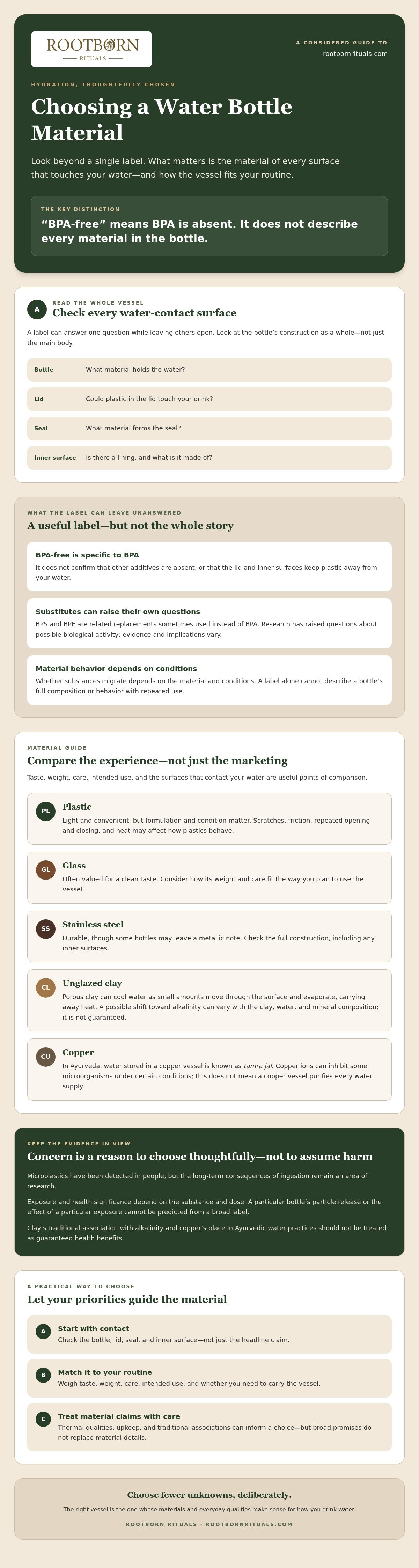
Choosing Plastic Free Hydration Bottles: A Guide to Material Selection
The right vessel depends on how you plan to use it. If temperature retention is your priority, compare insulated options and check which materials touch the water, including the lid and seal. If you’re drawn to the cooling feel of earth-born clay or the heritage of copper, consider how the vessel fits your routine and how it should be cared for. These qualities shape the experience, but don’t assume a material delivers a health benefit without reliable evidence.
Choose products with clear material descriptions. For clay, look for information about whether the surface is unglazed and whether the vessel is intended for drinking water. For copper, seek clear confirmation that the vessel is made for drinking and follow its care guidance. Don’t rely on words like “natural” or “pure” alone. Check what the vessel is made of and whether any lining, coating, or component contacts the water.
The Sensory Experience of Hydration
Water can taste different when it isn’t held in plastic, though perception varies from person to person and vessel to vessel. Glass is often chosen for a neutral-tasting experience. Clay brings an earthen texture and can feel cool through natural evaporation, while copper offers a distinctive drinking experience rooted in tradition. Rather than expecting a guaranteed change in water quality, notice what feels pleasant and practical for you.
A carafe on the table can invite a pause between meals and conversation. A vessel can complement mindful dining rituals, making water part of the shared table rather than an afterthought.
Building a Holistic Home Environment
A hydration vessel needn’t be chosen in isolation. Consider how it sits alongside your tableware and daily kitchen habits, and whether it complements your dining set. Reducing plastic in your kitchen can be a gradual process of thoughtful choices, rather than an overnight change.
Start with one step: review the bottle you reach for most, check every water-contact surface, then choose a replacement suited to your daily setting if you need one. Add a carafe for shared meals if it would be useful. This gradual approach can align your hydration tools with a broader kitchen refresh without discarding items that remain usable. For plastic free hydration bottles rooted in heritage and mindful living, explore the Hydration & Detox Rituals collection at RootBorn Rituals.
RootBorn Rituals: Embracing the Purity of Clay and Copper
Choosing a vessel can be a practical decision and a personal one. RootBorn Rituals’ Hydration & Detox Rituals collection offers hydration essentials for people seeking a more considered relationship with water. A mindful routine can connect everyday hydration with traditions that value natural materials and care for the objects we keep close.
Plastic free hydration bottles aren’t all alike, and “natural” shouldn’t be taken as a guarantee of a particular health outcome. Material, intended use, and care matter. RootBorn Rituals offers a curated collection for customers looking to bring mindful living into everyday routines, while leaving the choice of vessel to your needs and values.
The Clay Water Bottle: Earth’s Gift to the Modern Home
Unglazed clay’s porous surface supports natural evaporative cooling, which can help water feel cool without relying on an insulated synthetic layer. Clay is also traditionally associated with balancing water toward alkalinity, but any change can depend on the vessel and the water itself. Treat this as a material characteristic to explore, not a guaranteed wellness effect.
To begin a clay hydration ritual, confirm that a vessel is intended for drinking water, follow its care instructions, and fill it as directed. Clay’s earthen feel can bring a quiet sense of connection to the natural world. Details about how a particular vessel is made can vary, so look for clear information rather than assuming every piece is handcrafted.
Pure Copper Drinkware: A Legacy of Wellness
Copper cups hold a place in Ayurvedic practice, where water stored in copper is traditionally known as tamra jal. This heritage can give copper a meaningful place in a mindful hydration ritual, but it doesn’t establish that a cup detoxifies the body or guarantees greater vitality. Use copper drinkware for its intended purpose, follow its care guidance, and don’t treat traditional use as a substitute for safe water or medical advice.
A well-chosen vessel can serve both daily function and a sense of ceremony. Set a vessel where you’ll remember to refill it, or bring drinkware to the table as a reminder to pause. These small choices can make hydration feel less automatic and more connected to the rhythms of home.
RootBorn Rituals’ Hydration & Detox Rituals collection offers a way to explore hydration essentials for modern routines. Visit the Hydration & Detox Rituals collection to find an option that may suit your daily practice.
Choose a More Intentional Hydration Ritual
A thoughtful bottle choice begins with looking beyond a “BPA-free” label: consider every surface that touches your water, choose materials suited to your routine, and care for the vessel you use every day. Glass, clay, and copper each offer a distinct experience, while traditional materials can connect hydration with a slower, more mindful rhythm.
RootBorn Rituals’ Hydration & Detox Rituals collection is part of its curated range of wellness essentials. Explore the collection as you consider which hydration products fit your preferences and daily habits. For plastic free hydration bottles, focus on the material details, intended use, and care guidance rather than assuming any vessel guarantees a particular health outcome.
Let your next step be simple: choose a vessel that feels right in your hand, fits your day, and invites you to pause. Explore the Hydration & Detox Rituals collection and bring a more intentional moment to your everyday routine.
Frequently Asked Questions
Are plastic-free hydration bottles really better for my health than BPA-free ones?
Not automatically; the materials and how the bottle is used matter. “BPA-free” means BPA is absent, but it doesn’t establish that every other additive or component has been assessed. Choosing plastic free hydration bottles can reduce direct contact between water and plastic, though evidence about health effects varies by substance and exposure. Check the bottle, lid, seal, and any lining, and don’t treat a material label as a guarantee of health benefits.
Can I put hot liquids in a clay water bottle?
Only if the maker specifically confirms that the vessel is suitable for hot liquids. Unglazed clay can be porous and may crack with rapid temperature changes or thermal shock. A bottle designed for cool or room-temperature water shouldn’t be assumed safe for boiling water, tea, or other hot drinks. Check its care instructions, and don’t pour hot liquid into a cool vessel unless the manufacturer says it’s appropriate.
How do I clean a copper cup without using harsh chemicals?
Use warm water, mild dish soap, and a soft cloth, then rinse thoroughly and dry the cup. Avoid abrasive pads, bleach, and strong chemical cleaners, which may damage the surface. Follow the maker’s care instructions, since finishes and construction can differ. If the inside is coated or lined, check that guidance before cleaning. Don’t use a copper cup if its surface is damaged or you’re unsure whether it’s intended for drinking.
Do plastic-free bottles leach microplastics if they have a silicone seal?
A silicone seal means the bottle may not be entirely free of synthetic materials, but it doesn’t by itself prove that microplastics are entering the water. Silicone differs from conventional plastics, and shedding or migration depends on the seal’s composition, condition, and use. If avoiding all synthetic contact is important to you, check whether the seal touches the water and ask the maker about its material and intended use.
Why does water taste different when stored in a clay vessel?
Taste can seem different because clay has a porous, earthen surface and may influence how water feels and smells compared with water stored in glass or plastic. Evaporation through unglazed clay can also help water feel cool, which may change the drinking experience. Any mineral or pH change depends on the clay and the water, so don’t assume every vessel will alter taste or composition in the same way.
Is stainless steel completely plastic-free if the lid is synthetic?
Not necessarily. If “plastic-free” means no plastic or synthetic component contacts the beverage, inspect the lid, seal, straw, and inner lining as well as the steel body. A lid may contain plastic even if it doesn’t appear to touch the water during ordinary use. Ask the maker what each part is made from and whether it contacts liquid, especially if you’re seeking a bottle with no plastic contact.
What are the benefits of drinking from a copper vessel according to Ayurveda?
In Ayurveda, water stored in a copper vessel is traditionally called tamra jal and is associated with supporting balance and wellbeing. Copper also has antimicrobial properties in some conditions, but that doesn’t mean a cup makes unsafe water safe or guarantees digestive or other health benefits. Use copper drinkware only as intended, follow its care guidance, and consult a healthcare professional about personal health concerns.
How do I know if my clay bottle is truly unglazed and non-toxic?
Ask the maker to confirm that the interior and exterior are unglazed and that the vessel is intended for drinking water. Request clear information about the clay, any coatings or liners, and any available food-contact testing. “Natural” or “non-toxic” on its own isn’t enough to verify composition. If the seller can’t explain the materials or intended use, choose a vessel with clearer documentation and care instructions.


