


A thoughtful kitchen cleaning routine may begin with fewer tools, not more. In the eco cleanse & care collection, different materials and designs may suit different everyday tasks, so the best choice depends on what you wash, scrub, and wipe most often.
It’s reasonable to wonder whether a natural-material tool can handle daily dishes as well as familiar options, or whether choosing one means taking on fussy care. A useful tool should suit the task and fit comfortably into your routine, not add clutter or extra effort.
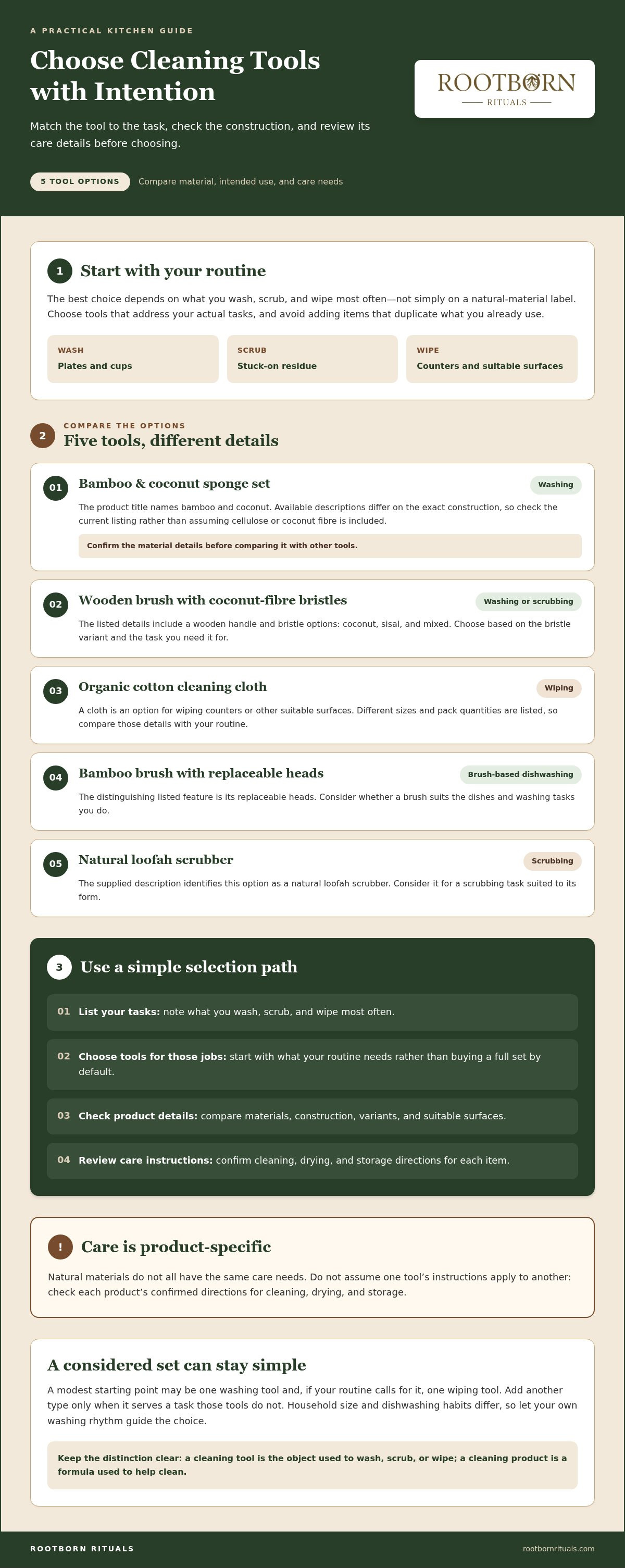
This guide will help you compare material, design, and care considerations before choosing. We’ll look at options such as a bamboo and coconut sponge set, coconut-fibre brushes, an organic cotton cloth, a bamboo brush with replaceable heads, and a natural loofah scrubber. You’ll learn how to match tools to dishes and surfaces, weigh practical trade-offs, and build a considered set without buying every option.
Key Takeaways
- Start with the dishes and surfaces you clean most often, then choose tools suited to those tasks rather than buying a full set by default.
- Compare materials and construction, including brush options with replaceable heads and cloths in different sizes.
- The eco cleanse & care collection offers five kitchen-cleaning options, so you can select a practical combination for your routine.
- Don’t assume natural materials all need the same care. Check each product’s confirmed instructions for cleaning, drying, and storage.
- Use a simple decision process: identify your tasks, choose tools that address them, and review care details before buying.
Eco Cleanse & Care: What Should an Eco-Minded Kitchen Cleaning Set Do?
A natural-material label doesn’t tell you whether a tool suits your dishes, counters, or daily routine. A brush that works for one task may be unnecessary for another, and a cloth won’t replace a tool designed for scrubbing. The useful questions are what a tool helps you clean, whether it suits the surface, and how you’ll care for it.
In this guide, eco cleanse & care refers to reusable kitchen-cleaning tools selected with attention to material, intended use, and care needs. It’s a buying guide to tools, not cleaning formulas. A cleaning tool is the object used to wash, scrub, or wipe; a cleaning product is a formula used to help clean. This distinction keeps the choice focused on the items you handle during everyday kitchen care.
For a broader introduction to the principles behind the practice, Green cleaning methods and products describes an approach concerned with environmental quality and human health. Here, the practical focus is narrower: choosing tools thoughtfully without assuming a natural material automatically suits every task or surface.
Start with the task, not the material label
Begin by listing the jobs your routine requires. Washing plates and cups, scrubbing stuck-on residue, wiping counters, and cleaning delicate surfaces are distinct tasks. Material and texture can influence how a tool feels and performs, but neither tells the whole story. Consider the surface you’re cleaning and check product details before using a tool where a gentler touch may be needed.
Frequency matters, too. A tool used after every meal should be comfortable to reach for and straightforward to clean according to its confirmed care directions. Note what you use daily, what you use occasionally, and what already works. This quick inventory can help keep a well-intentioned purchase from becoming another rarely used item.
Build a useful set without buying duplicates
A modest starting point may be one washing tool and, if your routine calls for it, one wiping tool. Add another type only when it serves a task the first two don’t. Household size and dishwashing habits can influence how many tools or cloths feel practical, but there’s no single quantity that suits every kitchen. Let your actual washing rhythm guide the decision.
If you’re considering a broader shift away from plastic in the kitchen, explore this plastic-free kitchen essentials guide alongside your cleaning-tool choices. Aim for a considered routine, not a crowded drawer: choose what serves your tasks, review care requirements, and leave out items that would duplicate what you already own.
How to Compare Eco-Friendly Kitchen Cleaning Tools Before You Choose
A useful comparison looks beyond a natural-material label. Consider what each tool is intended to do, which materials and construction details are confirmed, and whether its care requirements suit your routine. Task fit and care needs are practical criteria for comparing kitchen cleaning tools.
| Tool type | Listed material | Possible task to consider | Confirmed distinguishing detail |
|---|---|---|---|
| Sponge set | Bamboo and coconut are named in the product title; check the listing for exact construction details | Everyday washing | The available descriptions differ on the materials, so confirm the current product details rather than assuming cellulose is included. |
| Wooden brush | Wooden handle; coconut-fibre bristles, with coconut, sisal, and mixed variants listed | Washing or scrubbing, depending on the bristle option and task | Choose among the listed bristle variants. |
| Cleaning cloth | Organic cotton | Wiping counters or other suitable surfaces | Different cloth sizes and pack quantities are listed. |
| Brush with replaceable heads | Bamboo brush | Dishwashing tasks suited to a brush | The brush is described as having replaceable heads. |
| Loofah scrubber | Natural loofah | A scrubbing task suited to its form | The supplied description identifies it as a scrubber. |
Match material and texture to the cleaning job
The sponge set’s title names bamboo and coconut, while the available descriptions don’t agree on its exact construction. Check the current product listing rather than assuming cellulose or coconut fibre is included. Coconut fibre appears in the wooden brush description, alongside sisal and mixed bristle options. Compare the listed variants with the dishes and residue you regularly handle; the material alone doesn’t guarantee suitability for every surface.
The organic cotton cloth is a wiping option, but its description doesn’t establish how absorbent it is or which surfaces it suits. Treat the loofah’s scrubber description as a starting point, then check product details for intended use. For delicate finishes, follow the surface manufacturer’s guidance and don’t assume a tool is appropriate without confirmation.
Compare useful details beyond the material
Focus on distinctions that affect your selection: pack quantity, available cloth dimensions, bristle choice, and the replaceable-head design. Ask whether each item serves a separate task or repeats what you already own. A sponge and brush may have overlapping roles in your kitchen, while a cloth may address wiping rather than washing. Let your routine, not the appeal of a complete assortment, determine what belongs in your set.
The available descriptions don’t establish product-specific care instructions or independently verified environmental credentials. Confirm cleaning and drying directions before purchase, and don’t infer claims such as compostability or biodegradability from a material name. The EPA Safer Choice standards relate to cleaning products and formulas, so they shouldn’t be treated as certification of reusable tools. To compare the available options, explore Eco Cleanse & Care kitchen tools.
Which Eco Cleanse & Care Product Fits Your Kitchen Routine?
The five options in the eco cleanse & care collection address different routines. You don’t need to bring them all home at once. Compare each item with the tasks you actually do, then select only the tools that add a distinct role to your kitchen.
In brief: consider a sponge or brush for dishwashing, a loofah scrubber for a scrubbing task, and a cotton cloth for wiping. These broad roles are starting points, not guarantees of suitability for every dish or surface. Check the item details and care directions before choosing.
For dishes and everyday scrubbing: sponges, brushes, and loofah
- Bamboo & Coconut Kitchen Sponge Set, 6-12 Pack: The product title names bamboo and coconut, but the available descriptions differ on the exact construction. Check the current listing for material details and available pack quantities.
- Wooden coconut-fibre brush: This option has a wooden handle and listed coconut, sisal, and mixed bristle variants. Compare the bristle choice with the dishes you wash and the tool you already use.
- Bamboo brush with replaceable heads: Its distinguishing feature is the replaceable-head design. Consider whether that suits your routine before adding it alongside another dish brush.
- Natural Loofah Dish Scrubber: The product name identifies a natural loofah scrubber. Consider it for a scrubbing role, and check product details for confirmed use and care instructions.
These options needn’t overlap. If a sponge already serves your regular washing tasks, a second dishwashing tool may not add much. A brush or loofah makes more sense when it addresses a separate need.
For wiping and a considered starter selection
Organic Cotton Cleaning Cloth is the collection’s cotton wiping option. The listing includes dimensions and colour variants, but specific details aren’t established here. Review the current product information to compare available sizes and colours, then choose according to where and how you wipe in your kitchen.
A measured starting selection could be one dishwashing tool, with a cloth added if wiping counters or other surfaces is a regular task. The collection’s options are not a required set; let the work each item would do guide your choice. For more ideas on shaping a dishwashing routine, see the sustainable dishwashing rituals guide.
Before deciding, verify current variants and availability in the product listings, along with the care directions for each material. That final check grounds your selection in both your routine and the details provided for the specific tool.
Caring for Natural Kitchen Tools and Mistakes to Avoid
Care begins with the instructions for the specific item, not assumptions about its material. A wooden handle, cotton cloth, fibre brush, sponge, and loofah may have different care needs. The product descriptions available here don’t confirm precise cleaning or drying directions, so verify those details with the manufacturer or seller before setting a routine.
A simple routine for cleaning and drying tools
- Check first: Read the product label or seller’s care instructions before soaking a tool or applying heat.
- Remove residue: Clear away food residue after use if the product’s directions permit.
- Dry as directed: Allow the tool to dry fully where its confirmed care guidance recommends this, and follow any storage instructions.
- Review condition: Look for changes in smell, visible damage, or wear, and consider whether the item can still be cleaned and used as directed.
These are prompts for checking care, not product-specific instructions. Don’t assume that a sponge, brush, cloth, or loofah is dishwasher-safe, suitable for hot water, or safe to soak. Follow confirmed directions for each item instead of applying one method to every material.
Common buying and care mistakes
A natural material isn’t automatic proof that a tool is safer to use or has a lower environmental impact. Material names alone don’t establish sourcing standards, biodegradability, or compostability. Look for verified product information rather than drawing conclusions from words such as “bamboo,” “cotton,” or “loofah.”
Surface compatibility deserves the same care. Before using a scrubber on a delicate dish or finish, check the surface manufacturer’s guidance and the tool’s stated intended use. If either is unclear, don’t assume the material will be gentle enough.
Buying several tools with overlapping roles can also create unnecessary clutter. Start with the tasks you need to cover, then add an item only if it addresses a distinct job. Replace a tool when wear or damage prevents appropriate use, when persistent odour remains despite following its care instructions, or when hygiene needs make continued use unsuitable. There’s no verified universal replacement interval, so let the item’s condition and care guidance inform the decision.
Review the care details for the options in Eco Cleanse & Care kitchen tools before deciding which tools fit your kitchen.
Choose Your Eco Cleanse & Care Essentials with Intention
A useful kitchen-cleaning set is shaped by the work it needs to do, not by how many pieces it contains. Your dishes, surfaces, household size, and established routine all influence which tools make sense. The eco cleanse & care collection offers several options to consider, but no single combination is right for every kitchen, and not every item is essential.
A three-step checklist for choosing your tools
- Identify your recurring tasks. Note what you wash, scrub, and wipe regularly. Distinguish routine dishwashing from occasional residue removal or counter wiping, and consider which tools you already reach for.
- Choose tool types by their stated details. Compare the collection’s sponge, brush, cloth, and loofah options using listed materials, bristle variants, pack quantities, cloth dimensions, and replaceable-head construction. Choose a tool only when its described role addresses a task in your kitchen.
- Review care and product information. Before purchasing, check the current listing for available variants and confirm the manufacturer’s directions for cleaning, drying, and storage. Don’t infer care requirements or environmental credentials from a material name alone.
This brief pause can help you avoid both gaps and duplication. If you wash dishes by hand each day, a dishwashing tool may be your first consideration. A cloth may be useful if wiping surfaces is also a regular part of your routine. If an item would repeat a job already covered by a tool you own, leave it off your initial selection and reassess only if your needs change.
Browse the collection and choose what serves you
The five collection options include a bamboo and coconut sponge set, a wooden coconut-fibre brush with bristle variants, an organic cotton cleaning cloth, a bamboo brush with replaceable heads, and a natural loofah scrubber. Consider them as individual choices, not a prescribed set. Read the product descriptions closely, compare the details that matter to your tasks, and confirm current product information before completing a purchase.
A considered selection can be simple: identify the work, choose the tool type, and understand its care needs. To compare the options for your kitchen routine, browse Eco Cleanse & Care.
Choose a Kitchen-Cleaning Routine That Feels Considered
A thoughtful tool selection starts with your kitchen, not a predetermined set. Match tools to the dishes and surfaces you clean, consider whether each one adds a distinct purpose, and review its care instructions before buying. The eco cleanse & care collection brings together five options across sponges, brushes, a cloth, and a loofah scrubber. Details such as bristle variants, replaceable brush heads, cloth dimensions, and pack quantities can help you compare them.
Those distinctions can help narrow your choice, but they don’t make every item essential. Begin with the tasks you handle most often, then select only what suits your established routine. Check current product information and care guidance so your decision rests on confirmed details rather than assumptions about a material.
When you’re ready to explore the options, browse the Eco Cleanse & Care collection.
Frequently Asked Questions
What is included in the Eco Cleanse & Care collection?
The collection includes five kitchen-cleaning options: a bamboo and coconut sponge set, a wooden coconut-fibre brush with coconut, sisal, and mixed bristle variants, an organic cotton cleaning cloth, a bamboo brush with replaceable heads, and a natural loofah scrubber. Listed options also include different pack quantities and cloth dimensions. Check the current product information to confirm available variants and review each item’s intended use and care details before choosing.
Which natural kitchen cleaning tool is best for washing dishes?
The best fit depends on your dishes, the residue you encounter, and the tool’s stated intended use. A sponge or dish brush may suit regular washing, while bristle variants offer different construction details to compare. For delicate items, check the dish manufacturer’s care guidance and the cleaning tool’s product information before use. Choose an option that addresses your everyday washing tasks rather than assuming you need several overlapping tools.
Are natural dish brushes better than synthetic sponges?
Not in every situation. A brush and a sponge differ in shape, material, and how they meet a dish, so suitability depends on your washing habits and the items you clean. A natural material alone doesn’t establish cleaning performance, care requirements, or environmental impact. Compare confirmed product details, consider what you already use, and follow guidance for both the tool and your dishes. The right choice is the one that fits your routine.
Can I use a loofah dish scrubber on non-stick cookware?
Use a loofah scrubber on non-stick cookware only if both the cookware manufacturer’s care instructions and the scrubber’s product directions confirm it’s suitable. A material name by itself doesn’t establish compatibility with a particular coating. If guidance is unclear, choose a cleaning method the cookware manufacturer recommends rather than testing an unfamiliar scrubber on the surface. This keeps the decision grounded in the care requirements of the item you’re cleaning.
How do I care for bamboo, wood, cotton, and loofah cleaning tools?
Follow the confirmed care directions for each specific tool; don’t assume bamboo, wood, cotton, and loofah can all be cleaned or dried in the same way. Check the product label or seller’s instructions before soaking an item or applying heat. Remove food residue and allow a tool to dry fully only where its guidance permits. The eco cleanse & care product descriptions don’t establish precise care instructions, so verify them before use.
Are natural kitchen cleaning tools biodegradable or compostable?
Not necessarily. A tool’s material name doesn’t confirm that the finished item is biodegradable or compostable. Construction, components, and disposal conditions may matter, and the product descriptions here don’t establish those claims. Look for specific, verified information about the complete product and any relevant disposal instructions before making a decision. If those details aren’t provided, avoid assuming a natural-looking material can go into a home compost system or will break down in a particular setting.
How many kitchen cleaning tools do I need to get started?
There’s no required number. Start by identifying your regular tasks, then choose one dishwashing tool that suits your dishes and routine. Add a cloth if wiping counters or other surfaces is a separate, frequent job. Your household size and dishwashing habits may affect what feels practical, but a larger set isn’t automatically more useful. Review care instructions and avoid buying tools that duplicate jobs already covered by items you own.
Ready to compare the available tools for your routine? Browse the Eco Cleanse & Care collection.


