


What if the vessel meant to nourish your body quietly compromises the very vitality you seek? In countless homes, everyday hydration still depends on sterile plastic pitchers or fragile, factory-made glassware that fractures under routine daily use. Choosing authentic eco friendly water carafes has become an essential turning point for anyone seeking relief from invisible microplastics, chemical leaching, and cold, utilitarian kitchenware that strips mindful presence from the living space.
You already understand that vibrant wellness begins with pure, untainted water, yet discerning genuine, lead-free artisan ceramics and durable vessels from cheap, synthetic imports remains a persistent frustration. Discover how plastic-free, artisanal water carafes elevate your daily hydration rituals through material purity, conscious design, and ancestral craftsmanship. Ahead, we examine non-reactive materials like thermal borosilicate and raw terracotta, showing you how to curate an enduring, non-toxic centerpiece that brings quiet beauty and physical harmony to your daily table.
Key Takeaways
- Understand how transitioning from conventional plastic pitchers to natural earthen vessels shields daily drinking water from microplastics and chemical leaching.
- Compare the distinct wellness benefits of thermal borosilicate glass, evaporative terracotta clay, and ancestral copper to match your home's hydration rhythm.
- Learn how to select eco friendly water carafes that unite ergonomic, drip-free spouts with organic aesthetics for bedside tables and dining centerpieces.
- Master a conscious evaluation framework that inspects critical details, including natural cork seals, lead-free artisan glazing, and structural wall thickness.
- Establish simple, chemical-free cleansing rituals that preserve vessel integrity while transforming daily hydration into a grounding wellness practice.
The Anatomy of Pure Hydration: Why Choose Eco Friendly Water Carafes?
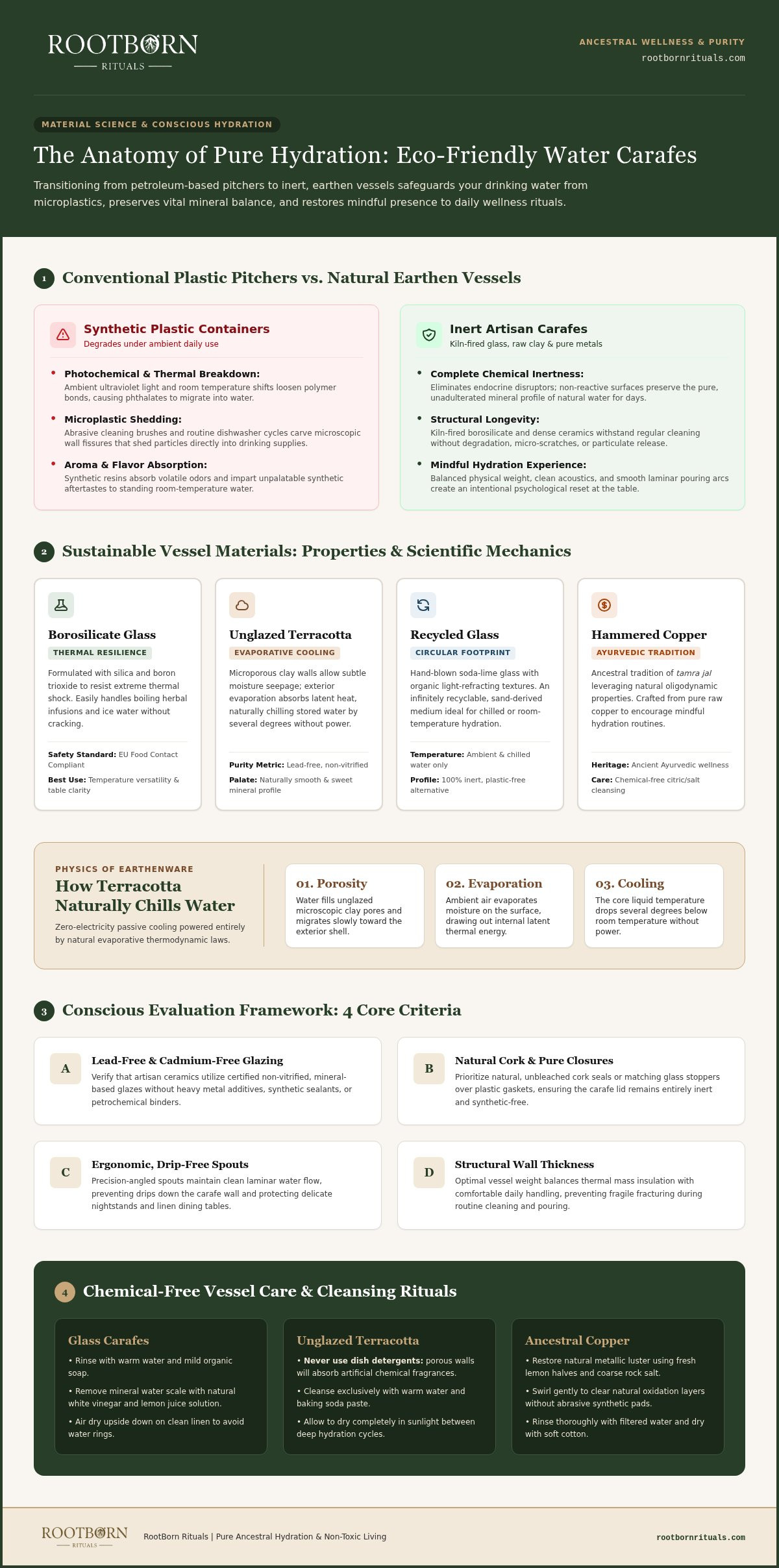
An authentic eco-friendly carafe is far more than a storage container; it is a reusable, plastic-free vessel shaped from natural earthen materials like unglazed clay, pure metals, and kiln-fired glass. Conventional water containment often treats hydration as a mindless utility, leaving room-temperature water vulnerable to synthetic contamination. In contrast, thoughtfully curated vessels preserve natural mineral balance while eliminating the unpalatable, synthetic aftertastes common to synthetic storage. Investing in durable eco friendly water carafes transforms ordinary liquid intake into an anchoring mindful ritual that restores reverence to the daily table.
The Invisible Health Impact of Conventional Plastic Pitchers
Standard household pitchers constructed from synthetic polymers subtly degrade with every passing month. Ambient ultraviolet light and subtle room temperature shifts loosen the chemical bonds within synthetic polycarbonate and resin containers, prompting phthalates to migrate into standing drinking water. Abrasive cleaning brushes and routine dishwasher cycles scour these synthetic walls, carving microscopic fissures that release shed microplastics directly into your daily hydration supply. Eliminating these petroleum-based vessels represents a foundational early step in any comprehensive non toxic kitchen makeover, permanently safeguarding your home against invisible endocrine disruptors.
Restoring Freshness: How Inert Materials Protect Water Vitality
Purity requires absolute chemical inertness. Non-porous natural materials ensure filtered water never absorbs volatile odors, stale aromas, or synthetic compounds. High-stability materials such as Borosilicate glass and dense earthen ceramics protect the clean, unadulterated flavor of spring water for days without degradation. Beyond physical purity, pouring from deliberate, heavy vessels provides a subtle psychological reset. The balanced weight of raw stoneware, the smooth clarity of glass, and the steady arch of water flowing from a well-balanced spout all slow the racing mind. Hydration ceases to be a forgotten chore, becoming a grounded moment of personal nourishment.
Sustainable Materials Compared: Borosilicate Glass, Terracotta Clay, and Pure Copper
Selecting the right medium means balancing daily durability with biological purity. True sustainability demands raw sourcing free from lead glazes, cadmium, and volatile binders. By evaluating thermal shock resilience, physical weight, and ancestral functionality, you can align your hydration habits with materials that actively nourish your lifestyle. Curating the best eco friendly water carafes begins with understanding how distinct earthen elements interact with water.
Recycled and Borosilicate Glass: Clarity, Heat Resilience, and Purity
Borosilicate glass stands apart through silica and boron trioxide composition, granting it remarkable resistance to extreme thermal shock. It handles boiling infusions and iced water with equal grace, never cracking under sudden temperature swings. Hand-blown recycled soda-lime glass offers an organic, light-refracting charm with a circular footprint, though it remains suited strictly for chilled or ambient water. Both forms represent infinitely recyclable, sand-derived alternatives to petroleum containers, adhering to strict European Union safety regulations for chemically inert food contact surfaces.
Terracotta and Earthen Clay: Ancestral Evaporative Cooling
Unglazed terracotta functions through passive physics known to ancient civilizations for millennia. Microporous clay walls allow minute amounts of moisture to seep outward; as this water evaporates from the exterior surface, it absorbs latent heat and naturally chills the remaining water inside by several degrees without electricity. Porous earthenware also gently interacts with dissolved minerals, yielding an exceptionally smooth, sweet palate. When sourcing terracotta, always verify that the clay is certified lead-free, non-vitrified, and unsealed by synthetic petrochemical resins.
Pure Hammered Copper: Ayurvedic Tradition and Natural Oligodynamic Action
Ayurvedic tradition has long revered tamra jal, the practice of storing clean water overnight in solid copper vessels. Laboratory research confirms that pure copper exerts a natural oligodynamic antimicrobial effect, neutralizing harmful waterborne pathogens on contact. Copper carafes require mindful stewardship: they should hold only pure, non-acidic spring water, never citrus or vinegar infusions, to prevent metallic over-leaching. A gentle wipe down preserves the metal's natural living patina over decades of use.
To explore vessels curated around these enduring principles, consider exploring mindful additions from RootBorn Rituals' hydration and table wellness collections to anchor your home's daily rituals.
Exemplary Designs: Eco Friendly Water Carafes for Every Room and Ritual
Every living space invites its own unique cadence of hydration. Bringing conscious design into your rooms means matching physical form with functional rhythm. Well-crafted eco friendly water carafes transcend utilitarian fluid storage; their balanced profiles and ergonomic pour spouts prevent frustrating tabletop drips, eliminating moisture rings on fine wooden surfaces. When curated thoughtfully alongside sustainable dining sets, these sculptural vessels elevate intentional living while sitting serenely as artful focal points on open shelving between meals.
The Bedside Carafe with Nesting Tumbler: Nighttime Peace of Mind
Restful sleep flourishes when nighttime essentials feel deliberate and pure. The classic bedside carafe pairs a compact carafe with an inverted nesting tumbler that caps the narrow spout. This configuration keeps airborne dust, lint, and overnight debris completely out of your water. Keeping clean hydration beside your evening journal or reading sanctuary nurtures an unhurried wind-down ritual. Ideal nightstand vessels hold between 500ml and 800ml. This measured capacity provides ample hydration through the night without leaving stale, stagnating water to sit neglected the following day.
The Sculptural Table Pitcher: Centering Mindful Family Meals
Shared nourishment centers around fluid balance and communion. Table carafes require a wide, grounded base that resists accidental tipping during animated dinner conversations. Coordinating natural clay or hand-shaped glass vessels with artisanal plastic free plates and bowls establishes visual tranquility across the entire tabletop. Look for substantial, curved handles that sit comfortably in hand, distributing liquid weight naturally so anyone can pour effortlessly without wrist strain.
The Wide-Neck Botanical Infusion Carafe: Nourishing Daily Elixirs
Living botanical waters transform daily hydration into a sensory tonic. Wide-neck carafes welcome thick rounds of organic citrus, freshly torn spearmint, cucumber spears, or raw mineral stones without catching at the collar. Clear, uncolored glass displays the vibrant green and gold hues of steeping herbs, turning water into a dynamic visual centerpiece on the kitchen counter. To maintain absolute purity, select designs paired with glass strainers or woven food-grade stainless steel lids rather than brittle plastic filters, keeping every pour clean, untainted, and deeply refreshing.
Essential Buying Framework: How to Select an Enduring, Non-Toxic Carafe
Choosing an enduring carafe requires a discerning eye that looks past surface aesthetics. Mass-market designs often masquerade as sustainable while relying on brittle constructions or toxic shortcuts. A truly sustainable vessel honors generational longevity rather than disposable kitchen trends. When curating eco friendly water carafes for your home, applying a rigorous multi-point evaluation shields your water from concealed toxins while ensuring daily ease of use.
Vetting Stoppers and Lids: Avoiding Concealed Plastic and Gaskets
The most vulnerable point of any water vessel is often its closure. Many modern carafes feature brushed steel or wooden caps that conceal hidden polypropylene threads, synthetic glues, or low-grade silicone seals beneath their covers. Over time, standing water constantly touches these synthetic liners. Look instead for solid, whole-bark cork stoppers that breathe naturally while blocking airborne debris. Untreated native hardwoods finished only with edible plant oils, or matching ceramic stoppers ground to fit snugly against the collar, maintain pristine, plastic-free contact.
Weight, Ergonomics, and Cleaning Accessibility
A vessel should feel stable on the table yet balanced and effortless during a pour. Overly delicate glassware breaks during routine washing, while excessively heavy stoneware strains wrists when filled to capacity. Strike a balance with these physical considerations:
- Pour balance: Verify that the handle placement or neck contour lets you pour smoothly with one hand when the pitcher is full.
- Cleaning clearance: Narrow bottlenecks require dedicated natural-fiber bottle brushes, whereas wide-mouth vessels let you easily cleanse the interior by hand.
- Vertical dimensions: Measure your refrigerator shelf height beforehand if you intend to chill water, as tall architectural necklines often exceed standard door bin heights.
Verifying Artisanal Provenance and Certified Non-Toxic Purity
True material purity cannot be left to chance. Inquire about independent laboratory testing verifying that ceramic glazes and decorative enamels are completely free of leachable lead and cadmium. Selecting pieces shaped by verified fair-trade master artisans ensures that ancestral techniques receive ethical support. Prioritizing authenticated provenance reflects the mindful principles outlined in our guide on how to remove plastic from your kitchen. Take time to explore our curated Hydration & Detox Rituals collection to discover heirloom vessels vetted for uncompromised material integrity.
Caring for Your Vessel: Cleansing Rituals and Daily Hydration Practices
Tending to artisanal eco friendly water carafes shouldn't feel like a harsh domestic chore. Gentle vessel maintenance acts as a meditative bridge between daily utility and holistic home wellness. When you rely on simple, earthen pantry staples rather than synthetic, perfumed surfactants, you preserve the structural integrity of natural materials while honoring the elemental purity of the water you consume.
Natural Descaling and Cleansing Without Synthetic Chemicals
Mineral scale from hard water inevitably gathers along the base of active vessels. Dissolve stubborn calcium deposits by swirling equal parts warm water and raw white vinegar or strained fresh lemon juice throughout the interior. Let this mild organic acid rest for thirty minutes to loosen sediment naturally before rinsing thoroughly with warm water. When clearing stubborn water rings from delicate glass carafes, add two tablespoons of coarse sea salt alongside a small cup of crushed ice. Swirling the mixture creates a gentle, non-abrasive scouring action that sweeps away cloudiness without scratching interior walls.
Closures demand equal mindfulness. Never submerge whole-bark cork stoppers or untreated wooden tops in standing water. Simply wipe them clean using a damp linen cloth and let them dry completely in an open, airy spot to prevent trapped moisture and mildew.
Establishing an Intentional Morning Water Ritual
Hydration becomes grounding medicine when approached with conscious intention. Fill your water carafe mindfully each evening, letting the water rest and settle overnight at room temperature. In the stillness of dawn, pouring from your carafe creates a tactile, restorative pause. The rhythmic trickle of water, the cool weight of the vessel, and the pure taste of unadulterated hydration gently orient the senses before morning distractions intrude. Keeping an artisanal pitcher present on your desk or dining table nurtures consistent hydration, transforming a basic physical necessity into a continuous ceremony of personal well-being.
Embracing Pure Water and Timeless Table Rituals
Water forms the quiet foundation of your vitality. Welcoming authentic eco friendly water carafes into your living space does far more than eliminate synthetic polymers; it restores a sense of sacred simplicity to everyday nourishment. When you move away from chemical degradation toward the elemental purity of thermal borosilicate, cooling earthenware, or radiant copper, you protect your water's delicate mineral balance while turning routine sips into grounding, mindful pauses.
Handcrafted using certified lead-free, plastic-free ancestral materials, these enduring vessels harmonize effortlessly with conscious, non-toxic table settings. They aren't fleeting home decor trends. Each piece is thoughtfully curated for generational durability, sculptural elegance, and daily wellness rituals that quiet the mind. Begin by honoring what enters your body and elevates your sanctuary. Explore Mindful Hydration Vessels at RootBorn Rituals and bring pure, lasting beauty to your table today.
Frequently Asked Questions
Can eco-friendly water carafes hold boiling water for hot tea?
It depends entirely on the carafe's material composition. Borosilicate glass carafes easily withstand boiling liquids and direct temperature shifts without cracking. Conversely, recycled soda-lime glass or unglazed terracotta shouldn't be exposed to sudden thermal shocks, as rapid temperature variations can cause structural fractures. Always verify whether your chosen vessel uses thermal-grade borosilicate before pouring freshly boiled water for herbal teas.
Is natural unglazed terracotta safe for storing drinking water daily?
Yes, natural unglazed terracotta is completely safe and beneficial for daily drinking water, provided it is tested free of heavy metals. Ancestral terracotta naturally cools liquid through gentle evaporation while imparting balancing earth minerals. However, ensure the raw clay is sourced from reputable artisans who guarantee zero lead, cadmium, or chemical sealing treatments. Routinely rinse and air-dry clay vessels completely between refills to maintain optimal cleanliness.
How do I clean hard water mineral scale from a narrow-neck glass carafe?
You can dissolve mineral deposits effectively using an organic acid soak without reaching inside by hand. Fill the vessel with equal parts warm water and raw white vinegar or strained lemon juice, allowing it to sit for thirty minutes. For stubborn residue, add two tablespoons of coarse salt and crushed ice, then swirl vigorously. The salt gently scours away deposits before a final rinse leaves your glass pristine.
Can I store acidic juices or citrus water inside a pure copper carafe?
No, you should never store citrus water, fruit juices, or vinegar infusions inside pure copper vessels. Acidic liquids react chemically with bare copper, accelerating metal corrosion and causing unsafe quantities of copper ions to leach into your beverage. Pure copper carafes are designed strictly for storing plain, non-acidic spring or filtered water. For infused botanical waters, choose inert borosilicate glass vessels instead.
What is the healthiest material for an everyday water carafe?
High-purity borosilicate glass is widely considered the healthiest material for everyday eco friendly water carafes. Because borosilicate is completely non-porous and chemically inert, it never absorbs residues, harbors bacteria, or leaches synthetic chemicals into your drinking supply. Unglazed, lead-tested terracotta is another exceptional ancestral choice if you appreciate natural passive cooling and earthen mineral nuances, while remaining entirely free from endocrine-disrupting plastics and toxic glazes.
How long can fresh filtered water safely remain inside a glass carafe?
Fresh filtered water can safely sit inside a covered glass carafe for up to three to five days at room temperature. Storing water in eco friendly water carafes made of inert glass prevents chemical leaching, but standing water eventually absorbs airborne dust and carbon dioxide if left unsealed. To enjoy the crispest taste and optimal freshness, refresh your carafe daily and keep it protected with a breathable cork stopper.
Are cork stoppers hygienic for long-term water carafe storage?
Yes, sustainably harvested natural cork stoppers are inherently hygienic due to suberin, a natural waxy substance that resists microbial growth and moisture penetration. Cork allows vessels to breathe while acting as an effective physical barrier against ambient household dust. To maintain hygiene over long periods, avoid soaking the cork in standing water; simply wipe it clean with a damp cloth and allow it to dry thoroughly in open air.


