


Your dinner plate isn't a mere utility; it's a sacred bridge between the earth and your body that dictates the sanctity of your daily nourishment. You likely feel a quiet anxiety when you consider the hidden chemicals and microplastics found in the blood of nearly every American, often leaching from the very items meant to serve your family. It's easy to feel disconnected from the source of your everyday objects when your kitchen is filled with low-quality, soulless items that offer convenience but lack spirit.
We believe your home environment should be a reflection of your deepest values. By choosing handcrafted sustainable tableware, you can transform a routine meal into an intentional wellness ritual that honors both your physical health and the natural world. This guide will show you how to identify truly non-toxic materials while curating a timeless aesthetic for your table. You'll discover how to move away from cluttered convenience and toward a lifestyle of purity, tradition, and profound peace in every bite. It is time to reclaim your kitchen as a sanctuary of intention.
Key Takeaways
- Learn why choosing handcrafted sustainable tableware is the first step in replacing disposable culture with a home environment built for longevity and intention.
- Gain practical knowledge on identifying non-toxic, natural materials that protect your physical health by preventing chemical leaching and microplastic exposure.
- Understand the concept of material wellness and how the temperature and pH of your food interact with the surfaces you eat from.
- Discover how to use specific mindful dining essentials to slow your pace, fostering a deeper connection to your food and a sense of sanctity.
- Explore the art of curating a timeless kitchen aesthetic that balances ancestral wisdom with modern, plastic-free living.
The Essence of Handcrafted Sustainable Tableware
Handcrafted sustainable tableware is more than a category of kitchen goods. It is a commitment to living with intention. These items are born from natural, non-toxic materials and shaped by hands that value longevity over the fleeting convenience of mass production. We define this approach as the creation of functional art designed to last generations rather than seasons. In 2026, the "conscious table" has moved from a luxury to a requirement. We recognize that our aesthetics must align with our ethical responsibilities toward the planet and our own bodies.
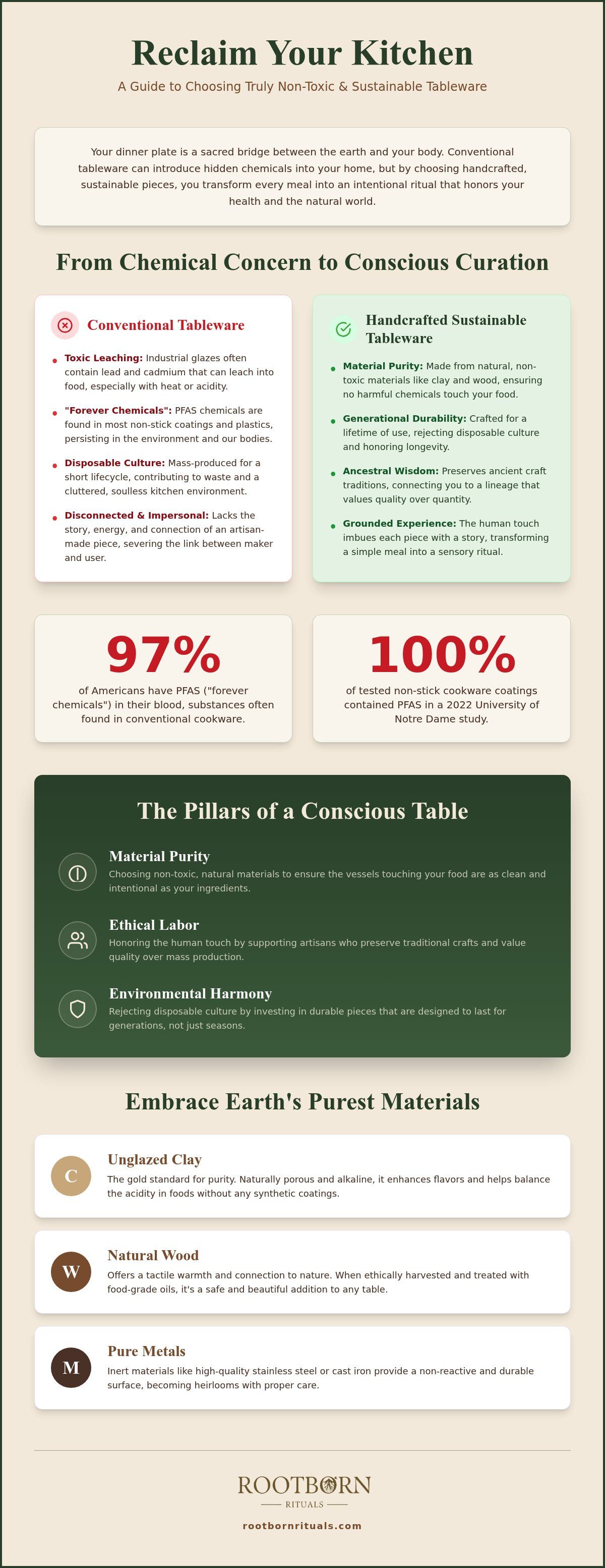
To build a truly sustainable table, you should look toward three essential pillars: material purity, ethical labor, and environmental harmony. This philosophy rejects the disposable culture that has defined the last century. It invites a slower, more reverent way of interacting with the objects that hold our nourishment. When we choose items made with care, we shift our perspective from mindless consumption to mindful curation.
Beyond Eco-Friendly: The Artisanal Difference
True sustainability is found in durability. A factory-molded plate is often designed for a short life cycle, but a hand-thrown clay vessel is crafted for a lifetime of use. The human touch in pottery and metalwork does more than create a shape; it preserves the ancient history of pottery and the wisdom of generations who understood the earth's cycles. There is a palpable energetic difference when you hold a piece that has been fired with care rather than stamped by a machine. These objects carry the story of their maker, reminding us that we are part of a lineage of craft that values quality over quantity. This connection transforms a simple meal into a grounded, sensory experience.
The Problem with Conventional Tableware
Mass-market ceramics often hide a darker reality behind their polished surfaces. Industrial glazes frequently contain traces of lead and cadmium, toxic metals that can leach into your food under heat or acidity. While many brands market "BPA-free" alternatives, these are often hollow compromises. A 2022 University of Notre Dame study detected PFAS, known as "forever chemicals," in 100% of tested non-stick cookware coatings. These substances persist in the environment and have been found in the blood of 97% of Americans.
Beyond the physical toxins, industrial manufacturing severs the vital connection between the maker and the user. It fills our sanctuary with soulless items that offer no story and demand no respect. This disconnection is the root of modern kitchen clutter. By choosing handcrafted sustainable tableware, you choose to heal that rift and bring purity back to your daily rituals. You ensure that the vessels touching your food are as clean and intentional as the ingredients you source.
Choosing Purity: Materials that Honor Your Health
Material wellness is the foundational belief that the objects we use to nourish ourselves should be as clean as the food we eat. When you choose handcrafted sustainable tableware, you're not just selecting a style; you're selecting a chemical profile. Natural materials like clay, wood, and pure metals react dynamically with food. For instance, the pH level of a sauce or the temperature of a soup can trigger leaching in synthetic glazes. By returning to ancestral materials, you ensure that your table remains a sanctuary of health and vitality.
Sourcing directly from the earth ensures that every plate and bowl supports your body’s natural rhythm. Wood, when harvested ethically and treated with food-grade oils, offers a tactile warmth that synthetic materials cannot replicate. These materials don't just sit on your table; they participate in the meal. They breathe, they age, and they protect. Integrating handcrafted sustainable tableware into your home is a profound act of self-care that prevents the silent intrusion of environmental toxins into your sanctuary.
Unglazed clay is the gold standard for purity due to its lack of synthetic chemicals.
Unglazed Clay: The Ancestral Anchor
The porous nature of clay allows for natural moisture retention, creating a unique micro-environment that enhances flavors without the need for additives. Unlike mass-produced ceramics that often require a glass-like coating to be functional, high-quality unglazed clay cookware relies on the inherent strength of the earth. Clay is naturally alkaline, which helps balance the acidity in many modern diets by gently neutralizing the pH of your meals as they sit. When vetting your kitchen, looking for food-safe materials is vital to avoid the hidden lead risks found in traditional but industrially glazed pottery.
Pure Copper and Natural Metals
The use of pure metals in the home is a practice rooted in ancient wisdom. In the Ayurvedic tradition, copper is revered for its ability to purify water and stimulate vitality. Using pure copper drinkware serves as a functional tool for mindful hydration. The metal naturally ionizes the water, a process believed to support digestive health and cellular function. It's essential to distinguish between pure copper and copper-plated alternatives. Plated items often use nickel or lead-based solders that can degrade over time. Truly sustainable choices prioritize solid, unadulterated metals that age gracefully and offer lasting benefits. If you're ready to transition toward a more intentional kitchen, our Mindful Dining & Table Wellness collection offers a curated starting point for your journey.
The Art of the Table: Functionality Meets Natural Aesthetics
The visual landscape of your dining room serves as the backdrop for your most intimate daily connections. Choosing plastic-free plates and bowls is an intentional step toward creating an elevated, grounded aesthetic that resonates with the rhythms of nature. Unlike the sterile uniformity of factory-made sets, handcrafted sustainable tableware offers a sensory depth that engages more than just the eyes. It's about the weight of a hand-thrown bowl in your palms, the soft thud of a wooden spoon against a ceramic rim, and the organic textures that invite touch. These objects carry a quiet presence that transforms a simple meal into a curated experience.
A harmonious table is built through the thoughtful layering of natural materials. You might pair the cool, smooth surface of recycled glass with the deep, tactile warmth of a hand-carved acacia board. This interplay of elements creates a visual balance that feels both sophisticated and timeless. Benefits of natural material table settings include:
- Tactile Warmth: Natural materials hold temperature differently, feeling alive and responsive to the touch.
- Unique Variations: No two pieces are identical, ensuring your collection is a one-of-a-kind reflection of your home.
- Timeless Appeal: These designs transcend fleeting trends, remaining relevant as they age.
The Aesthetic of Imperfection (Wabi-Sabi)
We believe there is profound beauty in the imperfect. Embracing the slight variations in handcrafted pottery is a celebration of authenticity and the human spirit. These "flaws" are signatures of the maker's hand, distinguishing them from soulless, mass-produced items. As you use your collection, natural patinas will develop on copper vessels and wooden boards. These marks don't signal wear; they tell the story of a well-loved home. Moving away from "perfect" matching sets allows you to build a soulful, curated collection that grows with you. While exploring artisanal glazes, it remains vital to consult FDA information on lead in pottery to ensure your aesthetic choices remain rooted in safety.
Durability and Longevity in 2026
It's a common misconception that handcrafted means fragile. In reality, high-quality artisanal pieces are often more resilient than their mass-market counterparts. They're designed for longevity, intended to become family heirlooms passed down through generations. Natural materials age with a grace that synthetics simply cannot match. While plastic degrades, cracks, and leaches chemicals over time, a well-cared-for clay vessel or pure metal cup only gains character. Investing in handcrafted sustainable tableware is a commitment to a future where quality is valued over convenience, and where every object in our environment serves a purpose beyond the immediate moment.
Integrating Handcrafted Pieces into Your Daily Rituals
Every meal is a transition. It's a bridge between the activity of the world and the restorative silence of the home. Incorporating mindful dining essentials into your daily life creates a physical boundary that protects this transition. When you use handcrafted sustainable tableware, the objects themselves dictate the rhythm of the meal. A heavy, hand-thrown ceramic bowl or a cool copper cup demands a level of focus that mass-produced items do not. These vessels act as ceremonial anchors, grounding your awareness in the weight, temperature, and texture of the present moment. This sensory engagement pulls you away from distraction and into a state of purposeful presence.
The Ritual of Cleansing and Care
Natural materials require a different kind of devotion than their synthetic counterparts. We find that natural dish brushes, crafted from sustainable bamboo or coconut fibers, are superior for maintaining handcrafted sustainable tableware. These tools provide effective cleaning without the risk of micro-scratches that can harbor bacteria. Avoid harsh, industrial detergents that strip natural finishes. Instead, choose gentle, plant-based soaps that honor the material. The ritual of caring for natural materials is an extension of the mindful living philosophy. Hand-washing becomes a meditative practice, a quiet time to season your wooden boards or polish your copper vessels. This intentional maintenance ensures your collection remains a part of your home's lineage for decades.
Intentional Eating as a Wellness Practice
The psychological impact of your tableware is profound. Research into sensory perception suggests that the weight and texture of a vessel can influence satiety and presence. A bowl that feels substantial in your hands signals to the brain that the nourishment within is significant. By creating a "sacred space" at the table through natural material table settings, you cultivate an environment conducive to the "rest and digest" state. This relaxation is essential for optimal nutrient absorption and metabolic health. A table set with intention invites you to slow your breath and engage with your food as a source of life. This shift from distracted eating to mindful consumption is a pillar of holistic well-being. Discover the tools for your transition in our Mindful Dining & Table Wellness collection.
Curating Your Mindful Dining Collection with RootBorn Rituals
RootBorn Rituals acts as a Wise Guardian for your home sanctuary. We don't simply offer goods; we invite you into a lifestyle of profound intention. Our philosophy as a Mindful Curator means we've already vetted every material and maker to ensure they align with the highest standards of purity and ethical responsibility. We encourage you to build your kitchen collection slowly, prioritizing quality over the cluttered convenience of mass production. Our Mindful Dining & Table Wellness collection serves as a starting point for this transition. Every piece we offer is a testament to our commitment to plastic-free, ancestral-inspired essentials that honor the sanctity of your daily life.
Building a collection of handcrafted sustainable tableware is a deliberate act of choosing heritage over the fleeting. It is an investment in objects that possess a soul and a story. When you surround yourself with items made from the earth, you create a cause-and-effect relationship between your environment and your physical health. This curated approach ensures that your kitchen remains a place of peace rather than a source of anxiety over chemical leaching or environmental degradation.
Starting Your Purity Journey
A non-toxic kitchen makeover doesn't have to happen overnight. We suggest beginning with the vessels that touch your food most often, such as your primary plates and bowls. This immediate swap reduces your daily exposure to synthetic glazes and microplastics. Transitioning from industrial sets to a natural, handcrafted table is a rewarding process of discovery. You'll find that as you replace soulless items with artisanal pieces, your connection to your meals deepens. The long-term health benefits of material wellness are matched by the timeless aesthetic of a kitchen filled with objects that age with grace. RootBorn Rituals provides the tools to ensure your transition is both beautiful and principled.
A Commitment to Future Generations
The environmental impact of our choices extends far beyond our own walls. By 2026, the global move toward plastic-free and biodegradable options has become a vital necessity for the health of our planet. When you choose handcrafted sustainable tableware, you're supporting artisanal traditions and ethical craftsmanship that value the maker's well-being as much as the user's health. Your purchase ensures that ancient wisdom survives in a modern world and that the items you eventually pass down are free from the "forever chemicals" that persist in our environment. This is how we build a legacy of purity and respect for the natural world. We invite you to Explore the Mindful Dining & Table Wellness Collection and begin your own ritual of intentional living.
Reclaiming the Sanctuary of Your Table
Your home environment is a reflection of your deepest values. By choosing handcrafted sustainable tableware, you've moved beyond mere utility and into a way of intentional living. You now understand that material wellness is the foundation of a non-toxic kitchen, where the purity of unglazed clay and ancestral metals protects your body from modern environmental toxins. These objects do more than hold your food. They act as anchors for presence, transforming the act of eating into a slow, restorative ritual that honors the earth and your health.
The transition toward a mindful home is a deliberate process of curation rather than accumulation. RootBorn Rituals is here to guide you with essentials rooted in ancestral wisdom and modern purity. Our collections feature exclusively plastic-free and non-toxic materials, blending sophisticated, high-end design with a reverent approach to daily life. We invite you to begin your journey toward a more intentional home with RootBorn Rituals. As you replace the soulless with the significant, you'll find that your table becomes a true sanctuary of peace and vitality. Trust your intuition and build a legacy of health for generations to come.
Frequently Asked Questions
Is handcrafted sustainable tableware dishwasher safe?
Most handcrafted sustainable tableware is not intended for the dishwasher. The intense heat and abrasive detergents used in modern machines can strip natural oils from wood and degrade the delicate surfaces of artisanal clay. We view hand-washing as an extension of the dining ritual itself. It's a moment to slow down and show reverence for the tools that nourish you. Gentle cleaning with plant-based soaps ensures these heirloom pieces last a lifetime.
How do I know if my ceramic plates contain lead or toxins?
Identifying toxins in ceramics requires a discerning eye for glazes. Mass-produced items often use lead or cadmium to achieve bright colors and high-gloss finishes, which can leach into food. To ensure purity, we recommend choosing unglazed clay or pieces with verified non-toxic, mineral-based glazes. You can also use at-home lead testing kits as a preliminary check. Choosing RootBorn Rituals ensures every item has been carefully vetted for material wellness and ancestral safety.
What are the health benefits of using unglazed clay tableware?
Unglazed clay acts as a natural partner to your health by interacting with the pH of your food. Its inherent alkaline properties help neutralize acidity, which can improve digestion and balance your body’s internal environment. Because it's porous, it retains moisture and heat without the need for synthetic coatings. This ancestral material ensures that no microplastics or "forever chemicals" like PFAS enter your nourishment, preserving the purity of every meal you prepare.
Why is copper used in traditional sustainable dining sets?
Copper has been a cornerstone of mindful hydration for centuries, particularly within Ayurvedic traditions. It's valued for its ability to naturally ionize water, a process believed to support cellular vitality and digestive health. In 2026, as we seek to eliminate plastic from our hydration rituals, pure copper serves as a functional tool for purification. It offers a sophisticated way to infuse your daily water intake with the grounding energy of natural earth metals.
Can handcrafted sustainable tableware handle hot liquids and foods?
Handcrafted sustainable tableware is designed to handle the warmth of intentional meals, but it requires mindful handling. Natural materials like clay and wood are excellent insulators, keeping your soups warm and your tea hot. However, you should avoid "thermal shock," which occurs when moving an item from extreme cold to extreme heat. Gradually warming your vessels ensures they remain structurally sound. This careful approach reflects a deep respect for the physical integrity of your tools.
How does choosing handcrafted items help the environment in 2026?
Choosing handcrafted sustainable tableware in 2026 is a powerful statement against the disposable culture of the past century. These pieces are typically plastic-free and biodegradable, meaning they return to the earth without leaving a toxic legacy. By supporting artisanal traditions, you help preserve ancient crafts that prioritize ethical labor and environmental harmony. The durability of these items reduces the need for frequent replacements, significantly lowering your total environmental footprint while fostering a more intentional, curated home environment.
Is it better to buy a full set or curate pieces individually?
We believe it's far better to curate your collection individually and slowly. Prioritizing quality over quantity allows you to select pieces that truly resonate with your personal aesthetic and wellness needs. This "slow curation" prevents kitchen clutter and ensures every item has a specific purpose in your daily rituals. Building your collection over time creates a soulful, layered look that reflects your journey toward a more intentional and sophisticated way of living.
What is the best way to clean and maintain unglazed clay vessels?
Cleaning unglazed clay requires a gentle touch to maintain its porous integrity. You should avoid conventional soaps, as the clay can absorb chemical scents. Instead, use hot water and a natural bamboo or coconut fiber brush to remove food particles. For a deeper cleanse, a paste of baking soda or salt works effectively. Periodically seasoning your vessels with food-grade oils or simple heat treatments ensures they remain durable and beautiful for years of mindful dining.


