


The modern dinner table has become a silent source of synthetic exposure, turning a moment of nourishment into a point of unseen toxicity. You likely feel a growing unease when serving your family on conventional surfaces, wondering if heat is leaching microplastics or endocrine disruptors into your organic meals. It's a valid concern, as the search for high-quality plastic free plates and bowls often leads to products that feel cheap or fail to meet the standards of a truly mindful home. We believe your kitchen should be a sanctuary where every object reflects a commitment to purity and ancestral wisdom.
In this guide, you'll discover how to transition from synthetic dinnerware to the enduring beauty of natural materials that protect your health and elevate your daily dining rituals. We will explore the distinction between vague marketing terms and certified purity, helping you curate a table that aligns with your deepest values. From understanding the safety of unglazed clay to embracing the timeless elegance of pure materials, you're about to transform your dining space into a reflection of holistic wellness and quiet sophistication.
Key Takeaways
- Recognize the subtle ways heat and acidity facilitate the migration of microplastics from synthetic dinnerware into your daily meals.
- Explore the healing properties of ancestral materials like unglazed clay and pure copper to find the safest plastic free plates and bowls for your family.
- Uncover the truth behind "bio-plastic" marketing to ensure your eco-friendly choices aren't concealing hidden industrial resins or synthetic binders.
- Learn how to curate a sensory dining experience by layering natural textures that honor the connection between your home environment and physical well-being.
- Discover how the Mindful Dining & Table Wellness collection bridges the gap between ancient wisdom and modern aesthetic sophistication.
The Hidden Impact of Plastic on the Modern Table
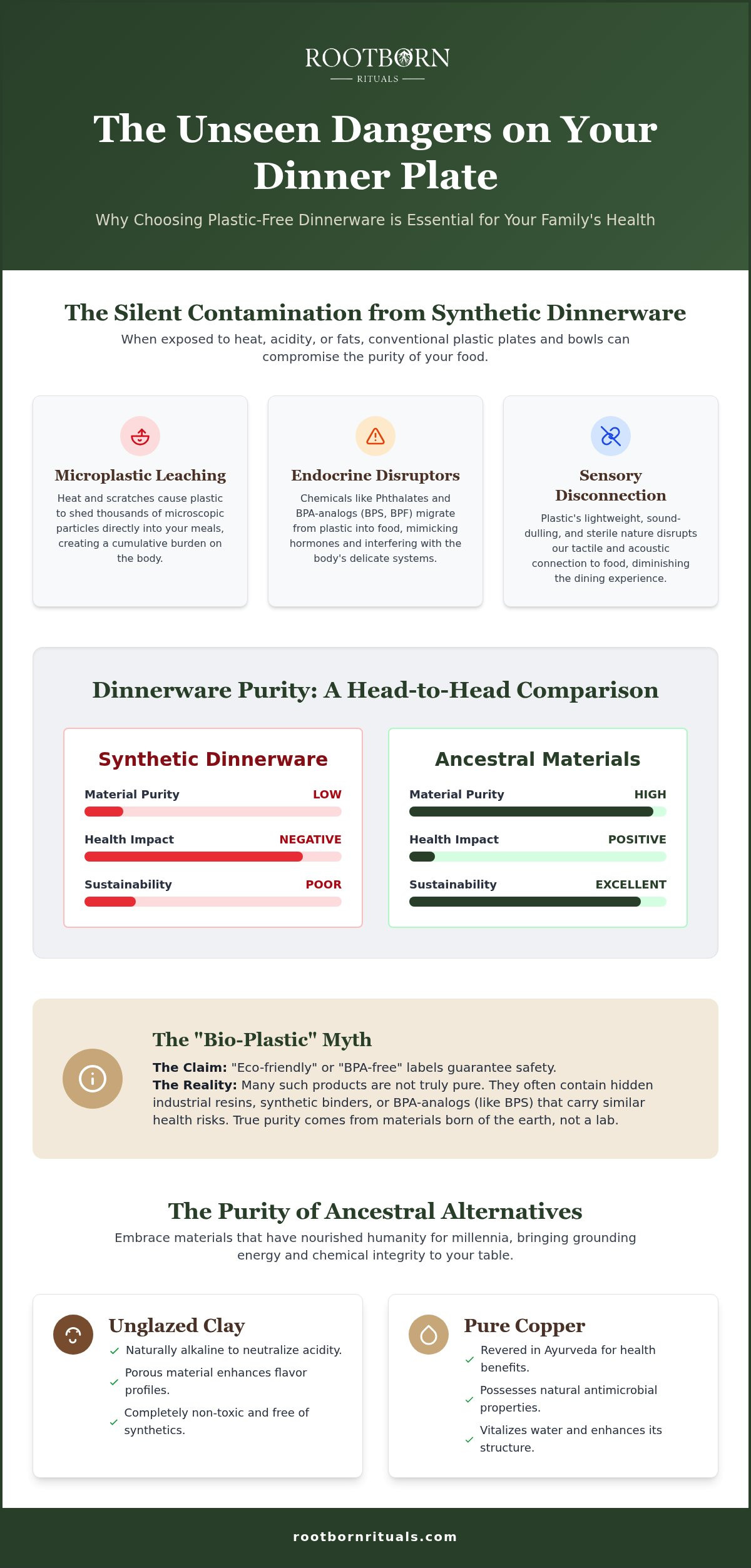
The dinner table is the heart of the home, yet it often harbors invisible risks that compromise the sanctity of our meals. When we serve hot, acidic, or fatty foods on synthetic surfaces, we initiate a silent migration of chemicals. Plastic is not a static material. It responds to its environment, shedding microscopic particles and chemical additives directly into the nourishment we provide for our families. Choosing plastic free plates and bowls is not merely an aesthetic preference; it's a necessary step in preserving the chemical integrity of our food and the health of our loved ones.
Many people rely on "BPA-free" labels as a shield against toxicity. This marketing term is often misleading. It frequently means the manufacturer has replaced Bisphenol A with Bisphenol S or F, which are structural analogs that may carry similar risks. These synthetic materials remain foreign to the biological body, regardless of the specific polymer used. Every scratch on a plastic surface releases thousands of invisible fragments. These microplastics accumulate in our bodies over decades, creating a cumulative burden that modern science is only beginning to understand. The table should be a place of restoration, not a source of environmental stress.
The Science of Leaching and Endocrine Disruption
Polymers are chemically unstable when exposed to high temperatures or acidic dressings. This instability allows phthalates, used to make plastics flexible, to break away from the material's molecular matrix. These substances are known to interfere with the body's delicate hormonal signaling. Endocrine disruption occurs when foreign chemicals mimic or block natural hormones, potentially leading to long-term developmental and reproductive health challenges. By removing these synthetics, you eliminate the primary vector for these disruptors in your kitchen.
Reclaiming the Sanctuary of the Dining Room
Beyond the toxicological impact, synthetic materials disrupt our sensory connection to food. Plastic is dull. It absorbs sound, feels lightweight, and carries a sterile, industrial energy that contrasts with the vitality of a home-cooked meal. Throughout the history of tableware, humanity relied on materials that felt substantial and resonated with the earth, providing a grounding weight to every bite.
When you replace synthetic items with natural alternatives, the acoustic and tactile landscape of your kitchen shifts. You hear the gentle ring of stone or clay. You feel the temperature of the meal through the vessel. This sensory feedback is essential for grounding and presence. To deepen this connection, consider exploring our philosophy on Mindful Dining: A Guide for Intentional Eating Rituals. Adopting plastic free plates and bowls transforms a routine necessity into a sacred act of care, ensuring your table remains a sanctuary of purity.
Ancestral Materials: The Purest Alternatives to Plastic
True sustainability isn't found in a laboratory; it's found in the earth. While industrial manufacturing prioritizes speed and disposability, ancestral wisdom favors materials that improve with age. Choosing plastic free plates and bowls crafted from raw, unglazed earth or pure metals honors the body’s need for biological compatibility. These aren't just vessels. They're living extensions of the natural world that bring a sense of permanence and peace to your table.
The Sacred Geometry of Clay Bowls
Unglazed clay is a porous, breathing material that interacts dynamically with your food. Unlike synthetic surfaces that remain inert or leach toxins, clay possesses an inherent alkalinity. This natural property helps neutralize acidity in meals, enhancing the flavor profile while supporting digestive health. Caring for these items is a ritual in itself. Through the process of seasoning with natural oils, you create a personalized patina that reflects your home's unique history. This connection to the earth is why we consider this material a cornerstone of wellness, as detailed in our exploration of Unglazed Clay: The Gold Standard for Health & Purity.
Copper and the Vitality of Water
Pure copper has been revered for millennia in Ayurvedic traditions for its natural antimicrobial properties and its ability to vitalize water. As we move away from the environmental impact of single-use plastics, we return to metals that offer genuine physiological benefits. It's vital to distinguish between pure copper and modern plated alternatives. Plated items often hide industrial alloys beneath a thin veneer; pure copper offers a consistent, therapeutic experience. Incorporating these vessels into your setting is an essential component of a Mindful Dining practice.
Hardwood and stone provide the final layers of a grounded table. These materials offer a tactile weight that plastic can't replicate, reminding us of our connection to the physical world. While synthetic trends fade and brittle composites crack, nature’s materials endure for generations. Every piece of stone or wood carries a unique grain, ensuring no two tables are ever the same. You can begin curating your own sanctuary by exploring the Mindful Dining & Table Wellness collection, where every piece is chosen for its purity, heritage, and lasting beauty.
The 'Bio-Plastic' Myth: Why Material Purity Matters
The market is currently flooded with "green" alternatives that promise sustainability while concealing a synthetic core. Labels such as wheat straw, bamboo fiber, and corn-based composites suggest a return to nature, yet these items are often industrial hybrids. To create the durable, smooth finish of these products, manufacturers pulverize plant matter and bind it together using synthetic resins. While these items appear earthy, they are frequently infused with melamine resin or polypropylene. This creates a material that looks like a plant but behaves like a polymer, carrying many of the same potential health risks of plastics found in traditional dinnerware.
When you seek plastic free plates and bowls, the distinction between a processed hybrid and a raw, ancestral material is vital. Industrial composites present a significant environmental challenge because they are neither truly recyclable nor easily compostable. Unlike a piece of solid wood or raw clay, these blended materials require specific industrial facilities to break down, and even then, they often leave behind microplastic residues. Choosing the path of material purity means rejecting these processed shortcuts in favor of substances that have supported human health for millennia.
Understanding Composite Bindings
Melamine resin is the most common binder used in "natural" composite bowls. It's a thermosetting plastic that provides rigidity, but it's chemically sensitive to heat and acidity. When these bio-composites are exposed to high temperatures, the bond can weaken, allowing chemical constituents to migrate into your nourishment. Unlike unglazed clay or stone, which can withstand significant heat, these hybrids have strict thermal limits. You can often identify a composite by its resonance. Tap the edge of the vessel; a true natural material like stone or ceramic produces a clear, melodic ring, while a composite hybrid yields a dull, plastic-like thud.
The Longevity of True Earth-Born Materials
Raw clay, solid hardwood, and natural stone represent a truly circular economy. These materials are born of the earth and can return to it without leaving a toxic legacy. There's a profound beauty in how these ancestral materials age, a process that synthetic surfaces can't replicate. A well-loved wooden bowl or a seasoned clay plate develops a unique patina over time, becoming more beautiful and personal with every use. This is a graceful maturation that reflects the history of your home.
Contrast this with the degradation of a synthetic surface. When a plastic or composite plate is scratched by a knife, the surface is permanently compromised, creating deep grooves where bacteria can flourish and microplastics can escape. Synthetic items don't age; they simply fail. By investing in plastic free plates and bowls made from pure, earth-born materials, you ensure that your table settings remain an enduring sanctuary of quality and health for generations to come.
Curating Your Intentional Table: A Selection Guide
Transitioning to a kitchen free of synthetics is a gradual process of reclaiming your space. It begins with an honest assessment of your daily rituals. The vessels you choose for a solitary morning breakfast should offer a different energy than the plates used for a communal evening meal. Selecting plastic free plates and bowls is an invitation to slow down and consider the weight, texture, and origin of the objects that hold your nourishment. By choosing materials that resonate with the earth, you transform a functional necessity into a moment of grounding presence.
A minimalist, wellness-focused kitchen doesn't require an abundance of items; it requires the right ones. Focus on pieces that offer versatility and sensory depth. Pairing the organic warmth of hand-carved wooden bowls with the cool, steady weight of natural stone plates creates a balanced aesthetic that honors both the forest and the earth. This contrast in texture heightens your awareness during the meal, making the act of eating a more immersive and mindful experience. Heavier dinnerware, such as solid clay or stone, naturally encourages a slower pace, as the physical presence of the vessel demands more intention than a lightweight synthetic alternative.
A Framework for Table Wellness
When selecting your essentials, prioritize unglazed surfaces. These raw finishes provide a non-slip, tactile experience that maintains a direct connection between your hands and the material. This physical feedback is a subtle reminder of the purity of your environment. A thoughtful starter set for a plastic-free transition includes four unglazed clay bowls for daily nourishment and two solid stone serving platters for communal gatherings. This foundation allows you to serve everything from morning grains to evening roasts on surfaces that are entirely free of industrial coatings.
Caring for Natural Materials
The longevity of ancestral materials depends on a different kind of care, one that rejects harsh synthetic detergents in favor of simple, natural methods. Cleaning your stone and clay should be a gentle ritual using warm water and perhaps a touch of sea salt for scrubbing. For wooden items, the regular application of food-grade natural oils, such as walnut or linseed, is essential to keep the fibers supple and resilient. View this maintenance not as a chore, but as a continuation of the dining ceremony. Caring for your tools reinforces your commitment to a sanctuary-like home. To begin your journey toward a more purposeful dining environment, explore our Mindful Dining & Table Wellness collection.
Elevated Dining with RootBorn Rituals
RootBorn Rituals serves as a bridge between the enduring wisdom of the past and the sophisticated needs of the modern home. Our Mindful Dining & Table Wellness collection isn't a mere assortment of kitchenware; it's a curated selection of wellness essentials designed to protect your family's health. By focusing on the intrinsic beauty of unglazed clay and the therapeutic properties of pure copper, we provide the tools necessary to curate a truly intentional table. These pieces bring a sense of ceremony to every meal, turning the simple act of eating into a restorative ritual that grounds the spirit and nourishes the body.
Our approach to design favors a minimalist aesthetic that highlights the raw, unadulterated nature of the earth. We believe a holistic home requires consistency from the stove to the table. When you transition to plastic free plates and bowls, you complete a circle of purity that begins with how your food is prepared and ends with how it's served. Our pieces are crafted to complement a life lived with purpose, offering a tactile and visual experience that industrial manufacturing can't replicate. Every bowl and plate carries the weight of presence, inviting you to slow down and savor the vitality of your nourishment.
Our Commitment to Material Purity
Every item in the RootBorn catalog undergoes a rigorous vetting process to ensure it meets our standards for biological compatibility. We don't settle for "eco-friendly" composites or industrial hybrids that hide synthetic resins behind a natural facade. Instead, we prioritize raw materials that have been trusted for generations. This dedication to purity is why we encourage a deeper understanding of your kitchen's tools through The Pure Ancestral Cooking Collection: A Purity Guide. By choosing unglazed clay and pure metals, you ensure no synthetic shadow falls across your table, preserving the sanctity of your culinary environment.
Join the Ritual of Intentional Living
We invite you to explore our curated dining sets and experience the profound shift that occurs when you remove synthetics from your environment. A single choice, such as replacing a worn plastic bowl with a hand-thrown clay vessel, has a lasting impact on your family's health sanctuary. It's an act of guardianship that preserves the physical and energetic integrity of your home. Embracing plastic free plates and bowls is a commitment to a lifestyle defined by quality over convenience and intention over habit. The beauty of this path lies in its simplicity; it's a return to a way of living that honors the sanctity of the earth and the vitality of the human spirit.
Embracing the Ritual of the Pure Table
Transitioning to a home free of synthetics is a profound act of guardianship. By looking past the marketing of industrial composites and choosing authentic, ancestral materials, you protect the sanctity of every meal. True health begins with the vessels we touch daily. The weight of stone and the breath of clay replace the silent risks of microplastics, ensuring that your table remains a sanctuary of physical and energetic purity.
Curating your collection of plastic free plates and bowls is an investment in your family's long-term well-being and a more intentional way of life. Every choice to prioritize raw purity over industrial convenience brings you closer to a kitchen environment that reflects your deepest values. We invite you to Explore the Mindful Dining & Table Wellness Collection, where every piece is expertly curated for material purity and ancestral wisdom. With national shipping across the USA, your journey toward a more reverent dining experience is within reach. Trust in the enduring beauty of nature to nourish your home and elevate your daily rituals.
Frequently Asked Questions
Are plastic-free plates and bowls microwave safe?
Unglazed clay and high-fired stone are typically microwave safe, but you should always avoid placing pure copper or any metal in a microwave. Wooden items may warp or crack due to the intense, uneven heating of moisture within the wood fibers. When choosing plastic free plates and bowls, it's essential to understand that natural materials react differently to modern appliances than synthetic polymers. Always test a new piece with a short duration to ensure thermal stability.
What is the best material for non-toxic children's dinnerware?
Solid hardwood and organic, unglazed clay are the premier choices for a non-toxic childhood environment. These materials provide a grounding weight and tactile feedback that helps children develop a mindful connection to their food. Unlike "bamboo fiber" composites that often hide synthetic resins, pure earth-born materials are biologically compatible and free from endocrine disruptors. They offer a sanctuary of purity for your family's most vulnerable members during their daily nourishment rituals.
Do unglazed clay bowls absorb flavors or bacteria?
Unglazed clay is a living material that breathes, but it does not harbor bacteria when cared for correctly. The natural alkalinity of organic clay actually works to inhibit the growth of harmful pathogens. While the porous surface may subtly carry the essence of highly aromatic spices over time, this is often considered part of the vessel's unique history. Proper seasoning with natural oils creates a protective barrier that minimizes absorption while enhancing the material's structural integrity.
Is wheat straw dinnerware actually plastic-free?
Most wheat straw dinnerware is not truly plastic-free because it relies on synthetic binders like melamine or polypropylene to hold the fibers together. These products are industrial composites rather than raw natural materials. While they use plant waste, the resulting hybrid material cannot be easily composted and may still leach chemicals when heated. For a truly pure table, look for ancestral materials like raw clay or solid wood that haven't been pulverized and reconstructed with resins.
How do I know if my ceramic plates contain lead or cadmium?
The most reliable way to avoid heavy metals like lead or cadmium is to choose unglazed, organic clay from trusted sources. These toxins are almost exclusively found in the bright, colorful glazes used on industrial ceramics. If you use glazed items, look for third-party certifications or use a home testing kit, though these aren't always definitive for low-level exposure. Shifting to raw, earth-born surfaces eliminates the need for chemical glazes, providing absolute confidence in your family's health.
Can I use copper plates for acidic foods like tomatoes?
You should avoid serving highly acidic foods, such as tomatoes or citrus, directly on pure copper surfaces. The acid reacts with the metal, which can lead to an unpleasantly metallic taste and excessive copper ingestion. Copper is best reserved for water vessels, dry grains, or as a ceremonial accent on the table. This mindful approach ensures you receive the antimicrobial benefits of the metal without disrupting the delicate chemical balance of your more acidic culinary creations.
What is the most durable plastic-free alternative for outdoor dining?
Solid hardwood is the most resilient and durable plastic-free alternative for the dynamic environment of outdoor dining. Unlike brittle composites or thin ceramics, high-quality wood can withstand the occasional drop without shattering. It's naturally lightweight yet substantial, providing a sophisticated aesthetic that complements the natural world. Stone platters also offer excellent stability for windier conditions. Both materials age gracefully, developing a beautiful patina that reflects the history of your gatherings under the open sky.
How do I transition my kitchen to be completely plastic-free?
Begin your transition by replacing the items that interact most frequently with heat and acidity, such as your primary breakfast bowls and dinner plates. This targeted approach immediately reduces the highest risk of chemical leaching in your home. Gradually introduce pieces from the Mindful Dining & Table Wellness collection to replace worn synthetic sets. Focus on quality over quantity, choosing a few versatile, ancestral pieces that serve multiple purposes. This slow, intentional process allows you to build a kitchen sanctuary with purpose.


