


The conventional plastic filter pitcher resting on your kitchen counter promises purity, yet it often trades municipal treatment chemicals for synthetic leaching and sterile, demineralized water. With microplastics now detected in an estimated 94% of U.S. tap water, conscious households often feel caught between industrial runoff and plastic-bound machinery. Embracing natural water purification tools offers a grounding, restorative alternative. You shouldn't have to strip away foundational trace minerals or pour daily hydration from petroleum-derived reservoirs just to protect your personal well-being.
True cellular vitality requires cleansing tap water without stripping away its living character. In this ancestral guide, you'll discover how earth-derived materials and natural purification tools cleanse water while restoring vital minerals and eliminating microplastics. We'll explore the time-tested properties of unglazed porous clay, active hardwood charcoal, and oligodynamic noble metals, guiding you to curate a serene, plastic-free hydration ritual that nourishes your home every day.
Key Takeaways
- Learn how raw, earth-derived elements utilize microporous adsorption to clarify tap water gently without stripping essential trace minerals.
- Discover why adopting natural water purification tools like Kishu binchotan charcoal and ceramic candles shields your home from synthetic microplastic shedding.
- Understand the vital differences between living, mineral-balanced hydration and the sterile, demineralized output produced by synthetic filtration systems.
- Master intentional care practices, including water boiling and sun-curing, to maintain the cleansing longevity of porous earth media.
- Explore how pairing elemental filters with unglazed clay and noble metal vessels transforms everyday fluid intake into a grounding wellness ritual.
What Are Natural Water Purification Tools and How Do They Work?
Natural water purification tools are non-electric, plastic-free instruments crafted from raw earth materials. Unlike mass-market appliances reliant on synthetic membranes and chemical glues, these ancestral tools use physical adsorption, porous micro-filtration, and elemental metallurgy to clarify domestic drinking water. They transform everyday tap water into living hydration while leaving beneficial minerals intact.
Modern municipal treatment relies heavily on synthetic polymers and high-pressure reverse osmosis membranes that strip water into an acidic, demineralized state. Ancestral traditions approached hydration with reverence. Exploring the documented history of water purification reveals that ancient Ayurvedic, Japanese, and Mediterranean cultures viewed clean water as a foundational pillar of domestic vitality. By harmonizing raw minerals with intentional design, natural water purification tools preserve vital electrolytes like calcium and magnesium while gently drawing out undesirable contaminants.
The Mechanics of Earth-Derived Adsorption and Filtration
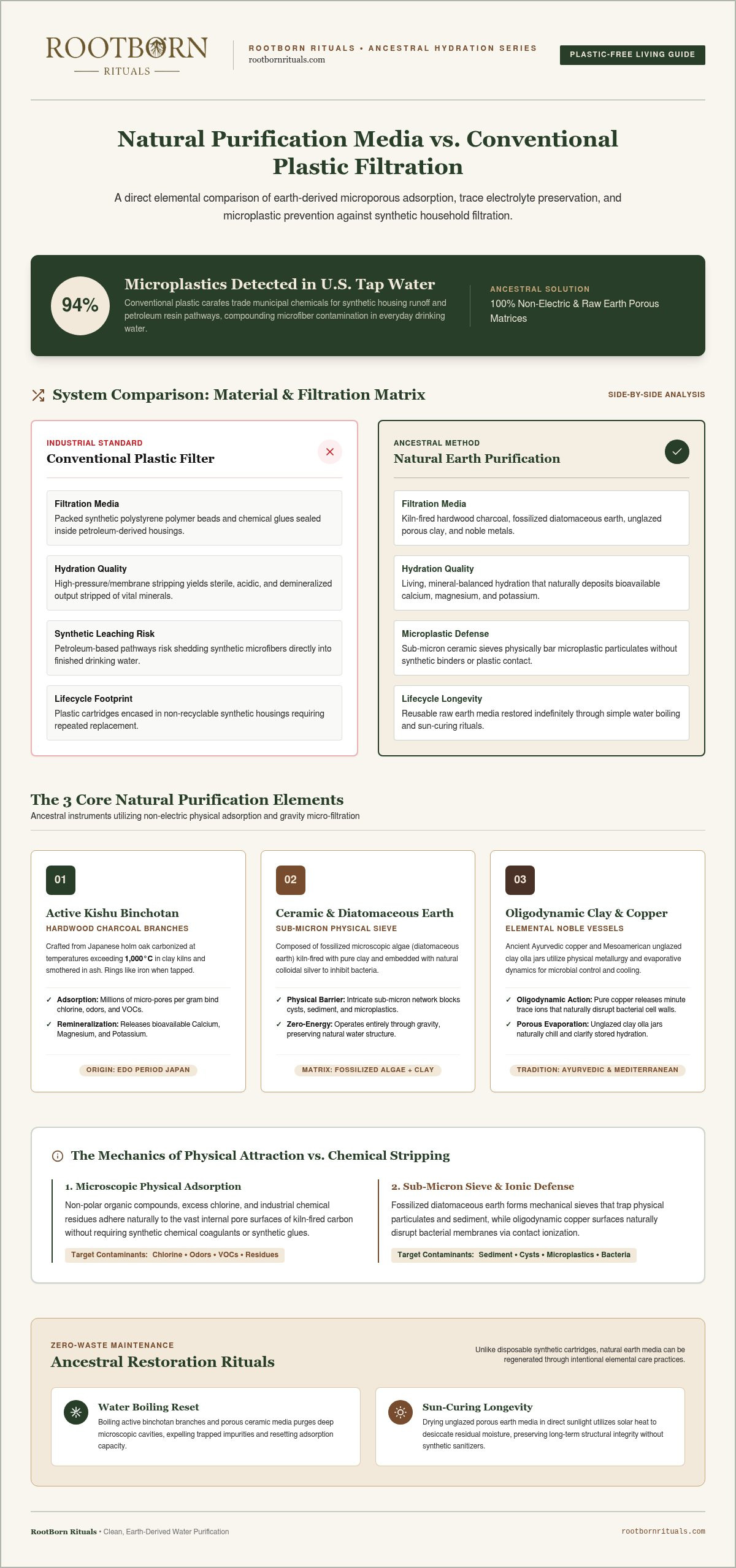
At the microscopic level, natural filtration operates through deliberate physical attraction rather than chemical force. Volatile organic compounds, excess chlorine, and synthetic residues adhere to the intricate internal networks of raw elements. Consider the physical differences between natural media and synthetic options:
- Elemental Activated Carbon: Hardwood charcoal branches contain millions of microscopic pores per gram. These natural cavities attract non-polar chemical impurities without synthetic glues.
- Synthetic Ion-Exchange Resins: Commercial filter cartridges typically pack polystyrene polymer beads together, creating petroleum-based pathways that risk shedding microfibers directly into your glass.
- Microporous Earth Matrices: Natural clay and diatomaceous earth act as physical sieves, trapping sediment and larger particulates without synthetic binders.
Ancient Wisdom Validated by Modern Water Science
Time-tested traditions are now finding widespread confirmation in modern analytical laboratories. Japanese households during the Edo period placed kiln-fired binchotan branches inside ceramic vessels, refining culinary water through pure carbon adsorption. In ancient Mesoamerica and the Mediterranean, unglazed clay olla jars chilled and clarified drinking supplies through subtle microporous evaporation.
Ayurvedic practitioners relied on pure copper vessels, a practice supported by modern microbiological testing of the oligodynamic effect. Laboratory research confirms that pure copper surfaces release minute trace ions that naturally disrupt bacterial cell walls. Natural purification is not an untested novelty; it is an enduring tradition backed by sound physical science.
The Core Natural Water Purification Tools for Pure Hydration
Selecting authentic natural water purification tools brings the quiet elegance of the natural world directly onto your countertop. Rather than relying on synthetic cartridges sealed in non-recyclable housings, these ancestral tools use honest, elemental materials to refine daily water.
Active Kishu Binchotan Charcoal Branches
True binchotan charcoal originates from sustainably harvested Japanese holm oak, slowly carbonized in clay kilns at temperatures exceeding 1,000 degrees Celsius before being smothered in ash. This ceremonial burn leaves behind an exceptionally dense carbon branch that rings like iron when tapped. Its microscopic pore labyrinth binds chlorine, volatile organic compounds, and unpleasant municipal odors. As water rests against the charcoal branch, the carbon releases bioavailable calcium, magnesium, and potassium, softening the water's texture and restoring subtle balance.
Micro-Porous Ceramic and Diatomaceous Earth Filters
Ceramic filtration relies on fossilized microscopic algae, known as diatomaceous earth, fired alongside pure clay. This mixture creates an intricate network of sub-micron pores that physically bar the passage of cysts, sediment, and microplastics. Incorporating natural colloidal silver into the ceramic matrix prevents bacterial growth across internal surfaces. Public health protocols for safe household water treatment highlight porous ceramic filtration as a dependable physical barrier that operates purely via gravity, preserving water's natural structure without electrical pumps.
Oligodynamic Vessels: The Power of Copper and Clay
Vessels crafted from earth and noble metals do far more than hold liquid; they actively refine it. Unglazed terracotta and porous clay breathe, cooling water through microscopic surface evaporation while interacting with trace carbonates to gently neutralize acidity. Complementing this, hand-hammered pure copper carafes leverage the oligodynamic effect, neutralizing unwanted microbes during quiet overnight resting hours.
When selecting natural water purification tools, purity of source is paramount. Always choose unlined, untreated copper and non-glazed earthen clays that remain free of toxic synthetic lacquers or lead-bearing glazes. You can explore curated earthen vessels and pure noble metals within the Hydration & Detox Rituals collection to ground your daily water practice in timeless beauty.
Natural Purification Media vs. Conventional Plastic Filtration
Mass-market water pitchers often trade visible sediment for invisible chemical migration. While conventional commercial systems market convenience, their synthetic composition introduces systemic vulnerabilities that earth-derived media completely bypass. Evaluating your daily hydration through an ancestral lens clarifies why genuine material purity matters.
Microplastic Contamination and Chemical Leaching Risks
Modern plastic pitchers hold water in prolonged contact with synthetic polymers. Over time, physical friction from refilling and fluctuations in ambient room temperature degrade petroleum-derived carafes. This degradation causes microscopic polymer shedding and plasticizer migration directly into the water you consume. Learning how to remove plastic from your kitchen reveals that eliminating plastic water carafes is one of the most impactful steps toward reducing synthetic estrogenic compounds in your home.
Demineralization: The Hidden Drawback of Synthetic Reverse Osmosis
Industrial reverse osmosis units force tap water through dense synthetic membranes under immense pressure, removing almost every dissolved element. This aggressive extraction produces "hungry," demineralized water. Void of naturally occurring electrolytes like magnesium, silica, and calcium, this stripped liquid tastes flat and naturally draws minerals from its surroundings to reach chemical equilibrium.
Natural water purification tools approach filtration with balance rather than clinical sterilization. By capturing unwanted impurities while preserving vital alkaline minerals, earth-derived tools maintain water's natural electrical conductivity and gentle taste profile without requiring complex remineralization hardware.
- Reverse Osmosis Membranes: Strip out beneficial electrolytes; yield acidic, demineralized water; rely on complex plastic tubing.
- Natural Earth Media: Capture organic compounds via physical surface adsorption; release trace calcium and magnesium; remain entirely plastic-free.
Environmental Stewardship: Biodegradability vs. Landfill Waste
Discarded commercial filters generate an alarming stream of domestic waste. Billions of non-recyclable plastic cartridges, stuffed with exhausted synthetic resins, end up in municipal landfills every year. These petroleum housings persist for centuries, slowly breaking down into fine microplastic dust.
Authentic natural water purification tools embody true cradle-to-cradle responsibility. After several months of clarifying water, a Kishu binchotan branch can be crushed into biochar to enrich the aeration and microbial life of your garden soil. Natural diatomaceous ceramic elements return safely to the earth as crushed stone. Choosing elemental purification tools closes the loop between mindful self-care and genuine environmental stewardship.
How to Establish an Intentional Plastic-Free Water Ritual at Home
Bringing natural water purification tools into your living space invites a deliberate pause in the rush of modern domestic life. Shifting from mechanical plastic filters to earth-derived media transforms hydration from an automated chore into a grounding countertop ritual. With minimal care, these elemental materials deliver lasting purity and quiet beauty.
Step 1: Awakening and Conditioning Your Natural Media
Porous natural media require gentle activation before their first use. Submerge your raw Kishu binchotan charcoal in boiling water for ten minutes; this opens its internal micropores and expels any lingering atmospheric particles. For gravity-fed ceramic elements, rinse the outer surface under clean running water, using a natural fiber bristle brush to clear surface dust without synthetic detergents. Every few weeks, lay your charcoal branch in direct midday sunlight for several hours to release trapped moisture and refresh its adsorption capacity.
Step 2: Pairing with Pure Storage Vessels
Purified water readily absorbs the chemical signature of whatever holds it. To maintain elemental vitality, store your filtered water exclusively in inert materials like lead-free borosilicate glass, handmade ceramic, or unglazed terracotta. Avoid carafes fitted with synthetic plastic spigots, rubberized gaskets, or acrylic lids. Applying the holistic principles of the non-toxic kitchen makeover ensures that every vessel gracing your counter supports genuine cellular wellness.
Step 3: Mastering Water Dwell Time and Rhythm
Natural filtration is an exercise in patient equilibrium. Unlike high-pressure mechanical devices that force water through synthetic barriers, elemental media require resting time to cleanse and remineralize effectively:
- Active Charcoal Rest: Allow your binchotan branch two to four hours of resting contact to adsorb volatile compounds and impart beneficial minerals.
- Overnight Copper Resting: Let clean water sit in a pure copper carafe for six to eight hours overnight to fully engage its oligodynamic antimicrobial properties.
- The Evening Refill: Fill your glass or clay vessels each evening so you wake up to refreshing, naturally chilled water at dawn.
Embracing this slow, rhythmic hydration cycle aligns your household with earth-derived harmony. Explore the plastic-free essentials within the Hydration & Detox Rituals collection to curate your own countertop water ceremony.
Elevating Daily Hydration with Ancestral Wellness Essentials
Viewing hydration as mere mechanical fluid intake reduces an essential life force to an automated task. When you shift your perspective, pouring a glass of water becomes an intentional pause during a hectic day. Integrating natural water purification tools into your living spaces allows you to honor the body's physiological requirements while anchoring your home in mindful tranquility.
The Transformative Vitality of Mindful Drinking
Water conditioned by natural earth elements possesses an unmistakable sensory presence. Free from the sharp bite of municipal chlorine and uncompromised by synthetic plastics, it tastes softer, rounder, and noticeably crisper. Each sip feels cellularly restorative rather than hollow.
This heightened sensory awareness naturally extends to how we nourish ourselves throughout the day. Connecting conscious hydration to the foundational principles of mindful dining essentials creates a harmonious table experience. Serving mineral-rich water from heavy glass or hand-thrown earthenware grounds domestic gatherings, transforming routine meals into communal celebrations of simple, unhurried vitality.
Curating an Ancestral Hydration Sanctuary
Functional objects within the home should bring visual peace as well as physical health. Rather than tucking utilitarian plastic filters away in refrigerator corners, natural water purification tools deserve a place of honor. A dark Kishu binchotan branch resting inside clear borosilicate glass or an unglazed clay urn functions as an organic sculpture on your countertop.
Surrounding your water rituals with natural materials creates an intentional design rhythm throughout the kitchen. Pairing these purification pieces alongside untreated wood cutting surfaces and pure earthenware cooking vessels creates a cohesive environment dedicated to holistic living. Exploring our thoughtfully curated, plastic-free Hydration & Detox Rituals helps you weave ancient water wisdom seamlessly into modern daily life, cultivating a sanctuary where pure health and serene aesthetics naturally align.
Reclaiming Pure Hydration as a Daily Sacred Practice
Returning to elemental hydration honors both your bodily vitality and the sanctity of your home environment. Choosing natural water purification tools frees your kitchen counter from synthetic leaching, preserves essential alkaline electrolytes, and eliminates persistent domestic plastic waste. When daily drinking water rests against raw hardwood carbon, porous terracotta, and pure noble metals, it regains the soft, balanced character nature always intended.
Cultivating this slow, rhythmic kitchen ceremony transforms an automated habit into a quiet moment of grounded reverence. Devoted entirely to zero-waste, plastic-free living essentials for the conscious sanctuary, RootBorn Rituals celebrates artisanal earth-derived vessels crafted without synthetic coatings or toxic lacquers. Every intentional sip restores a vital bond between physical well-being and the natural world. Discover our plastic-free Hydration & Detox Rituals to begin your journey toward pure, vibrant living today.
Frequently Asked Questions
How effective are natural water purification tools compared to modern tap filters?
Natural water purification tools match or exceed modern countertop pitchers in reducing chlorine, bad tastes, and organic compounds, all while preserving beneficial electrolytes. While they don't strip total dissolved solids like an industrial reverse osmosis membrane, they prevent water from turning acidic. For standard municipal tap supplies, porous earth media provide an effective, balanced physical barrier that clarifies drinking water without sterile over-processing.
Can Kishu binchotan charcoal remove heavy metals and fluoride from tap water?
Genuine Kishu binchotan effectively adsorbs heavy metals such as lead, mercury, and copper through its dense carbon matrix. However, it cannot reliably eliminate dissolved industrial fluoride, which requires specialized activated alumina or dense synthetic membranes. Charcoal works best as an elemental refiner that softens tap water, removes chlorination byproducts, and infuses essential calcium and magnesium back into every pour.
How often do natural purification tools like charcoal sticks need boiling or replacement?
Reactivate your Kishu binchotan charcoal sticks every three to four weeks by boiling them in rolling water for ten minutes. This clearing ritual releases trapped organic compounds and reopens the microscopic surface cavities. With routine sun-drying and gentle handling, a single artisan branch maintains active adsorption for approximately three months before gracefully transitioning into your garden soil as nutrient-rich biochar.
Is it safe to store drinking water in pure copper vessels indefinitely?
Water should not sit in pure copper vessels indefinitely. The ideal resting duration spans six to eight hours, usually overnight, which allows trace copper ions to naturally neutralize harmful microbes via the oligodynamic effect. Storing water beyond twelve to sixteen hours isn't recommended, as excessive copper concentration can alter the delicate flavor profile and deliver more trace metal than your body requires daily.
Do natural ceramic water filters eliminate dangerous bacteria and parasites?
High-density ceramic filter candles trap bacteria and microscopic protozoan cysts effectively. With pore ratings often dropping below 0.5 microns, the porous diatomaceous earth wall physically intercepts pathogenic organisms like Giardia and Cryptosporidium. When infused with pure colloidal silver, the ceramic matrix prevents biological growth within the core, providing dependable, electricity-free defense against waterborne microbes without shedding chemical residues.
What makes natural water purification tools safer than standard plastic filter pitchers?
Standard commercial pitchers house synthetic ion-exchange resins inside petroleum-derived casings, risking microplastic shedding and plasticizer migration directly into your beverage. By contrast, natural water purification tools rely exclusively on unglazed earth, noble metals, and hardwood charcoal. They introduce zero endocrine-disrupting chemicals, never degrade into polymer dust, and protect both cellular health and the surrounding environment from landfill pollution.
How long must water remain in contact with natural purification media before drinking?
Optimal contact time depends entirely on the elemental medium you select. For active Kishu charcoal branches, water reaches a softened, cleansed state within two to four hours of quiet contact. Unglazed clay olla vessels cool and aerate liquid continuously, while pure copper carafes require six to eight hours overnight to achieve full oligodynamic balance before you pour your morning glass.


