


What if the very vessels holding your nourishment are silently compromising the vitality of your home? It's a heavy realization to acknowledge that the convenience of modern plastic often comes at a cost to our cellular health and the sanctuary of our kitchens. You likely feel that familiar pang of anxiety when considering microplastics leaching into your family's meals, or perhaps you're simply weary of a pantry filled with mismatched, fragile containers that lack soul. Transitioning to glass and wood food containers offers a path back to purity and permanence.
Choosing these natural materials is more than a stylistic preference; it's a return to a more intentional way of living. This guide will show you how the harmony of glass and wood transforms food storage into a mindful ritual for health and home. We'll examine the science of material purity, the peace found in visual order, and how these durable tools serve as guardians of your well-being. By the end, you'll understand how to curate a non-toxic kitchen environment that honors the food it holds and the life you're building.
Key Takeaways
- Understand the vital health benefits of replacing plastic with natural materials to eliminate the risk of microplastic leaching into your food.
- Discover the superior durability of borosilicate glass and sustainable hardwoods as the foundation of a non-toxic, ancestral kitchen.
- Learn how to curate a serene, organized pantry using glass and wood food containers that foster a sense of visual peace and order.
- Compare the hygiene and environmental footprint of glass against synthetic alternatives like silicone and metal to make informed, ethical choices.
- Master simple cleaning and care rituals to ensure your natural preservation tools remain timeless, functional heirlooms in your home.
Beyond Utility: The Ritual of Natural Food Preservation
Food care is a silent dialogue between the earth and our bodies. When we choose how to store our organic ingredients, we aren't just organizing a shelf; we're creating a sanctuary for vitality. Using glass and wood food containers bridges the gap between ancient wisdom and modern safety, turning a mundane task into a mindful ritual. These materials don't just hold food. They honor it. They preserve the delicate flavors of a garden-fresh harvest and the complex nutrients of slow-cooked meals without the interference of synthetic chemicals. This shift transforms the kitchen into a space of sacred preservation where health is prioritized over haste.
The Problem with Plastic in the Modern Kitchen
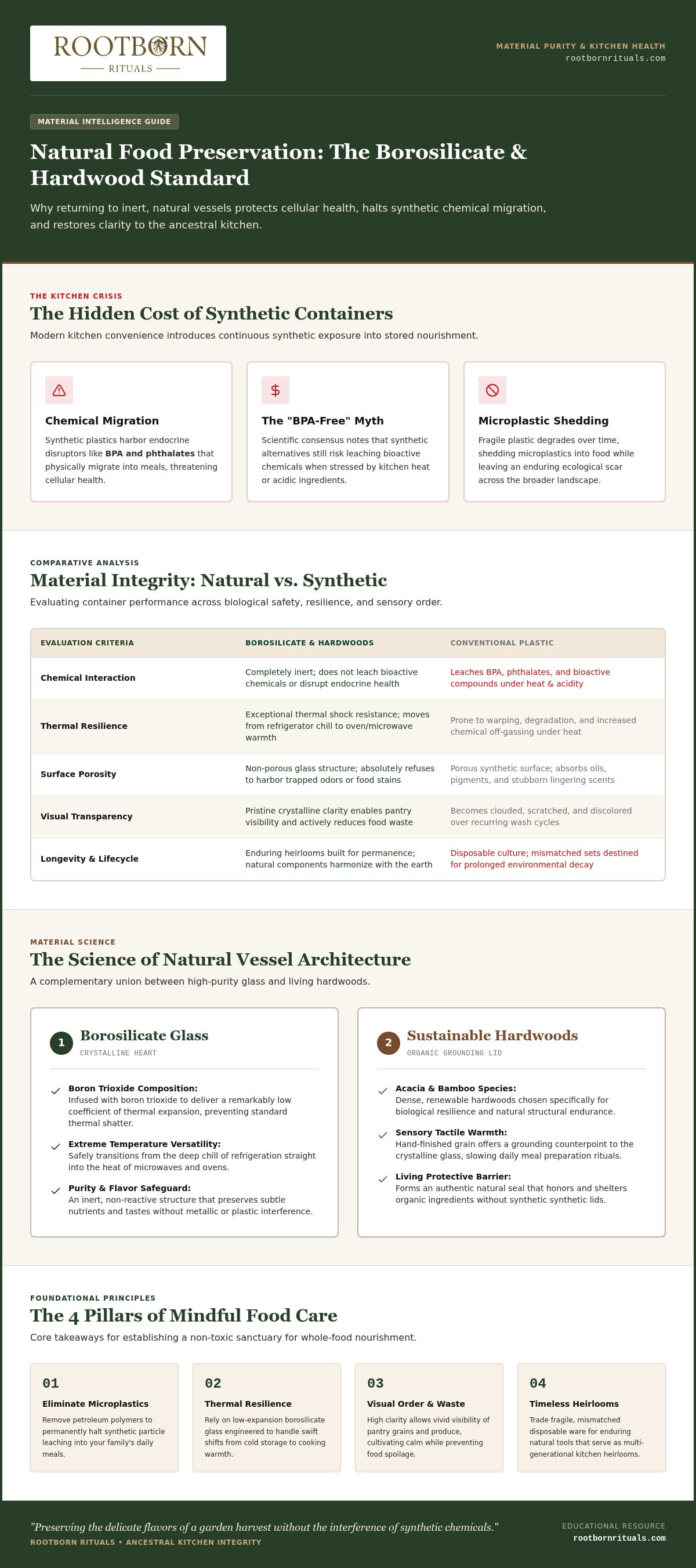
The modern reliance on plastic is a compromise that carries heavy, hidden costs. While marketed as convenient, synthetic containers often harbor endocrine disruptors like BPA and phthalates that migrate into your nourishment. Scientific consensus continues to evolve regarding the myth of "safe" plastics, as even BPA-free alternatives may leach bioactive chemicals when stressed by heat or acidity. Beyond the personal health impact, the environmental toll of disposable storage culture has left a lasting scar on our national landscape. Transitioning away from these materials is a vital health choice that protects your family's cellular integrity. To begin reclaiming your space, you can explore our guide on how to remove plastic from your kitchen to align your daily habits with ancestral purity.
Returning to Ancestral Purity
Our ancestors understood the profound relationship between the vessel and its contents. They relied on glass, wood, and clay because these materials are inert, honest, and enduring. There is a deep, grounding satisfaction in the sensory experience of natural materials. The cool, substantial weight of glass contrasts beautifully with the organic warmth of a hand-finished wood lid. These textures invite us to slow down during daily meal preparation, fostering a deeper connection to the ingredients we handle. The technical properties of borosilicate glass provide a foundation of trust, offering thermal shock resistance and a non-porous surface that refuses to harbor odors or stains. Natural preservation is the intentional act of honoring food through material purity. By curating your pantry with glass and wood food containers, you choose tools that respect the life-giving properties of your food while bringing a sense of timeless peace into your home.
The Purity of Borosilicate Glass and Sustainable Hardwoods
True preservation is a marriage of science and spirit. When we choose glass and wood food containers, we're selecting materials that respect the integrity of our nourishment. This combination isn't merely functional; it's a sophisticated system designed to protect the vitality of our ingredients. Borosilicate glass serves as the crystalline heart of this union, while sustainable hardwoods provide a grounding, organic soul. Together, they create a non-toxic sanctuary that honors the food we eat and the environment we inhabit.
Why Borosilicate Glass is the Gold Standard
The technical brilliance of borosilicate glass lies in its unique composition, specifically its high concentration of boron trioxide. This allows the material to possess a remarkably low coefficient of thermal expansion. While standard soda-lime glass might shatter when faced with sudden temperature changes, borosilicate remains stable and resilient. It's a reliable companion that transitions effortlessly from the chill of the refrigerator to the warmth of a microwave or oven. This thermal shock resistance ensures your tools remain functional for years, reflecting a commitment to quality over disposable convenience.
Beyond its strength, the absolute clarity of high-purity glass serves a deeper purpose in a mindful kitchen. It transforms your pantry into a visual ritual of abundance. When you can see the vibrant colors of your grains and greens, you're less likely to forget them. This transparency reduces food waste and encourages a more intentional relationship with your ingredients. Material purity is paramount. As we look to FDA guidance on food contact substances, the importance of using inert materials that don't leach chemicals into our meals becomes undeniably clear.
The Vital Role of Natural Wood Lids
Sustainable hardwoods like acacia and bamboo are not merely covers; they are living elements that breathe and protect. These dense woods are naturally resistant to moisture and harbor antimicrobial properties that make them ideal for food care. The organic grain of the wood provides a tactile reminder of our connection to the natural world. Every touch is a grounding experience. To ensure a truly hermetic seal, these lids often incorporate a high-grade silicone ring, which locks in freshness and protects against oxidation. This marriage of glass and wood food containers offers a level of hygiene and aesthetic harmony that synthetic alternatives simply cannot match.
Choosing these natural tools is a profound step toward a non-toxic home. You can explore our Natural Preservation Essentials to begin your own transition to a more intentional kitchen. By surrounding yourself with materials born of the earth, you create a space that fosters both physical health and a sense of enduring peace.
Comparing Storage Materials: Why Glass and Wood Reign Supreme
The vessels we choose for our nourishment carry a hidden lifecycle that extends far beyond the pantry shelf. When we evaluate storage options, we must look past the immediate price tag and consider the true cost of the materials involved. Mass-market solutions often prioritize industrial efficiency over human vitality. Choosing glass and wood food containers is a deliberate investment in the future, favoring materials that don't degrade, leach, or lose their soul over time. While plastic and metal have their place in modern life, they often fall short of the purity required for a truly mindful kitchen.
Glass and Wood vs. Plastic and Silicone
Plastic is a material defined by its eventual decay. Even the most durable synthetic containers begin to show their age through a network of fine scratches, stubborn stains, and lingering odors from past meals. These physical signs of wear are more than just aesthetic flaws; they're indicators of material breakdown. Every scratch is a potential site for bacterial growth or the shedding of microplastics into your food. Silicone is frequently presented as a natural alternative, yet it remains a synthetic polymer born of industrial processing. It lacks the ancestral heritage of earth-born materials. In contrast, glass and wood are stable and honest. They don't harbor the chemicals found in petroleum-based products, ensuring that your family's health isn't compromised by the tools meant to protect it.
Glass vs. Stainless Steel for Food Care
Metal containers are often lauded for their durability, yet they possess a significant limitation: they're opaque. Transparency is a vital tool for the mindful curator. When you can clearly see your ingredients, you foster a sense of visual abundance and reduce the likelihood of food being forgotten and wasted. Beyond the visual, glass is uniquely non-reactive. Metal can sometimes alter the delicate flavor profile of high-acid ingredients like citrus or tomato-based sauces, imparting a subtle metallic tang. Glass remains perfectly neutral, preserving the exact essence of what you've prepared.
There's also a psychological weight to the materials we touch daily. The substantial feel of a glass vessel paired with the organic warmth of a hardwood lid provides a grounding sensory experience that lightweight metal or plastic cannot replicate. Maintaining these natural tools is a simple, rhythmic process. Following USDA guidelines for cleaning wooden kitchenware ensures that your lids remain a hygienic and beautiful part of your home for decades. By choosing glass and wood food containers, you're not just buying storage; you're curating a collection of timeless tools that respect the sanctity of your nourishment.
Curating a Mindful Pantry: A Resource for Intentional Organization
The pantry is the heart's archive. It's a space that reflects our commitment to nourishment and our respect for the ingredients that sustain us. When we treat organization as a wellness practice, we move beyond mere tidiness into a state of intentional clarity. Transitioning to a non-toxic kitchen doesn't require an overnight upheaval. Instead, it's a methodical process of phasing out degraded plastic and introducing glass and wood food containers as permanent residents of your home. This systematic replacement reduces decision fatigue by providing a clear, visual inventory of your resources, allowing you to move through your kitchen with a sense of quiet confidence.
The Art of Decanting for Visual Serenity
Commercial packaging is designed to shout. It's filled with aggressive colors and marketing claims that disrupt the tranquility of your home environment. Decanting your grains, pulses, and spices into uniform vessels removes this external noise, allowing you to focus on the purity of the ingredient itself. Standardizing your storage sizes creates a rhythmic, balanced aesthetic that transforms a cluttered shelf into a gallery of natural textures. For those ready to deepen this practice, our guide on the non toxic kitchen makeover provides a comprehensive ritual for reclaiming your space from synthetic influences.
Slow Living and the Bulk Food Ritual
Adopting glass and wood food containers naturally facilitates a shift toward zero-waste shopping and slow living. Bringing your own vessels to local markets is a tactile way to honor the earth while ensuring your food never touches industrial plastics. There is a profound connection between a visible pantry and reduced food waste. When you can see the exact volume of your ancient grains through crystalline glass, you shop with precision and cook with gratitude. A curated pantry serves as a daily invitation to cook with intention. This mindful approach to storage perfectly complements our sustainable dining sets, creating a cohesive aesthetic that honors the entire journey of your meal from preservation to presentation.
Establishing this order is an act of self-care that ripples through every aspect of your daily life. It creates a sanctuary where you can truly slow down. We invite you to begin your journey toward a more purposeful home by exploring the curated selections at RootBorn Rituals, where every tool is vetted for its purity and its power to transform your daily rituals.
Honoring Your Tools: Caring for Glass and Natural Wood Lids
Caring for your tools is an act of gratitude for the nourishment they guard. When we choose glass and wood food containers, we're moving away from a culture of disposability and toward one of stewardship. These materials don't just hold our food; they're investments in our long-term wellness. Establishing a regular care ritual ensures that these vessels remain functional and beautiful for a lifetime. It's a slow, deliberate process that honors the natural origins of the glass and the wood, maintaining their integrity against the wear of daily use.
Borosilicate glass is remarkably resilient and perfectly safe for the dishwasher. However, many find that mindful hand-washing becomes a grounding moment in their daily routine. It allows you to appreciate the crystalline clarity and substantial weight of the material. For the lids, the focus shifts to preservation. Maintaining the hermetic seal is essential for keeping your ingredients fresh. Periodically check the natural gaskets for any debris and clean them with a soft cloth to ensure the airtight bond remains intact.
Preserving the Soul of the Wood
Natural wood is a living material that requires nourishment to prevent it from becoming brittle or cracked. Seasoning your lids with food-safe oils is a restorative act that deepens the grain and protects the wood's structure. Following a simple protocol can extend the life of your lids indefinitely:
- Apply a small amount of high-purity beeswax or food-grade mineral oil to a soft, lint-free cloth.
- Gently rub the oil into the surface of the wood, following the natural direction of the grain.
- Allow the lid to rest for several hours, letting the fibers fully absorb the oil before wiping away any excess.
You must avoid soaking wood lids in water. Prolonged moisture disrupts the natural cellular structure, leading to warping or splitting. If a lid begins to feel rough over time, a gentle sanding with fine-grit sandpaper followed by a fresh coat of oil will revitalize its organic luster.
Safe and Pure Cleaning Rituals
The purity of your containers should be matched by the purity of your cleaning agents. Use natural, biodegradable soaps that don't leave behind synthetic fragrances or chemical residues. If your glass vessels harbor stubborn odors from potent spices or fermented foods, a simple paste of baking soda and water offers a non-toxic solution. This ancestral method lifts scents without compromising the material's surface. When your glass and wood food containers aren't in use, store them with the lids off or slightly ajar. This allows the materials to breathe and prevents any moisture from being trapped, ensuring your kitchen sanctuary remains a space of freshness and peace.
Embracing the Ritual of Pure Preservation
Returning to natural materials is a profound step toward reclaiming the sanctity of your home. By choosing glass and wood food containers, you've moved beyond mere storage and into a practice of intentional living. You now understand that material purity isn't just an aesthetic choice; it's a vital commitment to your physical health and the vitality of your organic ingredients. From the thermal resilience of borosilicate glass to the antimicrobial warmth of sustainable hardwoods, these tools serve as permanent guardians of your family's wellness and the environment you inhabit.
Creating a non-toxic sanctuary is a slow, rewarding journey that honors the traditions of our ancestors while embracing modern safety standards. Our plastic-free materials are hand-curated for ancestral wellness, offering a timeless design that brings peace to the modern kitchen. We invite you to explore our Natural Preservation Essentials for a mindful kitchen and begin your transition to a more purposeful way of being. Your home is your most sacred environment, and every choice you make within it has the power to foster a deeper connection to the natural world. Trust in the process of slowing down and surrounding yourself with tools that truly honor the life they hold.
Frequently Asked Questions
Are glass food containers with wood lids truly airtight for long-term storage?
These vessels provide an exceptional seal when fitted with a high-grade silicone gasket. This flexible barrier creates a hermetic environment that protects your dry goods from moisture and oxidation. While the wood itself is a living material, the precision fit of the lid ensures that your ancestral grains and spices remain fresh for extended periods. It's a reliable system that balances natural beauty with the functional requirements of a modern pantry.
Can I put glass containers with wood lids in the microwave or oven?
You can safely use the glass base in the microwave or oven, but you must always remove the wood lid first. High heat from these appliances will cause natural wood to warp, crack, or lose its protective oils. Borosilicate glass is specifically engineered for thermal resistance. However, the wood lid is an organic element that requires the stability of room temperature to maintain its structural integrity and aesthetic soul.
How do I prevent the wood lids from molding or cracking over time?
Preventing damage to your lids requires a simple ritual of dry care and occasional seasoning. Never soak the wood in water or place it in the dishwasher, as excess moisture leads to internal swelling and eventual mold. Instead, wipe the lids with a damp cloth and dry them immediately. Periodically applying a food-safe oil creates a protective barrier that keeps the fibers supple and resilient against the dry air of your home.
Is borosilicate glass better than tempered glass for food storage?
Borosilicate glass is the superior choice for food care due to its exceptional resistance to thermal shock. Unlike standard tempered glass, which may shatter under sudden temperature shifts, borosilicate contains boron trioxide to minimize expansion. This makes it the ideal material for glass and wood food containers, as it safely transitions between various kitchen environments. Its non-porous nature also ensures that no chemical residues or odors linger after a cleaning ritual.
How do I remove the smell of strong spices from the wood lids?
Removing stubborn spice aromas is best achieved using a natural paste of baking soda and a small amount of water. Apply the paste to the underside of the wood lid and let it sit for several minutes before wiping it clean. This ancestral method neutralizes odors without introducing synthetic fragrances into your kitchen. For persistent scents, exposing the lid to fresh air and indirect sunlight for a few hours can also help revitalize the wood's natural scent.
Are these containers suitable for freezing liquids or leftovers?
These vessels are excellent for freezing leftovers, provided you leave ample space for expansion. Liquids expand as they turn to ice, which can exert pressure on the glass walls. To ensure safety, fill the vessel only to the three-quarters mark and allow the food to cool completely before placing it in the freezer. Using glass and wood food containers in the freezer protects your nourishment from the freezer burn often associated with thin plastic wraps.
Do wood lids require a specific type of oil for seasoning?
Wood lids benefit most from high-purity, food-grade oils that won't go rancid over time. Fractionated coconut oil, food-grade mineral oil, or a natural beeswax blend are the most effective choices for maintaining the wood's luster. Avoid using culinary vegetable or olive oils from your pantry. These organic fats can oxidize and develop an unpleasant odor, which may eventually compromise the sensory experience of your stored ingredients and the purity of your home.
What is the best way to clean the silicone seal on a wood lid?
The best way to clean the silicone seal is to gently remove it from the wood lid and wash it with warm, soapy water. Using a natural, biodegradable soap ensures that the seal remains free of synthetic residues. Once the gasket is completely dry, you can stretch it back into the lid's groove. This simple maintenance step prevents the buildup of fine particles and ensures your preservation tools remain a hygienic part of your daily ritual.


