


Did you know that the mechanical handling of plastic containers can shed up to 71.9 million microplastic particles into your family’s nourishment every single year? It’s unsettling to realize that the vessels meant to protect your food might be compromising its purity. You likely feel the weight of visual clutter and the subtle anxiety that comes with modern, synthetic storage. You want a kitchen that breathes, yet finding functional eco friendly pantry organization often feels like a difficult compromise.
We’re here to bridge the gap between ancient wisdom and modern function, transforming your space into a plastic-free sanctuary of health. By honoring these ancestral preservation rituals, you’ll reclaim the sanctity of your kitchen and ensure your food remains as nature intended. We’ll guide you through a deliberate process of decanting into glass and unglazed clay, using our Natural Preservation Essentials to create a rhythmic, visually serene system that’s as enduring as it is beautiful.
Key Takeaways
- Discover why unglazed clay is the gold standard for maintaining the breathability and ancestral vitality of your dry goods.
- Learn a structured template for eco friendly pantry organization that categorizes your staples by ritual rather than simple size.
- Master the transition ritual to mindfully audit your current inventory and purge synthetic materials without creating unnecessary waste.
- Understand the unique benefits of borosilicate glass for maintaining absolute hygiene and visual clarity in your food storage.
- Explore how integrating Natural Preservation Essentials protects your food’s purity and turns daily meal prep into a grounding ceremony.
The Philosophy of the Mindful Pantry: Beyond Simple Storage
The pantry stands as the silent heart of your home's vitality. It is more than a collection of shelves; it is a sacred reservoir where the energy of your future meals is held in trust. When we approach this space with intention, we move beyond the modern obsession with mere convenience. True eco friendly pantry organization replaces the frantic search for ingredients with a calm, rhythmic flow. It fosters a sense of culinary creativity that is often stifled by the visual noise of mismatched plastic and half-empty bags. By curating a sanctuary of whole foods, you reduce decision fatigue and honor the ancestral principles of food stewardship.
This shift from synthetic to natural is a return to a more grounded way of being. Throughout history, traditional food storage containers were crafted from the earth itself, utilizing glass, clay, and wood to protect the harvest. Reclaiming these materials allows us to align our daily environment with our deepest values of health and sustainability. It is a commitment to quality over quantity, ensuring that every object within your sight serves a purpose and carries a story of purity.
The Hidden Impact of Plastic on Food Purity
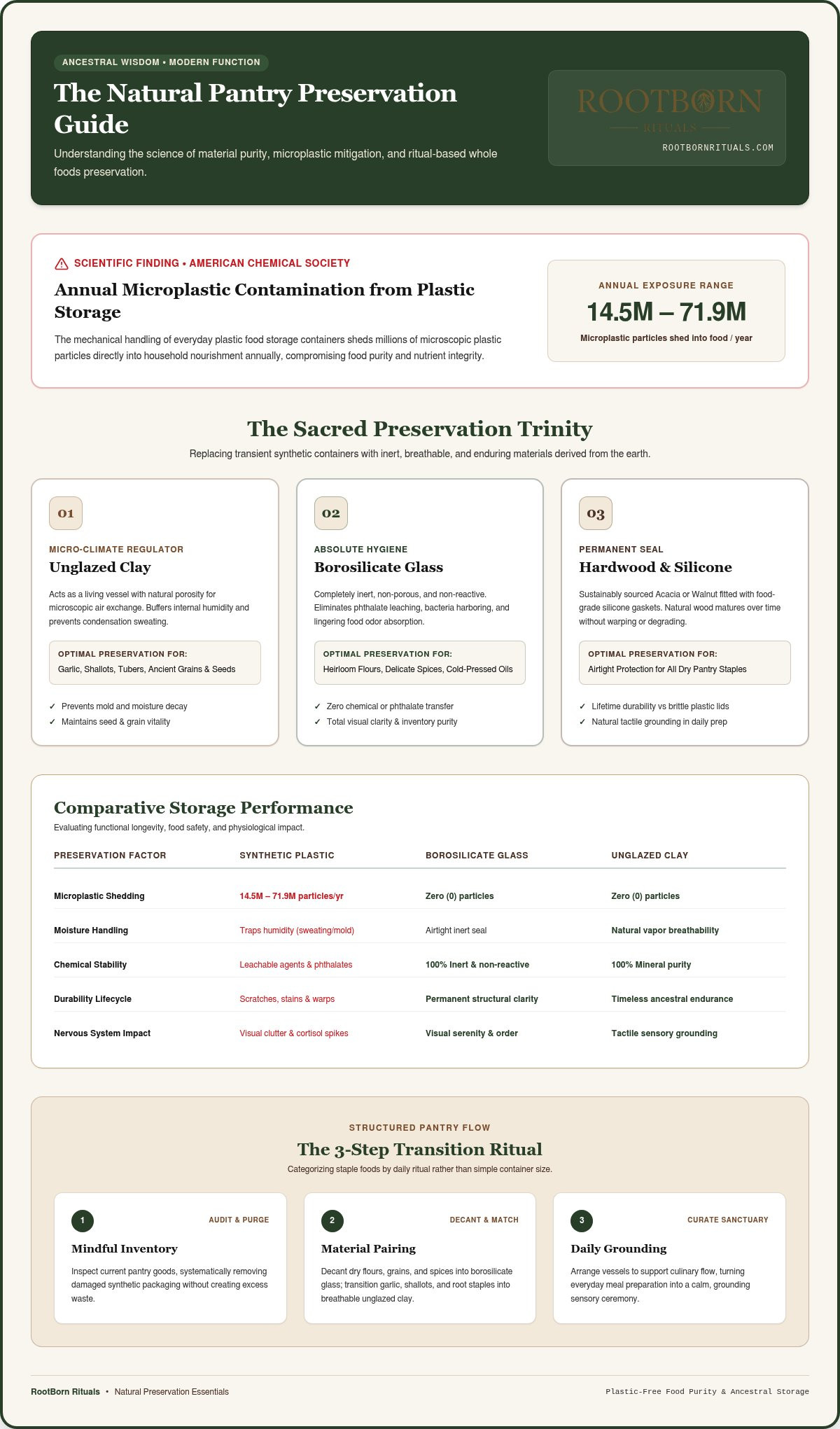
Choosing to remove plastic from your kitchen is an essential step in protecting your family’s long-term wellness. Research published by the American Chemical Society reveals a startling reality: the mechanical handling of plastic containers can shed between 14.5 million and 71.9 million microplastic particles into food annually. These microscopic invaders, along with chemical leachable agents, compromise the very life force of the grains and seeds you store. Our mission is to eliminate this invisible burden. By transitioning to our Natural Preservation Essentials, you ensure that your dry goods remain untainted. Plastic-free storage doesn't just look better; it preserves the vibrational integrity and nutritional density of your food, allowing the natural essence of each ingredient to shine through.
Organization as a Daily Wellness Ritual
We invite you to shift your mindset from the chore of cleaning to the ritual of curating. A mindful pantry is a curated space that supports your nervous system through visual serenity and sensory harmony. When you open your pantry door, the sight of uniform glass and the tactile warmth of wood should evoke a sense of peace rather than a surge of cortisol. This interaction with natural materials provides a grounding sensory experience that synthetic surfaces simply cannot replicate. The weight of a clay crock and the clarity of borosilicate glass remind us to slow down. This rhythmic approach to organization transforms a mundane task into a daily ceremony of gratitude for the earth's bounty.
Sacred Materials: Choosing Glass, Clay, and Wood for Longevity
Plastic is a material of transience. It scratches, stains, and eventually becomes brittle, releasing microscopic toxins into your immediate environment. In contrast, the materials we honor are chosen for their permanence and their purity. Borosilicate glass offers unparalleled clarity and hygiene. It’s an inert substance that won’t harbor bacteria or absorb lingering odors, making it the ideal vessel for storing pantry staple ingredients like heirloom flours, delicate spices, and cold-pressed oils.
A sustainable approach to eco friendly pantry organization begins with a reverence for the materials that touch your food. Unglazed clay acts as a living vessel, providing a unique micro-climate for your harvest. Its natural porosity allows for microscopic air exchange, which is the gold standard for preserving the vitality of garlic, shallots, and various tubers. While plastic traps moisture and invites rapid decay, clay regulates the internal environment to extend the life of your ingredients.
Hardwood lids, often crafted from acacia or walnut, provide the final protective seal. When fitted with food-grade silicone gaskets, these sustainably sourced lids offer the airtight protection necessary for long-term preservation. Unlike plastic lids that warp and lose their seal, natural wood matures with age. This durability ensures that your storage system lasts a lifetime, reducing the need for the constant replacement cycle driven by modern consumerism.
Why Material Purity Matters for Nutrient Density
The health of your food is inextricably linked to the vessel that holds it. Unglazed clay naturally buffers humidity, preventing the "sweating" that leads to mold in synthetic containers. This moisture regulation is vital for maintaining the nutrient profile of ancient grains and seeds. Glass provides a similar benefit by remaining completely non-reactive, ensuring no phthalates leach into your dry goods. Material stewardship is the foundation of a non-toxic home; it’s a deliberate choice to support your physical wellness.
The Aesthetic Harmony of Natural Textures
There’s a profound psychological shift that occurs when you replace visual clutter with a palette of earth-toned textures. Seeing your whole foods through clear, pure glass fosters a deeper connection to your nourishment. It’s a transparent invitation to cook with intention. By choosing timeless designs, you move beyond fleeting organization trends. This cohesive look creates a sense of sanctuary, proving that eco friendly pantry organization is as much about mental clarity as it is about physical order. To begin your journey, consider the quiet elegance of our Natural Preservation Essentials.
The Whole Foods Organization Template: Categorizing by Ritual
Traditional organization often mimics the chaos of a commercial grocery store, prioritizing shelf density over the human experience. We propose a different path. By categorizing your staples based on the ritual of their use, you create an intuitive flow that honors the preparation of every meal. This eco friendly pantry organization template divides your sanctuary into three distinct zones: the Bulk Foundation, the Preservation Zone, and the Active Kitchen. This method ensures that the items you reach for daily are within a gentle grasp, while foundational stores remain protected in the quiet depths of your shelves.
This structure isn't just about aesthetics; it’s about food stewardship. When you know exactly where your ancestral grains reside and how long your ferments have been aging, you reduce waste and deepen your connection to the seasons. Each zone serves a specific purpose in the lifecycle of your kitchen, turning the act of reaching for an ingredient into a mindful pause.
Grains and Legumes: The Foundation of Vitality
Ancestral grains and legumes form the bedrock of a nourishing diet. These staples thrive when stored in large-scale borosilicate glass or unglazed clay vessels that allow for easy visual inventory. To maintain the purity of this space, we eschew plastic adhesive labels. Instead, embrace the ritual of hand-marking your vessels with a wax pencil or tying minimalist linen tags around the necks of your jars. This tactile interaction reinforces your connection to the harvest. For natural pest prevention, tucking a few dried bay leaves or a small block of aromatic cedar into your grain bins provides a time-honored barrier without the need for synthetic repellents.
Oils, Spices, and Liquid Wellness
The 'Active Kitchen' zone houses the delicate elixirs and potent botanicals used in your daily seasoning rituals. High-quality fats and spices are sensitive to light and heat, which can degrade their nutrient density and flavor profile. Store your cold-pressed oils and hand-harvested salts in dark glass or ceramic vessels to shield them from ultraviolet rays. It’s vital to position these items away from heat sources like the oven or dishwasher to prevent premature oxidation. When you transition from preparation to the table, integrating sustainable dining sets ensures that the same level of material purity follows your food from the pantry to the plate.
The Preservation Zone is reserved for fermented goods, slow-aged vinegars, and long-term seasonal stores. These items require a cool, dark environment where they can mature undisturbed. By separating these from your daily essentials, you protect their slow transformation and ensure your eco friendly pantry organization remains a functional, living system. This intentional placement reflects a deep respect for the time required for true nourishment to develop, allowing you to curate a kitchen that breathes with the rhythm of nature.
The Transition Ritual: A Step-by-Step Guide to a Pure Pantry
Transitioning to a pure kitchen is a methodical ceremony; it is a slow peeling back of synthetic layers to reveal the vitality beneath. This process of eco friendly pantry organization is not a weekend chore to be rushed. Instead, it is an invitation to slow down and consider the materials that guard your family's health. By following a structured transition ritual, you transform a chaotic storage space into a curated sanctuary of wellness. This shift requires both physical action and a shift in perspective, moving from a mindset of "storage" to one of "stewardship."
The process begins with a Mindful Audit. Examine every vessel in your current collection. Plastic that has become cloudy, brittle, or scratched is actively shedding microplastics into your staples. Once identified, these items must be purged. We suggest repurposing them for non-food organization in a workshop or garden to extend their life without compromising your health. Next, move to Intentional Selection. Measure your shelving with precision. Visual serenity depends on the harmonious fit of your vessels within the space. The Decanting Ritual follows, where you pour your grains and seeds into their new sacred containers. Finally, establish a rhythm of Sustainable Maintenance, cleaning and refilling your jars with the changing of the seasons to ensure a constant flow of fresh, pure ingredients.
Conducting a Non-Toxic Kitchen Audit
Focus your initial efforts on the most at-risk containers. Scratched, aged, or heat-damaged plastic poses the greatest risk for chemical leaching. It is essential to prioritize the replacement of storage for high-fat foods, such as nuts, seeds, and oils, as these substances more readily absorb plasticizers. This audit is a vital component of a broader non-toxic kitchen makeover, ensuring that every corner of your culinary environment aligns with ancestral purity. By removing these silent disruptors, you create space for materials that truly honor your food.
The Art of Decanting for Freshness
Decanting is the soul of eco friendly pantry organization. Removing food from its commercial packaging and placing it into clear borosilicate glass immediately heightens your awareness of your inventory. You can see the texture of the grain and the vibrancy of the spice, which naturally encourages more creative and frequent cooking. To maintain an airtight seal with natural lids, ensure the silicone gaskets are seated properly and the wood is conditioned with food-grade oils. The rhythmic sound of grains cascading into a glass vessel offers a moment of quiet contemplation in an otherwise busy day. Begin your transformation today by curating your own set of Natural Preservation Essentials.
Curating Your Sanctuary: RootBorn Rituals for Natural Preservation
The completion of your transition ritual is just the beginning of a lifelong stewardship. Your pantry is now more than a storage room; it is a living sanctuary that reflects your commitment to purity and intentional living. This new standard of eco friendly pantry organization is a living practice that evolves with the seasons and the needs of your family. By choosing vessels that bridge the gap between ancient wisdom and modern sophistication, you create a space that breathes with the rhythm of nature. Our Natural Preservation Essentials serve as the cornerstone of this transformation, providing the tools necessary to protect the vitality of your nourishment for years to come.
Natural Preservation Essentials for the Modern Home
We believe that every object in your home should be an investment in your well-being. Our collection is founded on the marriage of function and ancestral material science, utilizing inert glass and breathable clay to honor the life force of your food. This is not a journey of mass consumption, but one of slow, deliberate curation. We encourage you to build your collection over time, selecting each piece with the same care you use to choose your ingredients. These artisanal tools are designed for durability, transcending the fragile nature of plastic. When you invest in high-quality, plastic-free materials, you are investing in the long-term health of your lineage and the preservation of the natural world.
As you move from preservation to preparation, the ritual deepens. Integrating organic clay cookware into your kitchen allows the vitality of your stored ingredients to flow seamlessly into the cooking process. The same principles of material purity apply to your pots and pans, ensuring that no synthetic toxins interrupt the journey from pantry to plate.
Expanding the Ritual: From Pantry to Table
A mindfully organized pantry facilitates a more profound connection to the act of eating. When your ingredients are held in sacred vessels, the transition to mindful dining rituals becomes effortless. You no longer eat for mere convenience; you nourish yourself with intention. The visual serenity of your eco friendly pantry organization sets the tone for the entire home, calming the nervous system before the first bite is even taken. This holistic approach ensures that every interaction with your culinary environment is a grounding pause in a fast-paced world.
Embracing the full scope of how to remove plastic from your kitchen is a powerful act of environmental and personal stewardship. It is a commitment to a lifestyle that values quality, tradition, and the profound impact of daily choices. By maintaining your sanctuary with reverence, you ensure that your home remains a bastion of health and tranquility. Let this be a lifelong practice of gratitude for the earth's bounty and the purity of the vessels that hold it.
Cultivating a Legacy of Kitchen Purity
Reclaiming the pantry as a sanctuary is a quiet yet powerful rebellion against the culture of the temporary. By moving away from synthetic vessels and embracing the permanence of glass and clay, you ensure that your nourishment remains untainted and full of life. You now possess a methodical template for eco friendly pantry organization that honors both your physical health and your need for visual serenity. This transition isn't merely about tidiness; it's a commitment to a lifestyle defined by intention and heritage.
Every vessel you choose for your home should tell a story of quality and care. We've vetted every detail of our collections to provide a strict plastic-free guarantee, combining artisanal quality with a health-first material selection that protects your family's vitality. We invite you to Explore our Natural Preservation Essentials to begin your pantry ritual and witness the transformation of your daily environment. Your kitchen is a reflection of your deepest principles. Let it breathe with the quiet confidence and purity it deserves.
Frequently Asked Questions
Is glass or clay better for eco friendly pantry organization?
Glass and clay are both essential components of eco friendly pantry organization, yet they serve different ancestral functions. Borosilicate glass is prized for its inert nature and absolute clarity, allowing you to monitor your staples with ease. Conversely, unglazed clay is the gold standard for breathability. It regulates humidity for root vegetables and ancient grains, preventing the moisture buildup that often leads to spoilage in non-breathable synthetic containers.
How do I keep my food fresh in plastic-free containers?
Maintaining freshness in a plastic-free kitchen relies on material integrity and proper sealing. For dry staples like flours and seeds, borosilicate glass provides a non-porous barrier against moisture and pests. For living foods like garlic or potatoes, unglazed clay crocks offer a cool, dark environment that mimics traditional root cellars. This approach preserves the nutrient density of your ingredients without the risk of chemical leaching from common plasticizers.
What are the best sustainable materials for an airtight seal?
The most effective sustainable seals utilize the natural resilience of hardwood lids paired with food-grade silicone gaskets. Acacia and walnut lids are particularly durable, resisting the warping that often compromises plastic alternatives. These natural materials mature with age, maintaining a reliable barrier against oxygen and pantry pests. For temporary storage, yellow beeswax wraps affirmed as safe under FDA guidelines offer a breathable, antimicrobial alternative to single-use wraps.
Can I reuse old glass jars for a sustainable pantry?
Reusing existing glass jars is a beautiful way to begin your journey toward a more intentional kitchen. It honors the principle of stewardship by extending the life of materials already in your possession. Before use, ensure the glass is free of chips and the lids are thoroughly sanitized. If the original metal lids show signs of rust or have plastic liners that appear degraded, consider replacing them with sustainable wood alternatives.
Is it expensive to switch to an eco-friendly pantry system?
Transitioning to a high-end, sustainable system is a deliberate investment in your family's future. While artisanal vessels carry a higher initial cost than mass-produced plastic, they're designed to last a lifetime. Consider that the average American family loses nearly $3,000 annually in wasted food. By investing in quality preservation tools, you reduce spoilage and eliminate the need for the constant replacement cycle driven by brittle, degrading plastic storage.
How do I prevent pests in a plastic-free pantry?
Preventing infestations in an eco friendly pantry organization system involves a mix of physical barriers and natural repellents. Borosilicate glass canisters with precise gaskets are impenetrable to common pests. You can further protect your sanctuary by placing dried bay leaves or small blocks of aromatic cedar on your shelves. These time-honored botanicals act as a gentle, non-toxic deterrent, ensuring your ancestral grains remain pure and undisturbed by unwanted visitors.
What should I do with my old plastic containers?
We recommend a mindful approach to purging your existing plastic inventory. If the containers are still functional but no longer safe for food contact due to scratching or cloudiness, repurpose them for non-culinary organization. They're excellent for holding craft supplies, garden seeds, or hardware in the workshop. This keeps synthetic materials out of the landfill while ensuring your food is no longer exposed to the millions of microplastics shed by degrading surfaces.
Does organizing the pantry really improve health?
A curated pantry has a profound impact on both physical and mental well-being. Removing plastic eliminates exposure to endocrine-disrupting chemicals and microplastics, which research suggests can reach up to 50.7 grams per person annually. Beyond physical purity, the visual serenity of natural materials like wood and clay reduces decision fatigue. This calm environment regulates the nervous system, turning the act of meal preparation into a grounding wellness ritual.


