


What if the modern conveniences we once celebrated as progress are actually the very things quietly compromising the sanctity of our sanctuaries? It's a heavy realization that the invisible presence of polymers has permeated our most private spaces; however, this awareness is the first step toward reducing microplastics in home environments. You've likely felt a nagging sense of unease while unboxing plastic-wrapped groceries or heating food in synthetic containers. You know intuitively that your home should be a place of absolute purity, yet the modern world makes that ideal feel increasingly out of reach.
This guide invites you to step away from the noise and embrace a more intentional path toward reclaiming your space. We promise to help you identify these hidden intruders and eliminate them by returning to the sacred use of natural, ancestral materials. By choosing tools that have nourished humanity for millennia, you can transform your living environment into a serene, toxin-free sanctuary. We'll explore how to replace modern compromises with unglazed clay, pure copper, and organic fibers; these are the physical foundations of a life lived in harmony with nature and heritage.
Key Takeaways
- Learn to identify the "invisible guest" by understanding the distinction between primary microplastic particles and the secondary degradation of synthetic household items.
- Pinpoint the primary sources of shedding in your daily life, specifically focusing on the kitchen as a critical area for reducing microplastics in home environments.
- Discover the restorative power of ancestral materials like unglazed clay and pure copper; they offer a biologically compatible alternative to synthetic coatings.
- Master a room-by-room ritual to transition your kitchen and dining spaces into plastic-free sanctuaries using natural preservation and dining essentials.
- Embrace a philosophy of slow living that transforms the removal of toxins into a sacred, lifelong practice of intentional curation.
The Invisible Guest: Understanding Microplastics in the Modern Home
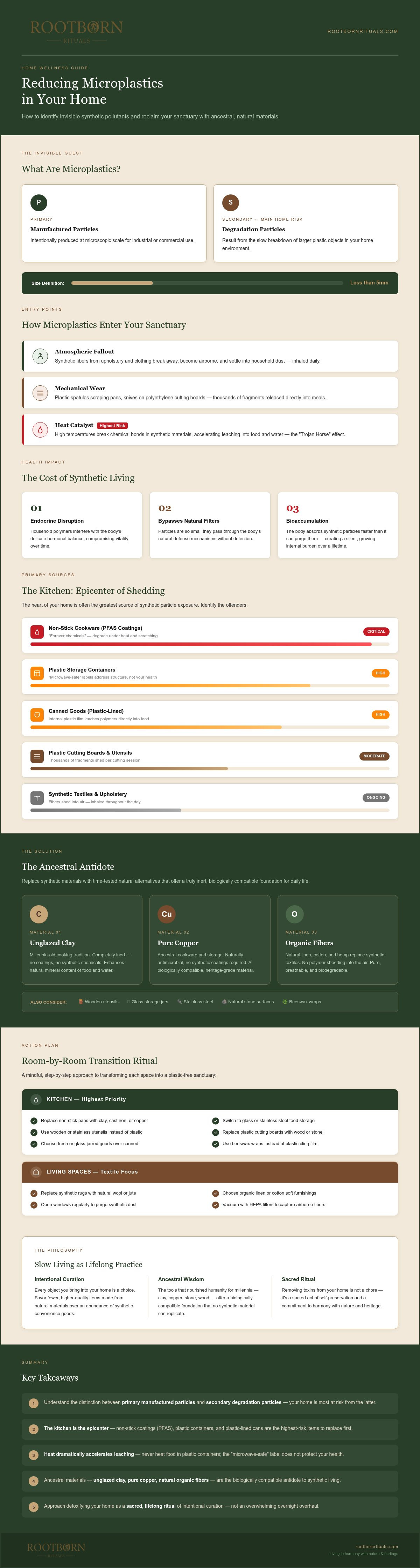
To protect the sanctity of our living spaces, we must first recognize the unseen intruders that have quietly settled within them. Microplastics are synthetic polymer particles measuring less than five millimeters in size. They exist in two distinct forms: primary microplastics, which are manufactured at this microscopic scale for industrial use, and secondary microplastics, which result from the slow degradation of larger plastic objects. In the context of reducing microplastics in home environments, we are largely contending with this secondary decay. It's the physical manifestation of a world that has prioritized convenience over permanence, leaving behind a fragmented legacy in our air and water.
The home has become the primary site of exposure, acting as a vessel for these particles. While we often think of environmental pollution as something occurring in the distant oceans, the concentration of synthetic dust and leached chemicals is often higher within our own four walls. Every synthetic textile, every plastic storage container, and every coated pan contributes to a microscopic shedding that we unknowingly ingest and inhale daily. This presence isn't just an environmental issue; it's a direct challenge to the purity of our personal sanctuaries.
How Microplastics Breach the Sanctuary
The entry points are as varied as they are subtle. Atmospheric fallout occurs when synthetic fibers from upholstery and clothing break away, becoming airborne before settling into the dust that covers our surfaces. Mechanical wear is another silent contributor; each time a plastic spatula scrapes a pan or a knife strikes a polyethylene cutting board, thousands of fragments are released into our meals. These small actions, repeated over years, create a constant stream of synthetic debris.
Perhaps most concerning is the heat catalyst. High temperatures act as a key that unlocks the chemical bonds of synthetic materials, causing polymers to leach into food and water. This "Trojan Horse" effect means that even if a material appears solid, the introduction of heat accelerates the transfer of toxins directly into our bodies. When we use plastic for high-heat cooking, we are essentially inviting these particles to become part of our biological makeup.
The Health Implications of Synthetic Living
Modern science is beginning to confirm what the body feels intuitively: synthetic living comes at a cost. Many household polymers are linked to endocrine disruption, interfering with the delicate hormonal balance that governs our vitality. Because these particles are so small, they bypass the body's natural filters, leading to a cumulative burden over a lifetime. Bioaccumulation is the silent, rhythmic gathering of synthetic remnants within our tissues, where the body absorbs these foreign particles faster than it can release them through its natural cycles of purification. Reclaiming our health requires a shift toward reducing microplastics in home rituals by choosing materials that honor our biological heritage and offer a truly inert foundation for daily life.
Identifying the Primary Sources of Plastic Shedding
While we often view the kitchen as the heart of the home, it has inadvertently become the epicenter of synthetic shedding. The ritual of reducing microplastics in home environments begins with a clear-eyed assessment of our most frequented spaces and the objects we interact with daily. This awareness isn't meant to overwhelm, but to empower you as a mindful curator of your own sanctuary. When we identify the specific conduits through which polymers enter our lives, we can begin the graceful process of replacing them with materials that honor our well-being.
The Kitchen Epicenter: Cookware and Storage
Non-stick coatings are perhaps the most pervasive offenders in the modern kitchen. These surfaces are engineered with PFAS, often called "forever chemicals," which fragment into microscopic debris as the coating inevitably degrades under high heat. Every scratch from a metal utensil or every cycle of overheating releases a flurry of synthetic particles directly into your nourishment. Similarly, the industry label of "microwave-safe" is a misnomer that addresses the container's structural integrity rather than your health; high-frequency waves agitate plastic molecules, causing them to migrate into your food. Even the humble canned good is often lined with a thin plastic film, ensuring that the ritual of opening a meal is accompanied by an unintended dose of polymers.
Textiles and the Air We Breathe
Beyond the kitchen, the very air we breathe is shaped by our choice of textiles. Synthetic rugs, polyester bedding, and nylon upholstery act as microfiber factories, shedding thousands of invisible threads with every step or movement. These fibers don't simply disappear; they become part of the household dust that settles on our surfaces and enters our lungs. Laundry cycles further accelerate this process, as the mechanical agitation of synthetic clothing releases millions of microfibers into the water and, eventually, back into our local ecosystems. To truly succeed in reducing microplastics in home settings, one must look beyond the obvious and address the hidden polymers in our textiles. Transitioning to organic fibers like linen, wool, or cotton provides a more grounded environment that honors the body's need for breathability.
The irony of modern purification is nowhere more evident than in water filtration. Many high-end filters are housed in plastic carafes or use synthetic cartridges; these can shed particles back into the very water they aim to purify. In the bathroom, the "microbead" legacy continues through liquid plastics used as thickeners in personal care products. Recognizing these sources is an invitation to curate a more intentional life. You might begin this journey by exploring Natural Preservation Essentials that replace these synthetic compromises with materials of ancestral purity.
The Ancestral Antidote: Reclaiming Purity with Natural Materials
The path toward reducing microplastics in home settings isn't a modern invention; it's a return to the elemental wisdom of our ancestors. For thousands of years, humanity relied on materials that were born from the earth and returned to it without leaving a synthetic scar. These ancestral materials aren't just tools; they're biologically compatible companions that respect the body's internal environment. While modern coatings are designed for a fleeting convenience, materials like clay and copper are crafted for a lifetime of purity. By surrounding ourselves with these inert substances, we create a physical barrier against the fragmentation of the modern world.
Organic Clay: The Gold Standard for Purity
Unglazed clay stands as the pinnacle of non-toxic living. Unlike the degrading synthetic coatings discussed previously, organic clay is entirely inert. It doesn't leach; it doesn't shed; it doesn't compromise the integrity of your food. When you cook with unglazed clay cookware, you're utilizing a porous vessel that allows heat and moisture to circulate in a way that modern metals and plastics simply cannot replicate. This breathability is a functional ritual, preserving the natural nutrients and flavors while ensuring that no microscopic polymers ever enter the steam. It's a sensory experience that grounds the kitchen in the weight and texture of the earth itself, offering a level of safety that is as ancient as it is absolute.
Copper and Glass: Sophisticated Hydration
Water is the most fundamental element of our vitality, yet it's often the most contaminated by synthetic storage. Transitioning away from plastic bottles toward pure copper and glass carafes is a profound act of self-care. Glass offers a neutral, non-leaching environment that preserves the water's clarity without the risk of chemical migration. It's the perfect vessel for those who seek absolute transparency in their hydration rituals, ensuring that the water remains as pure as the source intended.
Copper, however, brings an additional layer of ancestral wisdom to the home. In the Ayurvedic tradition, storing water in copper vessels is practiced to balance the body's internal energies and promote vitality. Beyond tradition, copper is naturally antimicrobial, offering a self-purifying quality that plastic can never achieve. By choosing these materials, you aren't just reducing microplastics in home; you're elevating a daily necessity into a sophisticated ritual of wellness. This shift from synthetic to elemental is the antidote to the confusion of modern living, providing a clear and beautiful path back to a grounded state of being.
A Room-by-Room Ritual for a Plastic-Free Sanctuary
Transforming a modern house into a sanctuary requires a deliberate purification of the materials that define our daily existence. This process is not merely about organization; it is a sacred ritual of curation. By systematically addressing each space, we create a home that supports our vitality rather than quietly taxing it. The journey of reducing microplastics in home environments begins where we are most vulnerable: the spaces where we prepare our nourishment and gather to share it.
The Kitchen Makeover Ritual
The kitchen serves as the heart of the home, making it the most critical starting point for your transition. Transitioning to plastic free kitchen essentials is a foundational step in reclaiming the purity of your meals. This ritual begins with a mindful audit of your current tools. Examine your cookware for any signs of peeling or scratched non-stick surfaces; these are active sites of polymer shedding. Once identified, these items should be gracefully retired from your sanctuary.
Next, replace synthetic utensils with those made from organic wood or high-quality stainless steel. These materials do not degrade under heat or release microscopic debris into your food. The final and most transformative step is to introduce organic clay cookware for all heat-based tasks. By utilizing unglazed earth, you ensure that the heat catalyst works in your favor, enhancing flavors while maintaining an absolute barrier against synthetic contamination.
A Mindful Dining Transition
The ritual extends from the stove to the table, where the act of dining should be a moment of pure connection. Curating a table with sustainable dining sets ensures that the elegance of your environment matches the quality of your food. Many modern households rely on melamine or plastic-coated plates, which can shed particles when in contact with warm food or acidic dressings. Replacing these with plastic free plates and bowls crafted from ceramic or stone restores a sense of weight and permanence to your meals.
The ritual of using handcrafted sustainable tableware elevates a simple Tuesday dinner into a ceremony of wellness. This transition also includes the smaller details that are often overlooked. Eliminate plastic straws and synthetic cups in favor of copper and glass carafes. These materials do not leach; instead, they provide a neutral, sophisticated vessel for hydration that honors the body's need for purity.
The pantry and laundry room are the final frontiers in reducing microplastics in home settings. In the pantry, adopt natural food preservation rituals by replacing plastic wraps and bags with glass jars and organic cloth covers. In the laundry room, consider installing a microfiber filter to catch synthetic threads from polyester clothing before they enter the water system. Each of these small, intentional choices contributes to a larger tapestry of health. To fully equip your sanctuary, explore our Natural Preservation Essentials and begin your journey toward ancestral purity.
Cultivating a Lifetime of Intention and Purity
The journey of reducing microplastics in home environments is not a race to a finish line; it's a fundamental shift toward slow living. It requires us to move beyond the reactive anxiety of modern toxicity and into a proactive state of mindful curation. When we choose to surround ourselves with materials that have stood the test of time, we're doing more than just cleaning our air and water. We're reclaiming a sense of agency over our immediate surroundings. This transition fosters a deeper, more resonant connection to the natural world, reminding us that we aren't separate from our environment but an integral part of its delicate balance.
Choosing Quality Over Convenience
Modern consumerism often prioritizes the immediate ease of disposable items, yet this convenience carries a heavy invisible cost. Choosing quality over convenience is an investment in both your physical health and your long-term peace of mind. Durable, natural materials like unglazed clay and pure copper offer a superior cost-per-use benefit compared to their synthetic counterparts. While a plastic container may degrade and require replacement within a year, heirloom-quality kitchenware is designed to endure for generations. This longevity reduces the cycle of waste and ensures that your home remains a sanctuary of stability. There's a profound psychological peace that comes from knowing every object in your living space has been carefully vetted for its purity and purpose.
The RootBorn Rituals Commitment
At RootBorn Rituals, our dedication to 100% plastic-free, earth-born essentials is a matter of deep principle. We act as a bridge between ancient wisdom and the complexities of modern life, ensuring that every piece in our collections aligns with a higher standard of wellness. We invite you to begin your own transformation by performing a non toxic kitchen makeover. This intentional process is the first step in a lifelong commitment to reducing microplastics in home spaces. By choosing tools from our Pure & Ancestral Cooking Collection or our Hydration & Detox Rituals, you're choosing a life of clarity and intention. Your home is more than just a shelter; it's a sacred vessel for your life's work and your family's health. Treating it with the gravity it deserves ensures that your environment remains a source of strength, purity, and enduring peace.
Reclaiming the Sanctity of Your Living Space
Reclaiming your home from the invisible presence of polymers is a profound act of devotion to your well-being. We've explored how the kitchen acts as an epicenter for shedding and how synthetic textiles influence the very air we breathe. By understanding these sources, the process of reducing microplastics in home environments becomes a clear, manageable ritual of replacement. Transitioning to unglazed clay, pure copper, and organic fibers isn't just a modern trend; it's a return to a biologically compatible way of living that honors our ancestral heritage.
Every intentional choice you make builds a legacy of purity for your family. Elevate your home sanctuary with our Pure & Ancestral Cooking Collection, where 100% plastic-free materials meet sophisticated modern design. We ensure your journey is supported by eco-conscious shipping and a deep commitment to ancestral wisdom. You have the power to transform your surroundings into a true refuge. Trust in the weight of natural materials and the peace they bring to your daily rituals.
Frequently Asked Questions
What are the most common sources of microplastics in the home?
The most pervasive sources include synthetic textiles, non-stick cookware coatings, and household dust. Polyester rugs and nylon upholstery act as microfiber factories; they shed threads that eventually settle into the air we breathe. In the kitchen, plastic cutting boards and utensils release particles through mechanical wear. By identifying these conduits, you can begin the process of reducing microplastics in home settings through the intentional curation of ancestral materials like organic wood and linen.
Can I ever truly remove all microplastics from my environment?
While achieving a zero-plastic environment is nearly impossible in our interconnected world, you can significantly diminish your exposure. The goal is to transform your home into a sanctuary where the most frequent points of contact are pure and inert. By focusing on your kitchen and bedroom, you address the primary sites of ingestion and inhalation. This journey is one of progress and intentionality, rather than a quest for absolute perfection in an imperfect landscape.
Is it safe to cook with plastic if it is labeled BPA-free?
BPA-free labels are often a modern misnomer that provides a false sense of security. Manufacturers frequently replace bisphenol A with similar chemicals like BPS or BPF, which may carry comparable health risks. Regardless of the specific polymer used, heat acts as a catalyst that causes synthetic materials to leach into your nourishment. Choosing truly inert materials like unglazed clay ensures your food remains free from the chemical migrations inherent to all synthetic containers.
How do microplastics get into my drinking water?
Microplastics enter your hydration rituals through contaminated source water, degrading plastic piping, and even the very filters designed to purify it. Many modern filtration systems are housed in plastic carafes that can shed particles back into the water. Transitioning to copper or glass carafes provides a sophisticated, non-leaching alternative. These materials respect the water's clarity and vitality; they ensure that your hydration remains a pure and restorative ritual for your body.
What is the best material to replace plastic food storage?
The most effective alternatives for food storage are glass, stainless steel, and organic clay. These materials are entirely inert and don't interact with the acidity or temperature of your food. Our Natural Preservation Essentials focus on these ancestral materials to provide a safe, permanent solution for your pantry. Unlike plastic, which degrades and requires frequent replacement, these tools are designed for longevity and purity, fostering a deeper connection to a grounded, toxin-free lifestyle.
Do natural fiber clothes also shed microparticles?
All textiles shed fibers through daily wear and laundering, but natural fibers like wool, cotton, and linen are biodegradable. Unlike synthetic microfibers, which persist in the environment and your lungs for decades, natural particles are biologically compatible. Moving toward organic textiles is a critical step in reducing microplastics in home air quality. These materials offer a breathable, grounded environment that honors your body's need for purity without leaving a permanent synthetic legacy.
How often should I replace my cookware to avoid plastic leaching?
If you are using non-stick or plastic-coated cookware, you should consider replacing it as soon as the surface shows signs of wear or scratching. However, a more sustainable approach is to transition to heirloom materials that never need replacing. Unglazed clay and pure copper are crafted for a lifetime of use. These ancestral tools provide a permanent barrier against leaching, allowing you to move away from the cycle of disposable, degrading synthetic kitchenware.
What happens if I accidentally ingest microplastics?
When microplastics are ingested, they can enter the bloodstream and settle within various tissues, leading to a process known as bioaccumulation. This cumulative burden is linked to endocrine disruption and other metabolic challenges. Because these particles are foreign to our biological heritage, the body often struggles to eliminate them as quickly as they are absorbed. Reclaiming your home's purity through ancestral materials is the most effective way to minimize this silent gathering within your body.


