


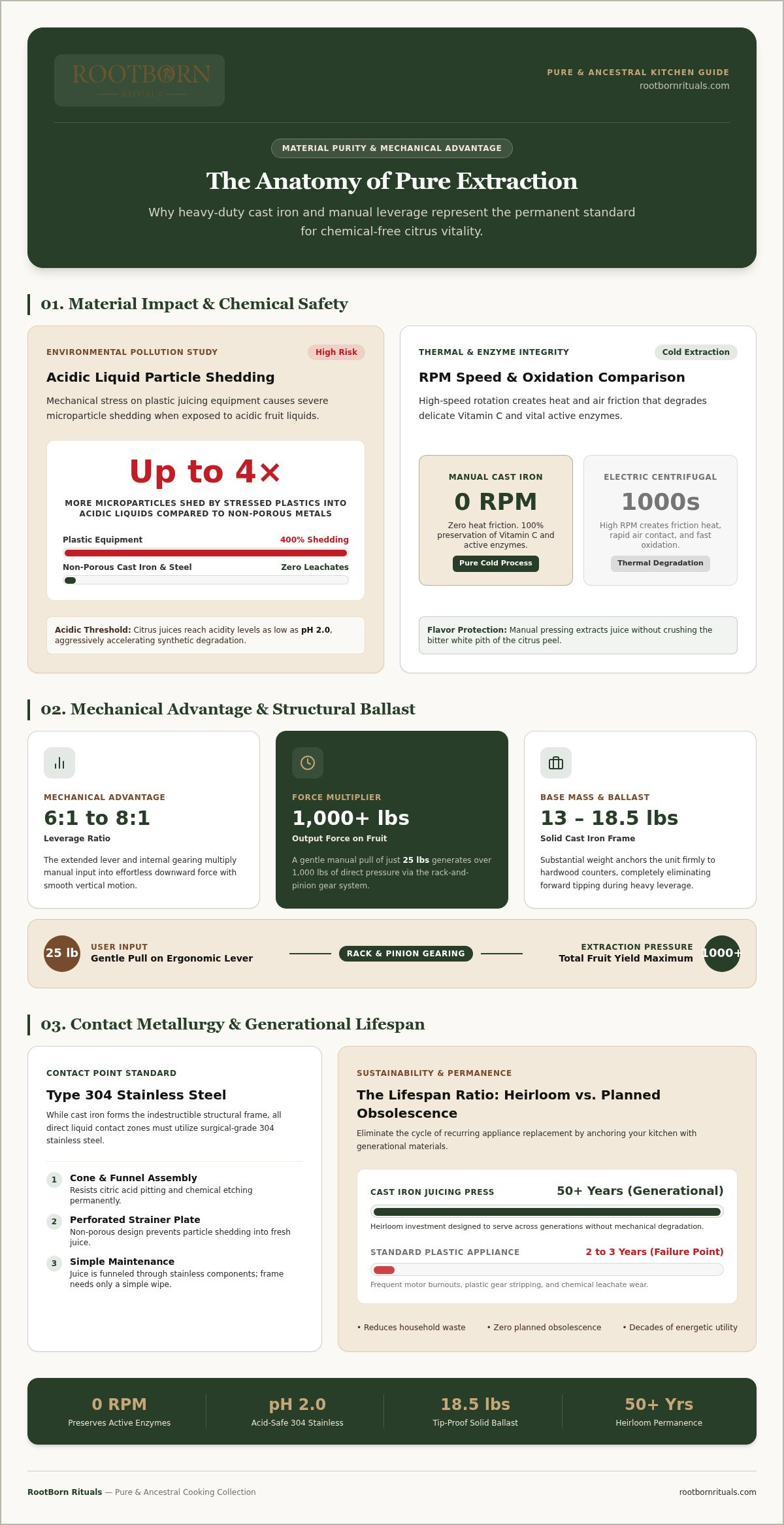
Research suggests that mechanical stress on plastic kitchen equipment can shed up to four times more microparticles into acidic liquids compared to non porous metals. When you press a fresh orange or lemon, the last thing you want is a side of chemical leachates. You likely feel the weight of this contradiction every time you power up a flimsy, loud electric machine. It's time to reclaim the purity of your morning glass. By choosing a heavy duty cast iron juicer, you're not just buying a tool; you're investing in a permanent anchor for ancestral vitality.
We understand the desire for a kitchen that reflects your values of longevity and holistic health. This guide will show you how to identify a lifetime quality press that eliminates plastic contact and honors the sanctity of your ingredients. You'll discover the mechanical advantage of traditional gearing, the importance of surgical grade stainless steel components, and how to transform a simple task into a mindful ritual. Let's explore how this heirloom piece can bring lasting peace and chemical free wellness to your intentional home.
Key Takeaways
- Discern why substantial weight and mechanical leverage are the foundations of an effortless, chemical-free extraction process.
- Select a cast iron juicer that serves as a permanent, heirloom-quality anchor for your home.
- Contrast the safety of traditional materials with the modern risks associated with synthetic leachates and reactive metals.
- Discover how to curate a dedicated hydration station that elevates your morning ritual into a moment of grounded presence.
- Master the simple, reverent care techniques required to preserve your tool's purity and function for a lifetime of use.
Beyond Plastic: Why the Cast Iron Juicer is the Gold Standard for Vitality
A cast iron juicer is a heavy, high-leverage instrument specifically crafted for the extraction of citrus and pomegranates. It stands as a centerpiece in the Pure & Ancestral Cooking Collection, representing a shift away from the disposable culture of modern appliances. Unlike electric versions that rely on rapid friction, this tool uses mechanical advantage to press fruit with grace and power. It's a return to the weight and permanence of ancestral materials that honors the ingredients it touches. By choosing iron, you're making a statement that your kitchen tools should be as enduring as the health they support.
Citrus juices are naturally acidic, often reaching a pH as low as 2.0. When these volatile liquids encounter synthetic materials, they can trigger the migration of microplastics and chemical leachates. Research in Environmental Pollution indicates that mechanical stress on plastic equipment can shed significantly more particles into acidic liquids than inert metals. Choosing iron is a return to material purity. It ensures that your morning wellness ritual remains untainted by modern industrial byproducts, allowing the natural vitality of the fruit to shine through without interference.
The Purity of Manual Extraction
Manual juicing is fundamentally a cold process. Traditional manual juice extractors and presses operate at zero RPM, which means there's no heat generation to degrade sensitive Vitamin C or active enzymes. High-speed electric juicers spin at thousands of revolutions per minute. This friction introduces heat and air, which accelerates oxidation and alters the delicate flavor profile of the fruit. A manual press also avoids crushing the bitter white pith of the peel, resulting in a sweeter, more vibrant juice. The process is silent and rhythmic. It invites you to be present with your ingredients, transforming a simple task into a brief, meditative ceremony that grounds your day.
A Lifetime Investment in Wellness
Sustainability is found in permanence. A cast iron tool can easily last fifty years or more, whereas the average plastic appliance often fails within two or three. By investing in a single, high-quality press, you reduce household waste and eliminate the cycle of planned obsolescence. A high-quality cast iron juicer stands as the ultimate tool for anyone learning how to remove plastic from kitchen environments while maintaining a high standard of wellness. This durability ensures that the energetic footprint of the tool is spread across decades of use. You aren't just buying a juicer; you're securing an heirloom that will serve generations. It's the ultimate choice for a home that values quality over convenience.
The Anatomy of Excellence: Evaluating Material Purity and Mechanical Leverage
The physical presence of a quality cast iron juicer is its first testament to excellence. A tool of this caliber generally weighs between 13 and 18.5 pounds, providing the necessary ballast to remain stationary during use. This substantial mass ensures that the unit won't tip forward when you engage the lever, a common frustration with lighter aluminum or plastic alternatives. Such a heavy instrument requires a stable foundation; it's best paired with durable dining tables crafted from solid hardwood. These surfaces offer the structural integrity needed to support both the weight of the iron and the downward pressure of the extraction process.
The true brilliance of this tool lies in the science of leverage. A well-designed manual press utilizes a long handle to deliver a mechanical advantage of approximately 6:1 to 8:1. This means that a gentle pull of 25 pounds can exert upwards of 1,000 pounds of force on the fruit. It transforms a labor-intensive task into a smooth, silent motion. While the frame provides the power, the contact points provide the purity. The cone and strainer should ideally be made of Type 304 stainless steel, which resists the pitting and corrosion caused by citric acid. While many experts offer cast iron care and seasoning guidelines for traditional cookware, the frame of a juicer requires only a simple wipe to maintain its luster, provided the juice is funneled through non-reactive steel components.
Mechanical Advantage and Ergonomics
A professional-grade juicer often features a rack-and-pinion gear system. This mechanism ensures that the pressure is distributed evenly across the fruit, maximizing yield without requiring excessive physical strength. Vertical presses are inherently superior to horizontal reamers because they use gravity as an ally rather than an obstacle. The handle should feel substantial in the hand, often finished with an ergonomic grip that prevents slipping. This thoughtful design allows for daily, repetitive use without straining the wrists or shoulders, making your morning wellness ritual a pleasure rather than a chore.
Non-Toxic Coatings and Finishes
The finish on the cast iron chassis is just as critical as the metal itself. Reputable tools use food-safe enamel or high-grade powder coatings that are certified free of leachable lead and cadmium. Low-quality replicas may use industrial paints that can flake or off-gas over time. When selecting your tool, look for compliance with California Proposition 65 or FDA heavy metal thresholds. These certifications guarantee that the beautiful finish on your press is as safe as it is durable. Choosing a tool with these verified standards ensures your kitchen remains a sanctuary of health. You can find more intentional pieces for your home in our Pure & Ancestral Cooking Collection, where every item is vetted for material integrity.
Material Matters: Comparing Cast Iron to Aluminum and Plastic Alternatives
The choice of material in your kitchen is a fundamental choice of philosophy. While aluminum juicers are common due to their low cost, their lightness is a functional liability. Aluminum lacks the stability required for high-pressure extraction, and it's highly reactive to the low pH of citrus fruits. When acidic juice contacts bare aluminum, it can result in a metallic aftertaste and material pitting. In contrast, a cast iron juicer provides a solid, inert foundation that respects the chemical integrity of your ingredients. It doesn't just sit on your counter; it anchors your space with a sense of permanence that lighter metals cannot replicate.
Plastic alternatives represent the antithesis of the ancestral kitchen. Beyond the aesthetic disparity, synthetic materials carry the risk of chemical leaching, especially when subjected to the mechanical stress of pressing. Research has shown that packaged citrus juices contain an average of 23 to 42 microplastic particles per liter. By using a manual press, you bypass the high-friction environment of plastic augers and screens. A cast iron juicer resonates deeply with the principles of a non toxic kitchen makeover, as it replaces reactive synthetics with stable, earth-born elements. This transition is not merely about utility; it's about shifting the energy of your home from the ephemeral to the enduring.
The Acidic Reaction: Why Material Purity is Paramount
Citrus juice typically maintains a pH between 2.0 and 3.5, a level of acidity that can corrode inferior metals and degrade plastic seals. High-quality cast iron tools utilize professional-grade enamel or powder coatings to create a barrier between the metal and the juice. This ensures that your liquid gold remains as pure as the fruit itself. When the juice is funneled through stainless steel components, the risk of oxidation is virtually eliminated. You're left with a vibrant, enzyme-rich extract that hasn't been compromised by reactive surfaces or industrial coatings.
Sustainability Comparison
The environmental footprint of a kitchen tool is measured by its lifespan. Iron is infinitely recyclable, yet its true sustainability lies in its ability to outlast the user. While a plastic electric juicer relies on the power grid and contains non-recyclable composite materials, a manual press is powered entirely by human intention. It requires zero electricity and produces zero electronic waste. Choosing a lifetime tool over a disposable gadget is a quiet act of environmental stewardship that honors both your personal health and the broader world.
Cultivating the Ritual: A Guide to Selecting and Caring for Your Juicer
Selecting a cast iron juicer is an act of discernment that requires you to look beyond mere utility. You're choosing a permanent resident for your countertop, so consider both the physical footprint and the juicing capacity. A professional grade unit typically stands between 15 and 19 inches tall, demanding a dedicated space among your mindful dining essentials. A removable strainer is a non negotiable feature; it allows for a thorough, mindful cleaning process that prevents acidic residue from lingering. Authentic craftsmanship is felt in the silence of the gears and the absolute lack of lateral movement when the lever is engaged.
Mass produced imitations often compromise on the quality of the mechanical joints. When you evaluate a piece, check for any "play" in the rack and pinion system. A high quality build feels like a single, solid entity, moving with a heavy, deliberate grace. This tool isn't just a gadget; it's a centerpiece of the Pure & Ancestral Cooking Collection that bridges the gap between raw nature and your daily glass. You can find these vetted, heirloom quality tools in our Pure & Ancestral Cooking Collection.
Choosing Your Heirloom Piece
The aesthetic of your tool should harmonize with the sanctuary of your kitchen. While a matte black finish offers a timeless, grounded feel, a vibrant food safe enamel can serve as a focal point of vitality. The "Pure & Ancestral" aesthetic favors materials that feel significant in the hand and look beautiful even when at rest. Beyond the frame, ensure the cone and funnel are crafted from surgical grade 304 stainless steel. This combination of heavy iron and inert steel represents the pinnacle of material integrity, ensuring your tool never compromises the purity of your ingredients.
Sacred Maintenance for Longevity
Treat the care of your press as a natural extension of your morning ceremony. Use warm water and a natural fiber brush to rinse the removable components immediately after use, preventing fruit sugars from hardening. The cast iron base should never be submerged; a simple wipe with a soft, damp cloth is all that's required to maintain its finish. Periodically, apply a single drop of food grade mineral oil to the moving pivots to keep the mechanism operating with rhythmic fluidity. A well-cared-for cast iron juicer becomes more efficient with age as the moving parts settle into a perfect, practiced harmony. By maintaining your tool with this level of intention, you honor the heritage of the materials and the health of your future self.
Integrating the Cast Iron Ritual into Your Mindful Kitchen
Your kitchen is more than a room for food preparation; it's the heart of your home's energetic wellness. Establishing a dedicated "Hydration & Detox" station provides a physical anchor for your health goals. At the center of this space, the cast iron juicer stands as a silent, powerful guardian of your family's vitality. To elevate this experience, consider pairing your freshly pressed elixirs with pure copper drinkware. The cool weight of the metal and the vibrant color of the juice create a sensory harmony that transforms a simple drink into a high-end wellness ritual. This station becomes a visual reminder to slow down, breathe, and nourish your body with intention.
Rituals for Intentional Living
The act of juicing is a tactile meditation. As you place a halved pomegranate into the press, you're connecting with the earth's seasonal cycles. In the deep winter, the rich crimson of pomegranate juice offers a potent dose of antioxidants; in the height of summer, the sharp clarity of lemon or grapefruit provides a refreshing detox. Choosing organic, seasonal fruit ensures you're receiving the highest vibration of nutrients available. When you press juice for your loved ones, you're performing a quiet act of service. It's a way to infuse your family's day with vitality and care from the very first sip. These small, repeated actions build a life of profound purpose.
The RootBorn Philosophy
Within our collection, every tool is chosen for its ability to foster a deeper connection between the home and the natural world. This cast iron juicer isn't a temporary convenience; it's a commitment to a home free from hidden toxins and full of purposeful objects. It's a handcrafted heirloom that will witness decades of family mornings, eventually being passed down to the next generation as a symbol of your values. We believe that the objects you interact with daily should reflect the quality of life you desire. Explore our curated Pure & Ancestral Cooking Collection to find your next heirloom tool and begin your own tradition of mindful living.
Embracing a Legacy of Ancestral Vitality
Choosing a cast iron juicer is a profound step toward a plastic-free home. It's a rejection of the ephemeral in favor of the permanent. By prioritizing substantial weight and mechanical leverage, you ensure that your daily hydration remains untainted by synthetic leachates. This tool isn't just an appliance; it's a centerpiece of a life lived with intention. You've discovered how material purity and mindful care can transform a simple task into a sacred morning ceremony. It's about more than juice; it's about the sanctity of the ingredients and the longevity of the tools that touch them.
Our commitment to ancestral material expertise ensures that every piece in our collection supports your journey toward a toxin-free kitchen. We invite you to explore our sophisticated, intentional designs that bridge the gap between ancient wisdom and modern wellness. Elevate your kitchen sanctuary with the Pure & Ancestral Cooking Collection. May your daily rituals be grounded in the quiet strength and enduring beauty of these timeless essentials.
Frequently Asked Questions
Is a cast iron juicer better than an electric one for preserving nutrients?
A manual press is superior for nutrient preservation because it operates at zero RPM, generating no heat friction. High speed electric juicers spin at thousands of revolutions per minute, which introduces heat and air that accelerate the oxidation of Vitamin C and enzymes. By using a cast iron juicer, you ensure the juice remains cold and chemically stable. This slow, deliberate extraction process honors the natural vitality of the fruit and yields a more vibrant, health supporting elixir.
Can I juice pomegranates with a cast iron citrus juicer?
You can absolutely juice pomegranates with a high leverage cast iron press. These tools are specifically engineered to handle the thick skin and dense internal structure of pomegranates, which would often clog or stall an electric reamer. The mechanical advantage of the lever allows you to crush the arils efficiently while leaving the bitter white pith intact. This results in a sweeter, purer pomegranate juice that serves as a cornerstone of your seasonal wellness rituals.
How do I prevent my cast iron juicer from rusting over time?
Preventing rust requires a simple yet disciplined maintenance ritual. Always rinse the removable stainless steel components immediately after use and dry them thoroughly with a soft cloth. The cast iron frame should be wiped down with a damp cloth but never submerged in water or placed in a dishwasher. Periodically apply a single drop of food grade mineral oil to the gear joints and moving pivots. This light barrier protects the metal from moisture and ensures the mechanism continues to operate smoothly.
Are cast iron juicers safe to use with highly acidic fruits like lemons?
Cast iron juicers are perfectly safe for lemons and other highly acidic fruits when they feature food safe coatings and stainless steel contact points. Citric acid can react with bare, unseasoned iron, causing a metallic taste or discoloration. However, professional grade models use enameled or powder coated frames combined with Type 304 stainless steel strainers. These inert materials prevent any chemical interaction with the juice, ensuring that even the most acidic citrus remains pure and untainted by metallic leachates.
How much space does a professional-grade cast iron juicer take up?
A professional grade manual press typically occupies a footprint of approximately seven by nine inches on your countertop. While they are relatively compact in terms of width, they stand between 15 and 19 inches tall when the handle is in the upright position. This vertical design allows the tool to serve as a visual anchor in your kitchen without crowding your workspace. Its significant weight ensures it stays firmly in place, making it a permanent and purposeful fixture in your hydration station.
Does the paint or coating on a cast iron juicer contain lead?
High quality cast iron tools from reputable curators are certified free of leachable lead and cadmium. Modern standards, such as California Proposition 65 and FDA heavy metal thresholds, mandate stringent testing for any enameled or powder coated surfaces that might contact food. When selecting your juicer, look for these specific safety certifications to ensure the finish is non toxic. Avoiding low quality replicas ensures your kitchen environment remains a sanctuary of health, free from the risks of industrial heavy metal exposure.
Is a manual juicer difficult to use for someone with limited hand strength?
Manual juicers are surprisingly accessible for those with limited hand strength due to the science of mechanical leverage. A well designed rack and pinion gear system provides a mechanical advantage of up to 8:1. This means you only need to apply a small amount of force to the long handle to generate hundreds of pounds of downward pressure. The process is smooth and rhythmic, requiring far less effort than handheld squeezers or manual reamers that demand repetitive twisting and wrist strain.
What is the difference between an enameled and a raw cast iron juicer?
The primary difference lies in how the material interacts with moisture and acidity. Enameled cast iron features a glass like coating that protects the metal from rust and prevents any reaction with acidic fruit juices. Raw cast iron is rarely used for the juice contacting parts of a juicer because it would immediately oxidize and turn the juice black. Most ancestral tools use a coated iron frame for indestructible stability while channeling the liquid through surgical grade stainless steel for absolute material purity.


