


What if the vessel holding your family's nourishment is silently compromising the very wellness you work so hard to cultivate? It's a heavy realization that even "lead-safe" labels can still allow for leaching up to 3.0 mg/L according to federal standards. You've likely felt the frustration of navigating vague marketing terms or the fear that a vibrant glaze might be hiding heavy metals. When you're committed to a plastic-free, intentional home, settling for "tolerable" levels of toxins feels like a betrayal of the ceremony of the meal.
Finding truly non toxic dinnerware sets requires looking beyond the surface to the ancestral roots of the materials themselves. This guide will teach you how to identify 100% pure options that meet the "Truly Lead-Free" standard of 0.0 PPM. You'll learn to curate a table that's safe for your children and beautiful enough to develop a soulful patina over years of daily ritual. It's time to bridge the gap between ancient wisdom and modern safety.
We'll examine the critical difference between FDA limits and the stricter California Proposition 65 requirements. We will also explore the safety of vitrified china and tempered glass to provide the clarity you need to dine with total peace of mind. Every meal is an opportunity for healing, and the journey begins with the plate.
Key Takeaways
- Understand why inert materials like organic clay and borosilicate glass are the gold standard for maintaining the purity of your nourishment.
- Learn to identify the hidden risks of industrial glazes, specifically how vibrant pigments can often signal the presence of heavy metals like lead and cadmium.
- Discover the "Curator’s Protocol" for vetting non toxic dinnerware sets, including how to verify kiln origins and request specific third-party laboratory leaching results.
- Distinguish between standard federal "lead-safe" thresholds and the "Truly Lead-Free" 0.0 PPM standard required for a truly health-conscious home.
- Explore how to integrate pure dining essentials into your daily rituals to create a cohesive environment of table wellness and sanctuary.
The Silent Guardian of the Table: Defining Non-Toxic Dinnerware
We often dedicate hours to sourcing organic ingredients and perfecting slow-cooking techniques, yet we rarely consider the chemical profile of the vessel holding our nourishment. A dinner plate is far more than a passive backdrop for your culinary creations; it's an active participant in your health. True purity at the table begins with understanding that the materials we interact with daily have the power to either preserve our vitality or subtly diminish it through chemical interference.
Choosing non toxic dinnerware sets is a profound declaration of intent for the mindful home. At its core, a non-toxic material is one that remains entirely inert. It doesn't react to the heat of a nourishing soup or the acidity of a bright citrus dressing. While industrial mass-production often prioritizes vibrant colors and low costs, the artisanal approach focuses on the elemental integrity of the earth itself. By seeking a comprehensive overview of tableware materials, we see a clear movement away from synthetic binders and toward the restorative simplicity of natural clay and glass.
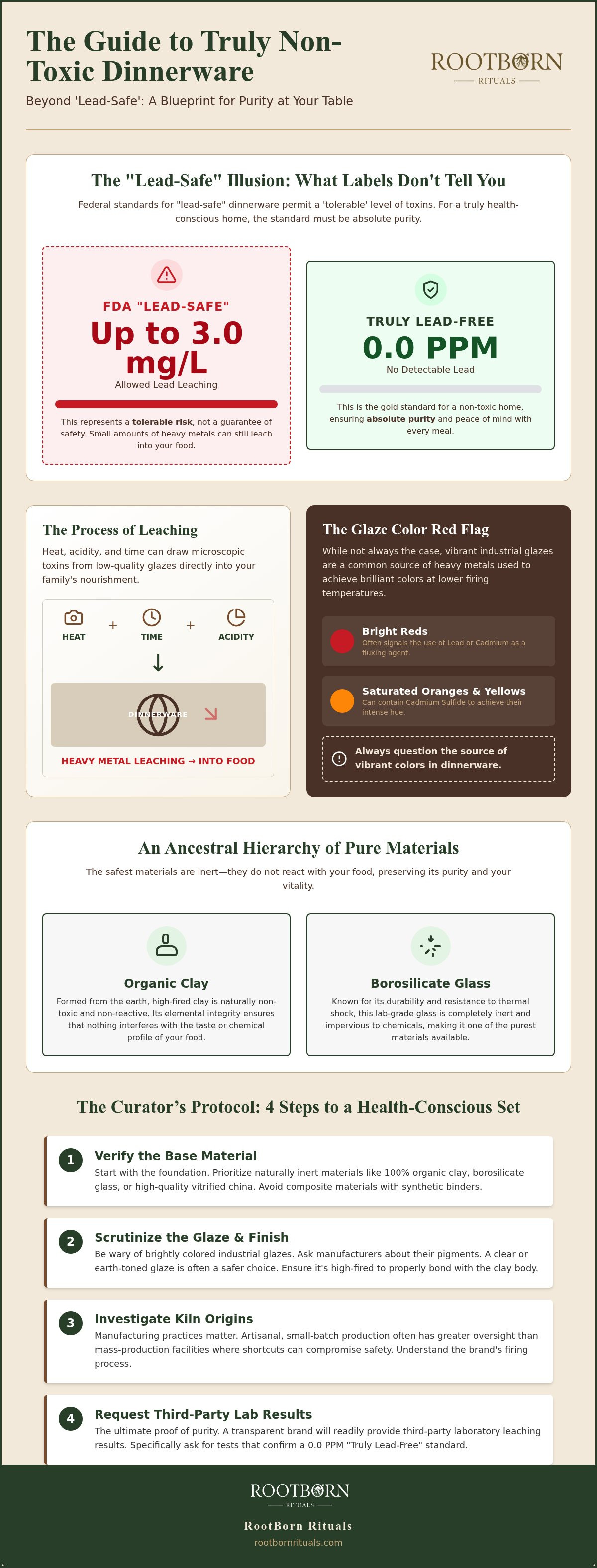
Many families feel a sense of security when they see a "lead-safe" label, but this standard is often insufficient for those pursuing holistic wellness. Current federal guidelines allow for lead leaching up to 3.0 mg/L in flat tableware, a threshold that represents a "tolerable" risk rather than absolute purity. For a home built on the principles of sanctuary and safety, we must look beyond these baseline regulations toward the "Truly Lead-Free" benchmark of 0.0 PPM.
The Threshold of Purity
Understanding leaching is essential for any mindful curator. This process occurs when heat, time, and acidity work together to draw microscopic toxins from a glaze into your food. It isn't a singular event but a slow, cumulative extraction that happens every time you dine. The difference lies in structural integrity. While many commercial sets rely on thin, surface-level coatings to mask inferior base materials, the RootBorn Rituals philosophy prioritizes substances that exist in nature. We believe that if a material requires complex synthetic stabilization, it doesn't belong at the center of your family's table.
The Impact on Mindful Dining
There's a quiet, grounding confidence that emerges when you know your table is 100% pure. This certainty removes the hidden layer of "fear-based" dining, allowing you to fully immerse yourself in the sensory beauty of your meal. It transforms a simple Tuesday night dinner into a sacred event. By aligning your physical tools with your internal values, you practice mindful dining, ensuring the sanctity of the meal remains unbroken from the soil to the soul. High-quality non toxic dinnerware sets don't just protect your body; they elevate the very spirit of the home.
Unveiling the Veil: The Hidden Chemistry of Industrial Glazes
Behind the glossy finish of many commercial plates lies a chemical reality that often contradicts the purity of the food served upon them. Industrial glazes are not merely decorative; they are complex chemical coatings designed to withstand the rigors of mass production. Unfortunately, the pursuit of vibrant aesthetics often introduces heavy metals into the home. Bright reds, saturated yellows, and deep oranges in non toxic dinnerware sets are frequently achieved through the use of lead and cadmium. These metals serve as powerful fluxes, allowing glazes to melt at lower temperatures and produce a brilliant, glass-like sheen that catches the eye but risks the body.
The cost of "fast-fashion" dinnerware extends far beyond the price tag. Low-quality manufacturing often results in under-fired glazes that fail to bond properly with the clay body. This creates a fragile surface where heavy metals can easily migrate into your meals. By prioritizing speed and volume over the slow, deliberate process of high-firing, industrial brands compromise the sanctity of the domestic environment. Choosing truly pure essentials from a collection focused on Table Wellness ensures that your home remains a sanctuary from these industrial shortcuts.
The Lead and Cadmium Dilemma
For the discerning curator, California's Proposition 65 serves as a vital safeguard. Its standards for lead and cadmium are significantly more stringent than federal requirements, providing a clearer picture of elemental purity. While modern regulations have improved, vintage sets often remain a hidden hazard. When heat and acidic foods interact with these unstable glazes, lead ions are chemically extracted from the ceramic matrix and absorbed directly into the nourishment you consume. This risk is why the FDA guidance on lead in pottery emphasizes caution with traditional and highly decorated wares.
Porous vs. Non-Porous Surfaces
The safety of non toxic dinnerware sets is also determined by the material's porosity. Earthenware, fired at lower temperatures, remains relatively porous, which can trap microscopic food particles, old oils, and bacteria within its structure. In contrast, high-fired stoneware and porcelain undergo a process called vitrification. When fired at temperatures exceeding 1200°C, the clay particles fuse into a dense, glass-like state that is naturally non-porous and inert. This structural integrity prevents the absorption of pathogens and ensures the surface remains hygienic without the need for toxic synthetic sealants. There's a profound beauty in unglazed, organic clay when it's sourced from pure earth; it offers a tactile connection to the natural world while maintaining the highest standards of physical purity.
A Return to Purity: An Ancestral Hierarchy of Dining Materials
The journey toward a truly health-conscious home often leads us back to the earth. When we evaluate non toxic dinnerware sets, we find a natural hierarchy of materials that have sustained humanity for millennia. This hierarchy isn't just about aesthetic preference; it's a map of biological compatibility. At the summit sits organic, unglazed clay, followed by modern non-reactive materials like borosilicate glass and professional-grade stainless steel. Each material offers a unique synergy with the food it holds, ensuring that the act of eating remains a clean, restorative ritual.
Beyond these primary materials, pure copper holds a revered place in Ayurvedic tradition. Often used for hydration rituals, copper is believed to ionize water, supporting digestive health and energetic balance. When sourced with the same discernment as your non toxic dinnerware sets, copper vessels become more than just tools; they are instruments of mindfulness that bridge the gap between ancient wisdom and modern physical health. By choosing materials based on their elemental stability, you create a table that supports the body's natural state of wellness.
The Wisdom of Organic Clay
Interacting with unglazed clay is perhaps the most ancestral way to nourish the body. Unlike industrial ceramics that may struggle to meet the FDA lead contamination limits for ceramic dinnerware, pure organic clay is fundamentally inert. It possesses unique alkaline properties that can gently balance the acidity of certain foods, enhancing the natural flavors without the need for synthetic additives. This material represents the pinnacle of thermal stability. It breathes, it ages with grace, and it provides a tactile connection to the soil. For the mindful curator, unglazed clay is the gold standard for health and purity, offering a level of elemental safety that factory-made sets simply cannot replicate.
Glass and Professional Grade Steel
While clay connects us to our heritage, modern materials like borosilicate glass and high-grade stainless steel provide reliable, non-reactive alternatives for the contemporary kitchen. Borosilicate glass is prized for its extreme heat resistance and absolute transparency. It doesn't stain, it doesn't hold odors, and it certainly doesn't leach. Similarly, 304 and 316 grade stainless steel offer a durable, non-porous surface that's ideal for a high-performance home. The grade is vital; lower-quality steels may contain impurities that react with acidic ingredients. Integrating these materials is a key step in curating a plastic-free kitchen, ensuring your table wellness remains uncompromised by synthetic binders or endocrine disruptors.
The Curator’s Protocol: Steps to Vetting a Health-Conscious Set
Selecting non toxic dinnerware sets is a deliberate practice of discernment that extends beyond aesthetic appeal. It requires a methodical approach to ensure that every vessel on your table aligns with your commitment to holistic health. A mindful home is built on the strength of these vetting rituals, transforming the act of purchasing into an act of guardianship. By following a structured protocol, you can move past vague marketing claims and find the elemental purity your family deserves.
Your first step is to scrutinize the origin of the clay and the location of the kiln. Regulations regarding heavy metal use vary significantly by region; unbranded or rustic pottery from areas with relaxed oversight often poses the highest risk. Following this, you must request specific lab results for lead and cadmium leaching. Reputable makers will provide transparency, ideally showing compliance with the "Truly Lead-Free" standard of 0.0 PPM. While federal FDA standards allow for some leaching, a health-conscious curator seeks absolute zero.
Be cautious of "matte" glazes. While these textures are currently favored for their modern, organic look, the matting agents used to dull the shine often rely on metal-based additives. Unless a manufacturer explicitly confirms these glazes are metal-free and third-party tested, a glossy, high-fired finish is often a safer choice. Finally, prioritize small-batch artisans over mass-market global retailers. Smaller studios typically have a more intimate relationship with their raw materials and a greater investment in the safety of their final creations.
Questions for the Discerning Maker
- What specific temperature is the dinnerware fired at? For true vitrification and safety, seek temperatures at or above 1200°C.
- Are the glazes third-party tested for California Prop 65 compliance? This standard is up to ten times stricter than federal limits.
- Does the maker disclose the source of their raw clay and pigments?
Third-party laboratory verification serves as the only objective bridge between a manufacturer's promise and the physical reality of a toxin-free surface.
The Visual Audit
Perform a visual audit of any set before it enters your home. Look for signs of low-quality glazing, such as "crazing" (tiny spider-web cracks) or uneven thickness, which can indicate an unstable bond between the glaze and the clay. These defects aren't just aesthetic; they are sites where bacteria can gather and heavy metals can leach. Remember that "handcrafted" doesn't always equate to non-toxic. Without material transparency, even the most beautiful artisan piece can harbor hidden chemistry. To deepen your understanding of how to build a safe environment, consult our Sustainable Dining Sets: A 2026 Guide to Mindful Table Curation.
If you are ready to elevate your daily rituals with vetted, high-integrity essentials, explore our Mindful Dining & Table Wellness collection today.
The Ritual of Sustenance: Weaving Purity into the Mindful Home
The act of dining is a daily ceremony. It's the moment where the energy of the home meets the nourishment of the body. Integrating non toxic dinnerware sets into this space isn't just about safety; it's about creating a cohesive environment of table wellness. When your surroundings reflect your internal values, the simple act of eating becomes a meditative practice that honors the food and the family gathered around it.
There's a profound synergy between what we serve on and what we cook in. If you've already transitioned to the Pure Ancestral Cooking Collection, you understand that organic clay preserves the life-force of your ingredients. Extending this purity to your plates ensures that the chain of health remains unbroken. You shouldn't compromise a meal prepared in toxic-free cookware by placing it on a surface that could leach industrial chemicals into your family's nourishment.
Caring for natural materials requires a shift in perspective. It's a move away from the aggressive, fast-paced cleaning of industrial life toward a slower, more intentional maintenance. Use gentle, plant-based cleansers and avoid abrasive scrubbers that might mar the natural finish. This care isn't a chore; it's a way of honoring the tools that nourish you and ensuring they remain inert and beautiful for years to come.
Creating the Sacred Table
Pairing your non toxic dinnerware sets with natural linens and wooden accents creates a sensory experience that grounds you in the present moment. A clutter-free, intentional dining environment allows the materials to speak for themselves. The weight of an organic clay bowl or the clarity of borosilicate glass dictates the energy of your meal, inviting you to slow down and consider the significance of the objects you interact with daily.
A Legacy of Purity
Choosing sets that are timeless rather than trendy reduces our environmental footprint and creates a lasting legacy for future generations. By investing in a single, durable, non-toxic set, you're providing your family with a foundation of safety that will last for decades. This is the healthy heritage we pass down; a commitment to purity that transcends convenience. We invite you to explore the RootBorn Rituals Mindful Dining Collection to begin curating your own sacred table.
Cultivating a Legacy of Table Wellness
The transition from industrial mass-production to ancestral purity is a profound shift in how we view the home. By moving beyond the "lead-safe" labels of global retailers and embracing materials like high-fired organic clay and borosilicate glass, you ensure that every meal remains a restorative ritual. True table wellness requires a commitment to materials that are fundamentally inert, providing a sanctuary where the physical tools of dining align with your internal values of health and stewardship. It's a journey that transforms the mundane into the sacred.
Choosing non toxic dinnerware sets is a deliberate act of guardianship for your family's vitality. It's about honoring the connection between the soil and the soul, ensuring that your table is a place of absolute safety. When you prioritize structural integrity and third-party verification, you create a legacy of purity that can be passed down through generations. Your home deserves the quiet confidence that only elemental materials can provide.
We invite you to Curate your pure table with the RootBorn Rituals Mindful Dining Collection. Each piece is artisan-vetted for material purity and focused on ancestral, health-first materials that are 100% plastic-free and sustainably sourced. Step into a more intentional way of being, where every object you touch supports your journey toward holistic wellness.
Frequently Asked Questions
Is ceramic dinnerware truly non-toxic?
Not inherently. Many commercial ceramics use glazes containing lead and cadmium to achieve vibrancy and lower firing costs. Truly non toxic dinnerware sets are those fired at high temperatures through vitrification with third-party verified, metal-free glazes. Purity depends on the structural integrity of the clay and the chemical composition of the finish. You should seek brands that disclose their full material list and testing protocols to ensure absolute safety.
How can I tell if my current plates contain lead?
Identifying lead without laboratory testing is difficult, but certain signs warrant caution. Home lead test kits provide a basic indication, though they often fail to detect low-level leaching. You should be particularly wary of vintage sets, highly decorated over-glaze patterns, or handcrafted items from regions with lax regulations. If a plate shows crazing or spider-web cracks in the glaze, it's more likely to release heavy metals into your food.
What is the safest material for everyday dinnerware?
Fully vitrified china, borosilicate glass, and high-fired stoneware are among the safest options available. These materials are non-porous and remain inert even when exposed to high heat or acidic foods. For those seeking the highest level of purity, unglazed organic clay fired at temperatures above 1200°C offers an ancestral, chemical-free alternative. These materials ensure that no synthetic binders or heavy metals migrate into your nourishment during daily use.
Are "lead-safe" and "lead-free" the same thing?
No, these terms represent different safety thresholds. Lead-safe typically means the product complies with FDA standards, which allow for leaching up to 3.0 mg/L in flatware. In contrast, lead-free or Truly Lead-Free indicates a 0.0 PPM standard where no lead is used in manufacturing. For a mindful home, pursuing the stricter 0.0 PPM standard provides the only guarantee of absolute elemental purity for your family's daily nourishment rituals.
Can non-toxic dinnerware be put in the dishwasher?
Most vitrified porcelain and tempered glass sets are dishwasher safe, but unglazed organic clay requires more intentional care. High heat and harsh detergents can eventually degrade the surface of some natural materials. Hand washing with gentle, plant-based cleansers preserves the integrity of your pieces and prevents the absorption of synthetic fragrances. This slow maintenance ritual honors the longevity of your investment and maintains the sanctuary of your dining environment.
Why is unglazed clay considered a superior dining material?
Unglazed clay is a living material that offers unique alkaline properties, which can gently balance the acidity in your meals. Because it's free from industrial glazes, there is zero risk of heavy metal leaching or chemical interference. It provides a tactile, grounding connection to the earth and possesses incredible thermal stability. This material represents the pinnacle of ancestral health, allowing the food's natural flavors to remain pure and entirely uncompromised.
Does the color of the plate affect its toxicity?
Yes, pigments play a significant role in chemical safety. Vibrant reds, oranges, and yellows are frequently achieved using cadmium or lead-based fluxes in the glaze. While modern manufacturing has improved, these bright colors remain higher risk than clear or white finishes. When selecting non toxic dinnerware sets, choosing neutral, earth-toned, or transparent options often reduces the likelihood of heavy metal exposure and aligns with a more natural aesthetic.
What certifications should I look for when buying non-toxic plates?
Look for California Proposition 65 compliance, which enforces limits up to ten times stricter than federal FDA levels. Additionally, prioritize brands that provide transparent access to third-party laboratory results from organizations like SGS. Certifications confirming a 0.0 PPM Truly Lead-Free and Cadmium-Free status are the gold standard. These documents provide the objective proof required to ensure your table remains a sanctuary for health and mindful living.


