


Everyday friction and routine handling of synthetic food containers can shed tens of millions of microplastic particles per person annually, quietly compromising the purity of the meals we prepare. You likely already feel that modern convenience has come at the expense of genuine well-being. Sifting through conflicting "eco-friendly" plastic labels while managing a cluttered, uninspiring pantry only deepens that anxiety. Choosing authentic sustainable kitchen storage solutions isn't merely about reducing household waste; it's a vital return to material integrity that honors personal health.
Discover how to transform your kitchen into a plastic-free sanctuary with storage solutions that prioritize both ancestral wisdom and modern health. When you replace synthetic vessels with honest, earth-born materials, you create an intentional space where nourishment remains uncompromised. Ahead, we explore how inert borosilicate glass and naturally breathable, unglazed earthenware extend the life of fresh produce, eliminate chemical concerns, and turn everyday food preservation into a grounding ritual of quiet beauty.
Key Takeaways
- Rethink food preservation not as passive storage, but as an intentional ritual that safeguards personal vitality and reduces exposure to synthetic compounds.
- Discover why authentic sustainable kitchen storage solutions favor inert borosilicate glass, natural wood, and breathable earthenware over deceptive eco-plastics.
- Learn how porous clay naturally regulates ambient humidity, extending the life and flavor of fresh produce without trapping damaging condensation.
- Master a step-by-step audit to declutter your shelves, using mindful decanting to transform your pantry into a tranquil, non-toxic sanctuary.
- Explore how RootBorn Rituals blends timeless material purity with modern functional design through the Natural Preservation Essentials collection.
Beyond Convenience: The Philosophy of Natural Food Preservation
Food preservation was never meant to be a hasty transaction with synthetic packaging. For generations, storing harvests was a reverent practice tied intimately to the seasons, honoring the life force within every grain, root, and leaf. When we examine authentic sustainable kitchen storage solutions, we see that true sustainability transcends simple waste reduction. It represents a conscious philosophy of living: an intentional decision to shield your household from synthetic additives while cultivating personal vitality through material purity.
Embracing a slow-living approach transforms kitchen organization from a weekend chore into a grounding preservation ritual. In a hurried culture centered on disposable single-use plastics and flimsy containers, returning to timeless vessels shifts our daily relationship with nourishment. Looking into the rich lineage of traditional food preservation techniques reveals how our ancestors used earthen cellars, porous clays, and pure glass to keep food vital without artificial barriers. Storage becomes a protective sanctuary for your family's health.
The Hidden Impact of Plastic on Kitchen Vitality
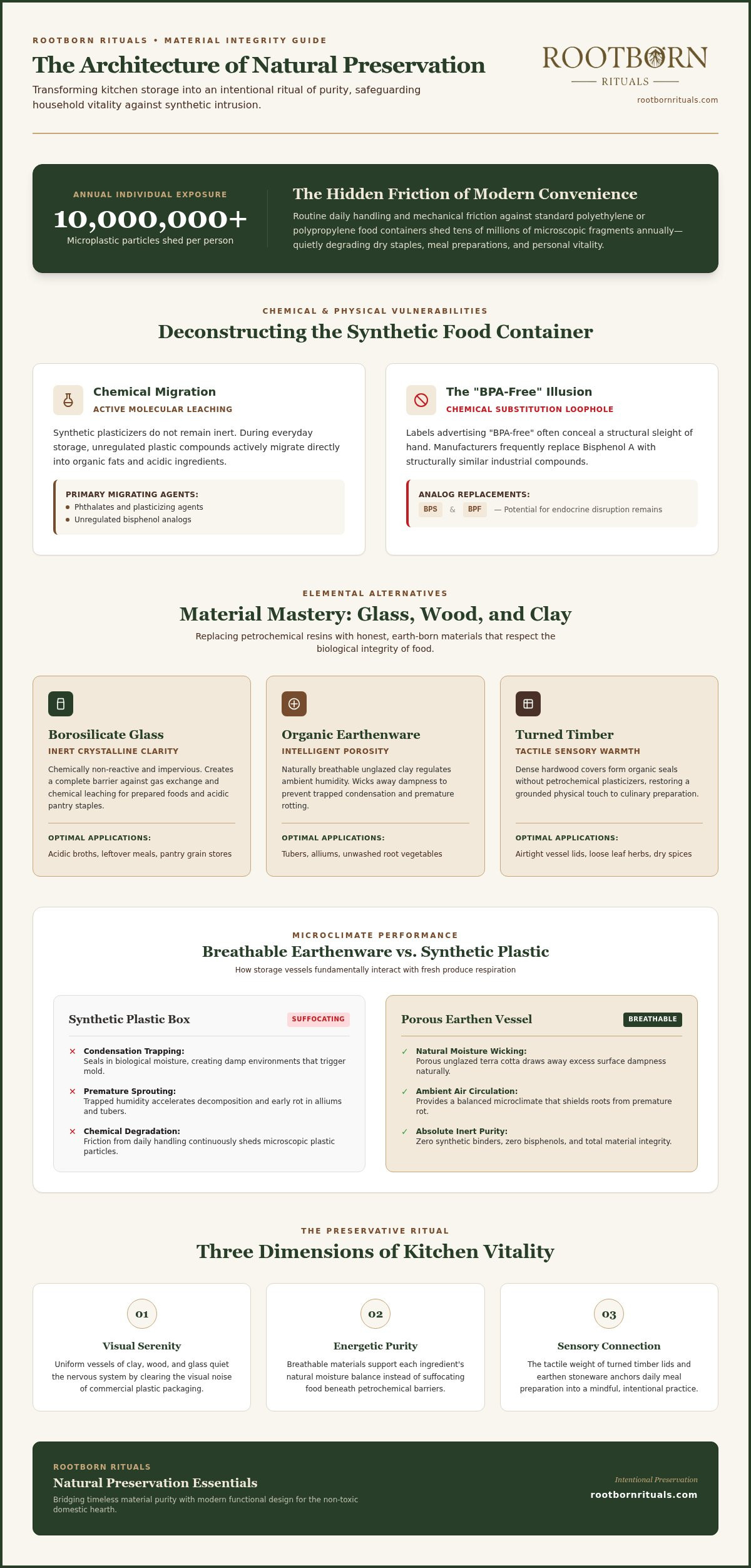
Modern convenience carries invisible consequences. Everyday mechanical friction against polyethylene or polypropylene food containers sheds millions of microscopic plastic fragments straight into dry staples and leftovers. Compounding this physical degradation is chemical migration. Synthetic plasticizers, including phthalates and unregulated bisphenol analogs, gradually migrate into organic fats and acidic ingredients. Discovering how to remove plastic from kitchen shelves begins with recognizing that "BPA-free" labels are largely illusory. Most manufacturers merely substitute bisphenol A with structurally similar alternatives like BPS or BPF, leaving the threat of endocrine disruption intact.
Transitioning to a Mindful Kitchen Sanctuary
The domestic hearth serves as the energetic core of your home. Replacing chaotic plastic bins with authentic sustainable kitchen storage solutions brings tangible psychological and physiological calm:
- Visual serenity: Uniform vessels of earthen clay, warm wood, and crystalline glass quiet the nervous system, eliminating the visual clutter of synthetic branding.
- Energetic purity: Storing fresh produce in breathable materials honors the ingredient's natural moisture cycle instead of suffocating it beneath petrochemical films.
- Sensory connection: The deliberate touch of turned timber lids and cool stoneware anchors you directly into the daily ritual of meal preparation.
There's no need to purge your shelves in a single afternoon. True transition unfolds with gentle intention. Begin by replacing the vessels that cradle your most sensitive staples, gradually weaving ancestral materials back into your daily rhythms.
Material Mastery: Choosing Glass, Wood, and Clay for Purity
Every vessel cradling your food actively interacts with it. Material integrity means choosing inert substances that respect the biological composition of whole ingredients, ensuring nothing unwanted leaches into what your family consumes. Mainstream alternatives often promote synthetic silicone or recycled resins. True purity, however, relies on elemental mediums: organic clay, dense hardwood, and tempered glass. These ancestral materials don't just hold ingredients; they elevate the sensory experience of cooking through their tactile weight, earthy grain, and unvarnished honesty.
According to the EPA's guide to preventing wasted food at home, tailoring storage methods to specific foods is essential for extending shelf life and keeping produce fresh. Selecting authentic sustainable kitchen storage solutions allows you to match each ingredient's unique respiration needs with the appropriate natural medium.
The Breathability of Organic Clay
Porous earthenware provides an intelligent microclimate that synthetic containers cannot replicate. Unglazed terra cotta wicks away excess moisture while allowing ambient air circulation, effectively shielding alliums and tubers from rot or premature sprouting. Just as in traditional unglazed clay cookware, this earthen material remains pure and free from synthetic sealants. Because natural unglazed clay possesses inherent gentle alkalinity, it neutralizes surrounding ambient acidity to preserve the crisp vitality of live vegetables.
The Timeless Integrity of Glass and Hardwood
Complementing porous earthenware, non-porous materials secure dry staples and moist perishables with absolute chemical neutrality:
- Borosilicate and soda-lime glass: High-density glass is completely non-reactive, resisting acidic erosion from ferments, vinegars, and citrus while leaving aromas unadulterated.
- Natural hardwoods: Densely grained timbers, such as acacia and oak, contain natural polyphenols that discourage surface microbial proliferation in dry pantry bins.
- Heirloom permanence: Unlike cycle-limited polymers that cloud and crack, durable glass jars and solid wood lids become lasting kitchen heirlooms that endure for decades.
Curating your home with intentional, earth-derived vessels transforms basic nourishment into a daily celebration of wellness. Explore how the mindful living principles at rootbornrituals.com can help you ground your own kitchen space in lasting material harmony.
The 2026 Sustainable Storage Roundup: Solutions for Every Need
Organizing a conscious kitchen requires more than swapping old plastic tubs for newer synthetic models. It calls for purposeful vessels that honor each ingredient's journey from harvest to plate. The most effective sustainable kitchen storage solutions bridge functional food care and aesthetic calm, serving distinct roles across dry pantry preservation, liquid nourishment, and table presentation. When storage pieces are crafted with timeless material honesty, they move gracefully from cool cupboards straight to an evening gathering.
Natural Preservation Essentials for Dry Pantries
Dry provisions like heirloom pulses, ancient grains, and sun-dried botanicals require stable environments free from atmospheric moisture and oxygen. Pairing heavy borosilicate glass jars with solid hardwood lids preserves both nutritional density and delicate aromatic oils. A snug food-grade seal ensures dry goods don't degrade from ambient humidity or pantry pests. Beyond functional protection, lining open shelves with luminous glass vessels creates a rhythmic visual quietude. You immediately see what you have, which fosters gratitude, simplifies weekly meal planning, and prevents accidental overbuying.
Mindful Hydration and Liquid Storage
Liquid preservation demands absolute inertness. Because fats and liquids absorb volatile organic compounds readily, relying on synthetic jugs invites real compromise. Research highlighted by Harvard Health Publishing warns against the risks of chemical leaching from plastic containers, underscoring how heat, age, and regular contact accelerate chemical migration into food and drink. Storing cold-pressed oils, herbal vinegars, and fresh water in dark glass or natural ceramic protects them from photo-oxidation and preserves their crisp, untainted taste.
Integrating these vessels alongside your mindful dining essentials weaves food care directly into everyday dining. A stoneware carafe or sculptured glass decanter honors the act of pouring water as a grounding daily ritual. Choosing multi-use, earth-derived storage vessels allows your kitchen to sustain a seamless rhythm between mindful preservation and peaceful nourishment.
Designing a Plastic-Free Organization Ritual
Transitioning away from petroleum-based storage doesn't require discarding everything overnight. Instead, view this shift as an unhurried, ceremonial audit of the vessels that touch your family's food each day. By systematically replacing synthetic containers with purposeful sustainable kitchen storage solutions, you transform daily meal preparation from chaotic maintenance into an intentional grounding practice.
Auditing Your Current Kitchen Environment
Begin by taking inventory of your pantry and refrigerator, identifying the items that pose the highest risk of chemical transfer. Prioritize replacing containers that hold hot, oily, or acidic foods, as these conditions accelerate the degradation of synthetic materials. If you're seeking a structured framework for this transition, explore our step-by-step guide to a non toxic kitchen makeover. Focus on quality over volume. It's far better to curate five dependable, heirloom-grade vessels than to clutter cupboards with dozens of mismatched containers you rarely touch.
Curating a Harmonious Aesthetic
Unify your space by selecting an organic palette rooted in earth tones, honest grain, and clear glass. Decanting bulk staples out of noisy, branded packaging into uniform jars invites sensory calm into an area often burdened by visual noise. Arranging your pantry with clear, breathable materials naturally minimizes food waste by keeping fresh ingredients and whole staples visible before they expire.
Establish a logical layout that aligns with daily kitchen rhythms:
- Daily essentials: Keep frequently handled grains, flours, and finishing salts at eye level in broad-mouthed glass jars for effortless measuring.
- Living produce: Store garlic, shallots, and root vegetables in unglazed earthenware cellars on cool, low shelving where airflow remains steady.
- Heirloom maintenance: Clean dense wooden lids with a damp cloth, condition them periodically with plant oils, and wash glass jars with warm water to preserve their longevity.
Every small refinement brings your domestic sanctuary closer to enduring wellness. Begin your transition today by exploring timeless, plastic-free pieces at rootbornrituals.com to elevate your pantry with lasting purity.
The RootBorn Approach: Elevating the Home with Preservation Essentials
Every home deserves a sanctuary where health isn't left to chance. At RootBorn Rituals, food preservation is treated not as a mundane chore of concealment, but as a reverent practice that safeguards vitality. The Natural Preservation Essentials collection was thoughtfully curated to unite ancestral purity with clean, modern design. By introducing vessels that honor the energetic and biological integrity of fresh harvest, your kitchen shifts from a space of convenience into a peaceful refuge dedicated to family wellness.
Why Ancestral Materials Outperform Modern Synthetics
Synthetic polymers degrade with every wash, releasing microscopic residues and harboring trapped odors over time. In contrast, untreated earth-born vessels improve with age and mindful stewardship. Unglazed organic earthenware breathes in harmony with living produce, maintaining balanced internal humidity while keeping moisture-driven rot at bay. Much like our traditional organic clay cookware, these preservation pieces are shaped from uncontaminated earth, free from synthetic glazes, heavy metal pigments, or petroleum derivatives. Investing in authentic sustainable kitchen storage solutions ensures you bring home heirloom-quality vessels that will protect your provisions for decades without compromise.
Inviting Purity into Your Daily Life
A non-toxic home begins with deliberate, everyday decisions. Stepping into this new rhythm doesn't require drastic upheaval, just an intentional commitment to material purity. When you bring authentic sustainable kitchen storage solutions into your pantry, you create a physical buffer between industrial processing and your family's plates. Pair your preservation jars with our Mindful Dining & Table Wellness pieces, or explore our Hydration & Detox Rituals collection to extend this grounding material harmony across every corner of your living space.
Transforming your kitchen into a plastic-free sanctuary grounds your daily routine in timeless beauty. Choose to surround yourself with earth-born clay, honest hardwood, and pure glass, letting each meal begin with gratitude and lasting health.
Returning to Material Purity and Daily Vitality
Creating a home centered on wellness begins with the quiet choices made across your kitchen counter. Moving away from synthetic polymers shields your family from unwanted chemical migration, while restoring food to its natural rhythm of preservation. Embracing authentic sustainable kitchen storage solutions honors the living vitality of fresh ingredients through the intelligent breathability of organic clay, the warmth of hardwood, and the pristine neutrality of tempered glass.
When ancestral craftsmanship meets modern design, your pantry transforms into a grounded sanctuary of quiet order. Each decanted jar and earthen vessel reflects an intentional commitment to non-toxic living. Trusted by mindful living experts, RootBorn Rituals crafts every offering from completely plastic-free materials to protect what nourishes you most, turning daily nourishment into an act of reverence.
Take the next step in refining your home's preservation rituals. Explore the Natural Preservation Essentials collection to curate a kitchen rooted in timeless beauty, intentional health, and enduring vitality.
Frequently Asked Questions
What are the most sustainable materials for kitchen storage?
Untreated organic clay, borosilicate glass, food-grade stainless steel, and sustainably harvested hardwood are the most sustainable materials. These earth-derived resources are infinitely recyclable, naturally non-toxic, and either biodegradable or permanent. Unlike petroleum plastics that break down into micro-fragments, genuine sustainable kitchen storage solutions utilize materials that endure for generations without shedding synthetic chemicals or endocrine disruptors into your food supply.
Is glass or stainless steel better for food storage?
Both materials offer exceptional benefits depending on your specific preservation needs. Glass is completely inert, non-reactive, and transparent, making it ideal for acidic ferments, pantry decanting, and refrigerator visibility. Stainless steel is lightweight and virtually indestructible, excelling in travel storage and freezer preservation where light degradation isn't a primary concern. Pairing both ensures a versatile, resilient system free from synthetic coatings.
How do I store vegetables without plastic?
Store produce by matching each vegetable's moisture needs with breathable, natural containers. Root vegetables and alliums thrive in porous, unglazed earthenware cellars that wick excess moisture while maintaining airflow. Leafy greens stay crisp when wrapped in damp organic cotton bags stored in a cool drawer. Herbs flourish like fresh bouquets upright in a small glass jar filled with fresh water.
Why is organic clay used for food preservation?
Organic clay is prized for its natural porosity, which regulates ambient humidity and prevents trapped condensation. When vegetables respire, unglazed earthenware breathes with them, preventing mold and premature decay. Clay also possesses natural, mild alkalinity, which helps neutralize localized acidic degradation. This ancient material creates a cool, balanced microclimate that preserves the vital nutrients and crisp texture of your harvest naturally.
Are wooden lids hygienic for food containers?
Yes, dense hardwood lids are naturally hygienic when properly cared for and dried between uses. Hardwoods like acacia and oak contain natural phenolic compounds that naturally inhibit bacterial growth on their surfaces. When paired with removable food-grade silicone seals, they provide airtight closures without allowing food to touch synthetic surfaces. Regular conditioning with pure plant oils preserves the wood's density and moisture-repellent grain.
How can I make my pantry completely plastic-free?
Making your pantry completely plastic-free is best achieved through a gradual, section-by-section audit rather than a sudden purge. Begin by decanting dry staples from commercial bags into clear glass jars sealed with natural wood lids. Next, replace synthetic vegetable bins with breathable terracotta or clay keepers. Choosing durable sustainable kitchen storage solutions guarantees that every replacement piece serves your kitchen with heirloom-level purity and enduring beauty.
What is the best way to store dry goods for long-term freshness?
Store dry goods in airtight glass vessels placed in a cool, dark environment away from direct heat. Exposure to light and oxygen quickly degrades the natural oils in ancient grains, flours, and botanical spices. Tight-fitting hardwood lids with clean seals protect against ambient moisture and pantry pests. Keeping ingredients in transparent jars lets you monitor volume effortlessly while maintaining nutritional potency.
Can sustainable storage solutions actually save money?
Yes, investing in high-integrity storage reduces household expenses over time through lasting durability and minimized food waste. Flimsy plastic containers warp, stain, and crack within months, requiring continuous replacement. In contrast, heirloom materials like tempered glass and kiln-fired clay last for decades. Proper breathable storage also prevents fresh vegetables from rotting prematurely, saving households significant grocery costs each year by keeping produce vibrant longer.


