


Does it not feel fundamentally discordant to harvest the purest organic ingredients only to seal their vitality within a vessel born of petroleum and synthetic polymers? You've likely felt that subtle pang of anxiety when pressing a plastic lid onto a warm meal, knowing that heat and time invite invisible chemicals into your nourishment. This disconnect between our health values and our storage habits creates a quiet friction in the heart of the home. By choosing natural food preservation containers, you bridge this gap; you replace the frustration of stained, mismatched plastic with the enduring grace of earth-born materials that respect the life force of your food.
We believe that every interaction with your kitchen should be an act of intentionality. In this guide, you'll discover how to transition toward a preservation practice that honors both your body and the planet. We'll explore the sophisticated utility of ancestral materials and how these Natural Preservation Essentials can transform your pantry into a sanctuary of clarity. You'll learn to curate a high-end kitchen aesthetic that prioritizes purity over convenience, ensuring your leftovers remain as vibrant and untainted as the day they were prepared.
Key Takeaways
- Understand how standard synthetic vessels can leach microplastics into your leftovers, altering the purity and health profile of your organic meals.
- Identify why natural food preservation containers made from unglazed clay offer superior moisture regulation and breathability compared to modern airtight alternatives.
- Master a methodical process for auditing your current storage inventory to identify and replace high-risk plastic items with safer, ancestral materials.
- Learn to distinguish between the health profiles of glass, stainless steel, and clay to build a pantry that reflects your commitment to holistic wellness.
- Discover how the Natural Preservation Essentials collection serves as a bridge to a more intentional way of being, grounding your kitchen in the wisdom of nature.
The Hidden Cost of Convenience: Why Material Matters in Food Care
The modern kitchen often operates on a paradox. We source heirloom vegetables and grass-fed proteins, yet we entrust their vitality to containers born of industrial chemistry. This convenience carries a silent price. Standard synthetic vessels aren't inert; they interact with your food on a molecular level. Microplastics and endocrine disruptors shed from these surfaces, creating a quiet intrusion into the very nourishment you've carefully selected. When we prioritize speed over substance, we lose the energetic purity that organic ingredients provide. Synthetic materials can even alter the delicate flavor profile of your food, leaving behind a subtle, chemical resonance that masks the earth's natural sweetness.
The Science of Leaching and Food Integrity
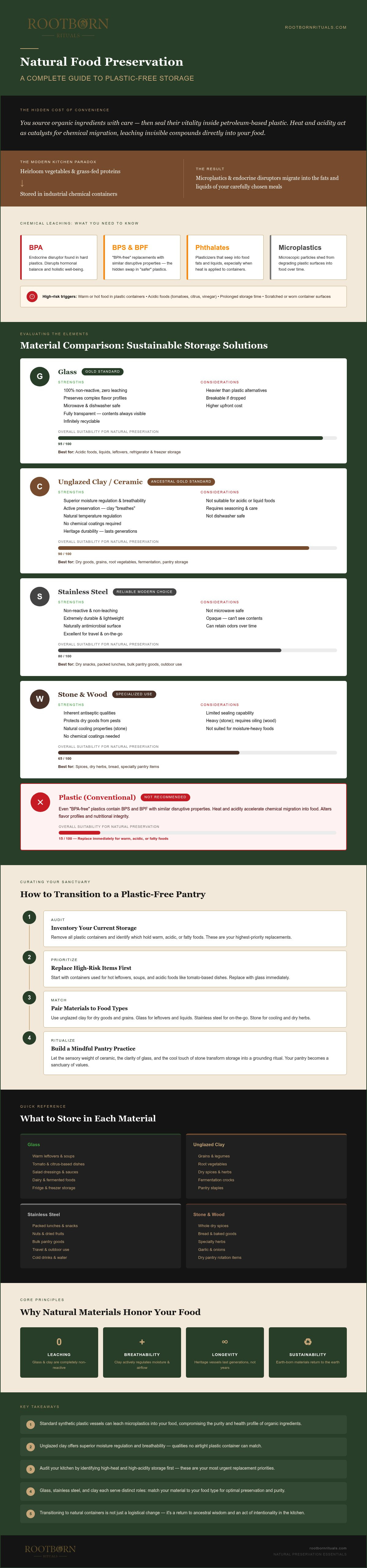
Heat and acidity act as catalysts for chemical migration. When you place warm leftovers into a plastic bowl, the molecular bond of the polymer weakens. This allows phthalates and BPA alternatives to seep into the fats and liquids of your meal. Even labels claiming to be BPA-free often mask the presence of similar chemicals like BPS or BPF, which can disrupt holistic well-being. In contrast, natural food preservation containers crafted from glass or clay offer a stable, non-reactive environment. These materials don't leach; they protect the complex flavor profiles and nutritional integrity of your ingredients without chemical interference. Glass and clay remain the gold standard because they respect the biological composition of what they hold.
A Ritual for Ancestral Purity
Transitioning your kitchen is more than a logistical change; it's a return to heritage. Ancestral food care relied on the earth to preserve the earth. Clay breathes, glass clarifies, and stone cools. These aren't just tools; they're vessels for a mindful lifestyle. Learning how to remove plastic from your kitchen is the first step in this sacred audit. It begins with identifying high-heat items and acidic storage that pose the greatest risk. By integrating natural food preservation containers into your daily rhythm, you cultivate a sensory connection to your environment. The cool touch of ceramic and the weight of glass turn a mundane chore into a grounding ritual. Your pantry becomes a reflection of your values, filled with materials that endure for generations rather than cluttering a landfill. This shift fosters a sense of peace, ensuring your home remains a sanctuary of purity.
Ancestral Wisdom Meets Modern Preservation: The Power of Natural Materials
To define natural food preservation containers is to recognize them as vessels crafted from earth-born, non-toxic materials that exist in harmony with the biological world. Unlike plastic, which creates a stagnant and suffocating environment, natural materials like clay, glass, and stone participate in the preservation process. They act as active guardians of vitality. Stone and wood possess inherent antiseptic qualities that protect dry goods from spoilage and pests without the need for chemical coatings. This is the intersection where ancient wisdom meets modern necessity; it's a return to a kitchen that breathes rather than one that merely stores.
By choosing materials that originate from the soil, you invite a specific energetic purity into your home. These vessels don't just hold food; they honor it. The weight of a stone jar or the cool surface of a ceramic crock provides a sensory reminder of our connection to the earth. This mindful approach transforms the act of putting away groceries into a grounding ritual. It's a methodical way to ensure that the life force of your organic ingredients is maintained from the moment of harvest to the moment of consumption. When you choose these materials, you're opting for longevity over the ephemeral nature of disposable culture. A well-crafted natural vessel can serve a family for decades, becoming a heritage piece that carries its own story and purpose within the household sanctuary.
The Sacred Art of Clay Preservation
The choice of unglazed clay represents an ancestral gold standard. Clay is a living medium; its microscopic pores allow for a gentle exchange of air that prevents damp stagnation. For ferments, this breathability is vital. Because clay is naturally alkaline, it balances the pH of acidic ingredients while its breathability facilitates evaporative cooling, keeping contents cooler than any synthetic vessel ever could.
Glass and Wood: A Symphony of Clarity and Protection
High-quality glass offers a non-porous sanctuary where flavors never linger or transfer. It provides total transparency, inviting a mindful inventory of your pantry. When paired with ethically sourced wood lids, these vessels create a balanced ecosystem for dry grains. You can begin this transition with our Natural Preservation Essentials; natural food preservation containers like these blend curated materials to create a high-end, sustainable aesthetic grounded in purity.
Evaluating the Elements: A Comparison of Sustainable Storage Solutions
Choosing the right vessel is a deliberate act of curation that balances physical durability with biological integrity. When you select natural food preservation containers, you're weighing the specific needs of your ingredients against the physical properties of the earth. This selection process shouldn't be a hurried task. It's a methodical evaluation of how different elements interact with light, air, and moisture. By understanding these nuances, you transform your pantry from a mere storage area into a sanctuary of vitality where every object serves a distinct, health-focused purpose.
Clay vs. Glass: Choosing the Right Vessel
The choice between clay and glass often depends on the breathability your food requires. While glass provides an airtight, non-porous seal perfect for liquids and delicate leftovers, unglazed clay offers a living environment. Use clay when moisture regulation is paramount, such as with root vegetables or active ferments. Opaque clay also provides a critical shield against light sensitivity, protecting the volatile compounds in heirloom oils and dried herbs that glass might expose. There's also a profound tactile experience in handling these vessels. The weight of a ceramic jar and the cool, smooth surface of glass offer a sensory connection to the meal preparation process that synthetic materials simply cannot replicate.
The Limitations of Metal and Silicone
Stainless steel is undeniably tactical and durable, yet it often lacks the organic warmth that defines a mindful home. It feels industrial and cold, serving a utilitarian purpose without the ancestral resonance of earth-born materials. Silicone is frequently positioned as a safe alternative, but it remains a modern polymer. Its production involves high-heat industrial processes that lack the "vitality" found in stone or clay. While it's a step away from toxic plastics, it doesn't offer the same heritage connection. For those seeking the highest purity profile, natural food preservation containers made from primary elements remain the superior choice for a long-term wellness ritual.
| Material | Reactivity | Longevity | Purity Profile |
|---|---|---|---|
| Unglazed Clay | Non-reactive; Alkaline | Multi-generational | Ancestral & Living |
| High-Quality Glass | Non-reactive; Inert | High (with care) | Modern-Pure |
| Stainless Steel | Low; Non-leaching | Exceptional | Tactical-Industrial |
| Food-Grade Silicone | Low; Stable | Moderate | Synthetic-Hybrid |
Ultimately, the aesthetic impact of these materials shouldn't be underestimated. A kitchen filled with glass, wood, and clay reflects a commitment to a slower, more intentional way of living. These materials age with grace, developing a patina of use that tells the story of your family's nourishment. By auditing your current inventory and favoring these elemental solutions, you create a high-end environment grounded in nature's own wisdom.
Curating Your Sanctuary: How to Transition to a Plastic-Free Pantry
Approaching the transition to a plastic-free kitchen shouldn't be an act of frantic disposal. Instead, view it as a methodical, rhythmic cleansing of your home sanctuary. This process is deeply intentional; it's a slow-living approach that favors quality over the hollow convenience of quantity. By auditing your current inventory, you identify the items that no longer serve your health or your values. Replacing synthetic vessels with natural food preservation containers allows you to reclaim the energetic purity of your kitchen, turning a cluttered space into a curated reflection of mindful living.
Begin your audit by focusing on high-risk plastic items. Heat and acidity are the primary catalysts for chemical leaching, so prioritize the removal of containers used for warm leftovers or acidic ferments. As you phase out these materials, you create space for natural food preservation containers that honor the life force of your ingredients. This isn't about an overnight overhaul; it's about building a collection of Natural Preservation Essentials that will serve your family for a lifetime. Every new piece should feel like a deliberate choice, grounded in heritage and the quiet confidence of earth-born materials.
The Pantry Transition Ritual
A successful transition involves more than just storage. It's a holistic shift that includes your entire dining experience. You can find comprehensive guidance on replacing problematic materials with non-toxic dinnerware sets to ensure every layer of your meal remains pure. Once you've addressed high-fat and acidic storage needs, focus on the visual flow of your pantry. Grouping vessels by material, such as stone, glass, and clay, creates a soothing aesthetic that inspires more intentional meal preparation and mindful eating habits.
Caring for Your Natural Vessels
Caring for earth-born materials is a ritual in itself. Natural vessels like clay and wood don't require harsh synthetic detergents; in fact, these chemicals can compromise the integrity of the material. Instead, use gentle, plant-based cleansers or simple hot water to maintain purity. Proper seasoning of wood lids with food-grade oils and ensuring clay containers are completely dry before storage will guarantee their longevity. Embrace the patina that develops over time. These subtle changes in color and texture aren't flaws; they're a story of use and care that connects you more deeply to the objects in your home.
To begin curating your own sanctuary of health and heritage, explore our full collection of Natural Preservation Essentials and choose pieces that resonate with your commitment to purity.
RootBorn Rituals: Elevating Your Kitchen with Natural Preservation Essentials
At RootBorn Rituals, we believe the objects you touch every day should be as pure as the life they support. Our natural food preservation containers aren't merely functional items; they're bridges to a more ancestral way of being. By curating vessels that honor the deep connection between food, health, and the natural world, we invite you to transform your kitchen into a sanctuary of clarity. Every piece in our collection represents a rejection of the disposable and a return to the enduring, ensuring that your home remains a sacred space for nourishment.
This commitment to plastic-free, sustainable craftsmanship is woven into every vessel we offer. We understand that the home environment has a profound impact on physical health, and we've carefully vetted every detail to ensure it aligns with a high-end, holistic lifestyle. Our Natural Preservation Essentials are designed to be heirloom pieces that age with grace, serving as silent guardians of your family's vitality. When you choose materials born of the earth, you're opting for a higher quality of life and a deeper connection to the rhythms of nature.
The RootBorn Philosophy of Food Care
Our philosophy is rooted in the belief that the material of a vessel dictates the vitality of its contents. We prioritize unglazed clay and organic materials because they respect the biological needs of your food. This dedication to purity extends to our handcrafted sustainable tableware, where every plate and bowl is designed to evoke a sense of peace and sanctity. We don't just sell products; we offer tools for a more intentional life. By choosing natural food preservation containers from our curated selection, you're investing in a legacy of wellness that transcends modern convenience.
Begin Your Preservation Ritual
Starting your journey toward a plastic-free pantry is an act of quiet rebellion against industrial norms. We suggest selecting your first pieces of Natural Preservation Essentials based on your daily rhythms. Perhaps it's a set of clay crocks for your countertop ferments or glass jars for your heirloom grains. These items can be seamlessly integrated into a non-toxic kitchen makeover, providing a foundation for a home that breathes. This methodical progression allows you to appreciate the significance of each object as it enters your space.
You aren't just changing your storage; you're joining a community of Wise Guardians who value intention over speed. It's time to slow down and consider the significance of the objects you interact with daily. By choosing vessels that align with your principles, you ensure that every meal is a ritual of purity and every bite is a step toward holistic vitality. We invite you to explore our collections and begin the deliberate process of curating a kitchen that reflects your deepest values.
Embrace the Ritual of Pure Preservation
You've explored how synthetic materials disrupt the energetic purity of your food and how unglazed clay and glass offer a living environment for your nourishment. Transitioning to a plastic-free pantry is a methodical act of self-care; it replaces chemical anxiety with the steady, grounded presence of earth-born materials that respect the life force of every ingredient. By choosing natural food preservation containers, you're not just organizing a kitchen; you're curating a sanctuary of clarity.
We invite you to Explore the Natural Preservation Essentials Collection to find vessels that align with your commitment to purity. Our collection blends ancestral wisdom with sophisticated, handcrafted designs to support your modern wellness journey. Every piece is plastic-free and ethically sourced to ensure your home remains a place of sanctuary and peace. You're now ready to begin this rhythmic shift toward a more intentional way of being. Your kitchen is waiting to breathe again, and it's clear that your health is worth the deliberate choice.
Frequently Asked Questions
Are natural food preservation containers really safer than BPA-free plastic?
Yes. Plastic, even when labeled BPA-free, often contains chemical analogs like BPS or BPF that can leach into food. Natural food preservation containers made from glass or unglazed clay are chemically inert and stable. They don't react with heat or acidity, ensuring that no synthetic polymers or endocrine disruptors enter your meals. Choosing earth-born vessels provides a level of purity that synthetic manufacturing simply cannot replicate.
How do I clean unglazed clay containers without using soap?
Cleaning unglazed clay requires a gentle, soap-free ritual to protect its porous nature. You should soak the vessel in warm water and use a soft brush to remove food particles. For a deeper cleanse, create a paste using baking soda and water to lift oils without leaving a chemical residue. Always ensure the container is completely dry before storing it to maintain its structural integrity and prevent any damp stagnation.
Can I use glass and wood containers in the freezer for long-term storage?
Glass is an excellent medium for freezing, provided you leave adequate space for food expansion to prevent cracking. Tempered glass handles low temperatures with grace, maintaining a non-porous seal for your broths and stews. While wood lids are beautiful, they are best suited for dry pantry storage rather than the moisture-heavy environment of a freezer. For long-term freezing, ensure your glass vessels are specifically rated for thermal shifts to guarantee longevity.
Do natural materials like clay actually keep food fresh for longer?
Clay vessels offer unique moisture regulation that synthetic containers lack. The microscopic pores in unglazed clay allow for a gentle exchange of air; this prevents the humid stagnation that leads to rot in root vegetables and fruits. Additionally, clay facilitates evaporative cooling, which keeps the internal temperature slightly lower than the surrounding environment. This living atmosphere helps maintain the vitality and crispness of your produce through ancestral science.
What is the best material for storing acidic foods like tomato sauce?
High-quality glass is the superior choice for acidic contents like tomato sauce or citrus ferments. Because glass is non-reactive and non-porous, it won't be etched by acids or absorb the deep pigments of the sauce. While clay is naturally alkaline and can balance acidity, glass ensures a complete flavor barrier. It prevents any metallic or earthy transfer, keeping the bright, sharp notes of your ingredients perfectly intact.
How do I prevent my wooden lids from cracking or absorbing odors?
Protecting wood requires a simple seasoning ritual using food-grade oils. Rubbing a small amount of walnut or linseed oil into the grain every few months creates a protective barrier against moisture and odors. This practice prevents the wood from becoming brittle and cracking over time. If a lid absorbs a strong scent, a quick wipe with lemon juice and a thorough air-drying will restore its neutral, organic aroma.
Is it worth the investment to switch my entire pantry to natural materials at once?
We recommend a methodical, rhythmic transition rather than an immediate overhaul. Focus first on high-risk items like those used for heating or storing fats and acids. Building a collection of natural food preservation containers is a slow-living practice that favors quality over speed. By replacing items gradually, you can appreciate the craftsmanship of each new vessel while ensuring your kitchen evolution remains a peaceful and sustainable process.
Can clay preservation jars be used for fermenting vegetables at home?
Clay is perhaps the most revered material for home fermentation. Its alkaline nature and breathability create an ideal environment for beneficial bacteria to flourish while suppressing harmful molds. Unlike plastic crocks, clay provides a stable temperature and a living surface that respects the biological complexity of the fermentation process. Using these ancestral vessels turns the act of preservation into a sophisticated ritual of health and heritage.


